


More news on this day
Travelers across Europe are facing significant disruption as widespread delays and cancellations at Zurich Airport have triggered a knock-on effect on flights to major hubs including Vienna, Amsterdam and Paris, with Swiss, Lufthansa, KLM, British Airways and other carriers collectively reporting 405 delayed services and 16 cancellations.
Get the latest news straight to your inbox!
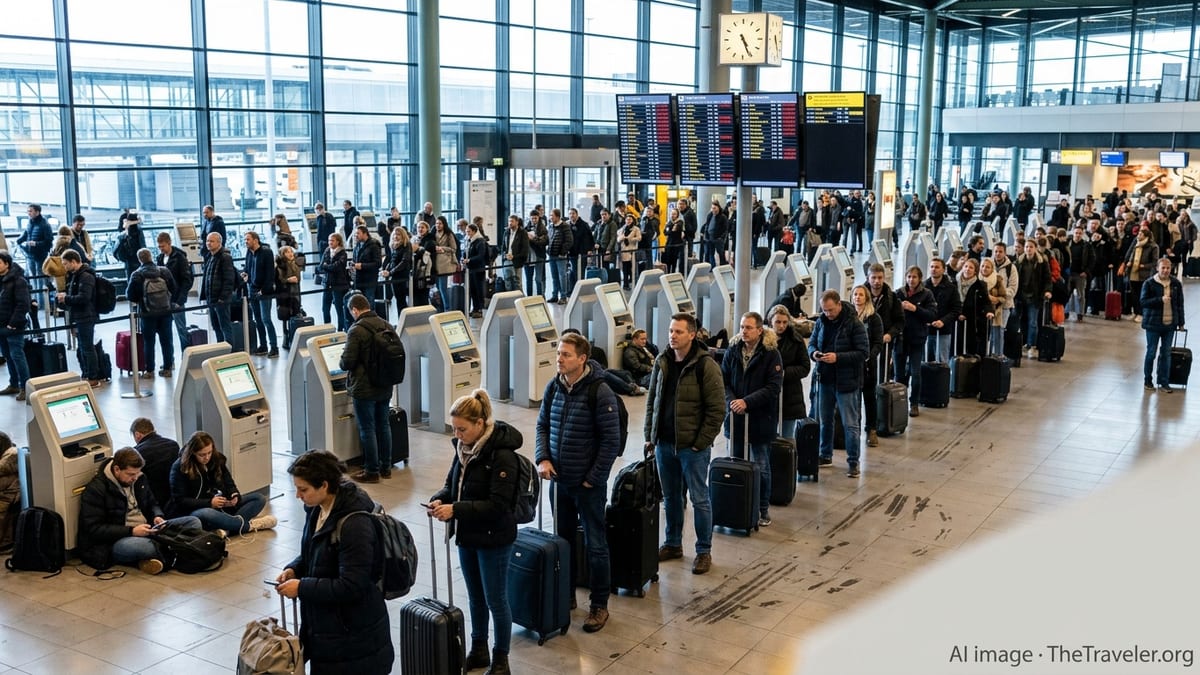
Heavy delays hit Zurich as peak summer traffic builds
Zurich Airport, a key hub for the Lufthansa Group and an important connector for European and long haul traffic, has entered the new week with extensive disruption to its departure and arrival program. Publicly available tracking data and local coverage indicate that 405 flights linked to the airport have been delayed, alongside 16 outright cancellations concentrated in the Swiss International Air Lines schedule.
The disruption comes as early summer traffic ramps up and the airport operates close to capacity for much of the day. Zurich is a primary base for Swiss and an important spoke for Lufthansa, KLM and British Airways, which all rely on tightly timed connections through European hubs. When operations slow at a hub of this size, delays can quickly propagate across the broader network.
Reports from recent days already pointed to mounting strain, with passengers describing extended ground holds, missed connections and late night diversions. The latest wave of disruption has compounded that pressure, turning what might otherwise have been routine evening and early morning delays into a larger network event felt well beyond Switzerland.
Data from European network performance briefings in June already showed Zurich among airports with elevated delay levels, particularly around peak hours. The current episode adds to that trend, underscoring how sensitive busy hubs are to relatively small operational shocks when schedules are tightly packed.
Vienna, Amsterdam and Paris feel knock on effects
The backlog at Zurich has quickly spilled over onto heavily used routes linking the Swiss hub with other major European airports. Flight tracking boards show repeated delays on services between Zurich and Vienna, where Austrian Airlines and Swiss jointly market several daily flights that feed into long haul connections in both directions.
Connections to Amsterdam Schiphol and Paris airports have also been affected, with departure and arrival times pushed back as aircraft and crews arrive late from earlier rotations through Zurich. These routes are critical for KLM and Air France networks, and also carry codeshares for Lufthansa Group carriers and British Airways on certain itineraries, so even modest disruption into these hubs can cascade through multiple airlines’ timetables.
Recent operational problems at Amsterdam earlier in June, where more than one hundred flights were disrupted in a single day, had already left airlines and passengers sensitive to any fresh instability. Today’s Zurich centered delays add another layer of complexity to travel plans, especially for passengers relying on tight connections between European and intercontinental sectors.
In Paris, the impact appears more distributed across several airports and airlines, but longer than scheduled ground times for Zurich bound and Zurich originating flights are contributing to schedule compression, particularly in the late afternoon and evening waves when traffic is heaviest.
Major European carriers struggle to keep schedules intact
Swiss International Air Lines, based at Zurich and operating a dense European and intercontinental network from the airport, has borne the brunt of the cancellations, with 16 flights dropped from today’s schedule according to local reporting. Many other Swiss operated services are running behind schedule, in some cases by an hour or more, as knock on delays accumulate.
Lufthansa, which uses Zurich as part of its broader multi hub system alongside Frankfurt and Munich, is also experiencing knock on disruption. Publicly available data and passenger accounts from recent weeks highlight a pattern of schedule strain for the airline, including cancellations and rebookings tied to operational bottlenecks and labor related challenges across its network.
KLM and British Airways are likewise being drawn into the current disruption through shared routes, codeshares and connecting passengers. Both airlines have faced their own operational challenges at other hubs this summer, and today’s Zurich focused delays are adding to a complex operating environment in which spare capacity to recover from irregular operations is limited.
Other carriers with a strong presence at Zurich, including Edelweiss and various partner airlines within the Lufthansa Group, are working within the same constrained environment. As aircraft rotate through Zurich later than planned, even airlines not directly responsible for today’s primary delays can find their own services affected.
Operational pressures and structural constraints at Zurich
While the immediate trigger for the current wave of disruption has not been tied to a single public incident, the pattern fits with the broader operational pressures that have been building at Zurich. Aviation analysts routinely point to a combination of high traffic intensity, strict night time noise restrictions and complex airspace coordination as factors that leave the airport with limited room to absorb disruption.
Passenger experiences shared in recent months describe frequent late evening delays, aircraft waiting extended periods for departure slots and diversions when arrivals risk breaching night curfew limits. In practice, this means that even relatively small technical or staffing issues can force airlines into difficult choices about which flights to protect and which to delay or cancel in order to stay within regulatory constraints.
European network briefings in June also highlighted that several large airline groups, including those centered around Zurich, are still operating with tight crew and fleet margins after years of schedule adjustments. When airports such as Zurich, Frankfurt or Amsterdam encounter periods of poor weather, staffing gaps or air traffic flow restrictions, the scarcity of spare aircraft and crews can quickly translate into extended disruption.
Industry observers note that Zurich’s role as both an origin and destination gateway for Switzerland and as an international transfer hub increases the stakes when operations go awry. Local journeys can often be rebooked within the region, but long haul connections that depend on precise timing through Zurich are more vulnerable to mass delays.
Passengers face missed connections and uncertain compensation
For travelers, today’s disruption is manifesting in missed connections, long queues at service desks and uncertainty over compensation and care. Social media and forum posts from recent weeks already captured frustration among passengers caught up in Swiss and Lufthansa related delays and cancellations, particularly where communication and rebooking options were perceived as limited.
Under European passenger rights rules, airlines are generally required to provide meals, refreshments and accommodation during extended delays, and in many circumstances to offer compensation when cancellations or long delays are not caused by extraordinary factors beyond their control. However, individual cases depend on the exact cause and timing of each disruption, and the interaction between multiple airlines on a single itinerary can complicate claims.
Travel advocacy groups typically advise passengers to document delay times carefully, keep boarding passes and booking confirmations, and follow up in writing with the operating carrier for each affected flight. In a situation like the one unfolding around Zurich, where multiple airlines and hubs are intertwined, clarity about which airline operated which leg becomes especially important.
With Zurich Airport expected to remain busy throughout the summer season, travelers planning itineraries through the Swiss hub may choose to allow extra connection time, particularly when linking European and long haul flights. While today’s disruption reflects a specific peak of operational stress, the underlying pressures on capacity and staffing across European aviation suggest that irregular operations could remain a recurring feature of the 2026 travel season.