


More news on this day
For travelers used to traditional big-ship sailings, stepping onto an ultra-luxury cruise can feel like entering a parallel universe, where butlers remember your coffee order, menus read like fine-dining playbills and even the test kitchen feels like a ticketed event.
Get the latest news straight to your inbox!
Butlers That Feel More Like Personal Concierges
One of the biggest psychological hurdles for first-time guests in ultra-luxury suites is figuring out what to do with a butler. Reports from recent sailings indicate that many travelers arrive assuming this is a hands-off perk they will barely use, only to discover the butler quietly orchestrates almost every stress point in the day. From arranging priority boarding to coordinating luggage delivery and in-suite dining, these staff members function as a hybrid of room steward and high-end hotel concierge.
Travel coverage and cruise forums suggest that butlers on luxury-focused lines like Regent Seven Seas, Silversea and certain suite categories on mainstream brands are trained to handle everything from pressing formalwear to setting up cocktail receptions in the cabin. First-timers often do not realize they can delegate tasks as varied as securing prime restaurant reservations, rebooking shore excursions or even sourcing specific snacks that are not stocked in the minibar. The surprise is less about the existence of butler service and more about how comprehensive it is when fully used.
Another unexpected element is the level of personalization that develops over a relatively short voyage. Accounts from passengers describe butlers learning daily routines and preferences within the first 24 hours, then anticipating needs before guests ask. That might mean cappuccinos arriving at the exact moment someone typically steps onto the balcony, or a favorite pillow type waiting after turndown. For travelers used to anonymous big-ship service, this level of attention can be both disarming and addictive.
A Culinary Scene That Rivals Top City Restaurants
Dining expectations are another area where ultra-luxury cruises can upend assumptions. While many travelers picture buffets and banquet-style dinners, the high end of the market has shifted toward chef-driven concepts, tasting menus and small-plate venues that mirror gastronomic trends on land. Recent coverage of newbuilds highlights partnerships with acclaimed chefs and the introduction of flagship venues that have been recognized by independent rating bodies for their quality.
Passengers trying ultra-luxury for the first time often report being surprised by the number of included specialty restaurants relative to the ship’s size. Instead of paying surcharges for a handful of premium venues, the model on many high-end lines folds multiple fine-dining spots into the fare, from French-inspired rooms to intimate sushi counters. The result is a nightly decision that feels closer to choosing among top restaurants in a global capital than selecting a different corner of the same dining hall.
Equally surprising is the emphasis on flexibility around dietary preferences. Publicly available information from cruise lines and traveler accounts indicates that chefs in ultra-luxury galleys are more likely to customize dishes, adjust tasting menus on the fly or create off-menu options for repeat guests. For a first-time luxury cruiser, that can mean discovering that a favorite dish from earlier in the voyage quietly reappears later in the week, refined or reimagined based on feedback.
Test Kitchens and Experimental Menus at Sea
Among the newer concepts at sea, the rise of test kitchen-style venues has caught many first-time luxury guests off guard. Rather than traditional à la carte menus, these restaurants operate more like culinary labs, presenting multi-course set menus that spotlight specific techniques, ingredients or themes. On some ships, menus are labeled with course numbers or key components, inviting guests to treat the experience as a guided tasting rather than a standard dinner.
Travelers who are accustomed to cruise dining built around predictability often describe the first visit to a test kitchen as a moment of culture shock. Dishes may arrive plated in avant-garde styles, with foams, gels or unexpected flavor pairings more commonly associated with experimental restaurants on land. For adventurous eaters, this can be a standout highlight of the voyage. For more cautious diners, it can be a surprise that requires a mental shift from ordering “safe” favorites to trusting the kitchen’s vision.
Another unexpected factor is how these venues structure reservations and repeat visits. Reports from recent sailings show that the same test kitchen may rotate menus throughout a cruise, encouraging guests to return for an entirely different lineup of dishes. First-timers, who often book a single visit assuming it will mirror other specialty dining, can be surprised to learn that the restaurant is intended as an evolving experience, not a one-off novelty.
Space, Silence and Small-Ship Atmosphere
For many travelers, the biggest surprise of an ultra-luxury cruise is not a tangible perk but the feeling of space. Compared with contemporary megaships, ultra-luxury vessels and ship-within-a-ship suite enclaves typically carry far fewer passengers per square foot. Industry guides on the segment note that higher space ratios and crew-to-guest numbers are key selling points, and first-time guests often notice this most in public areas that never feel crowded.
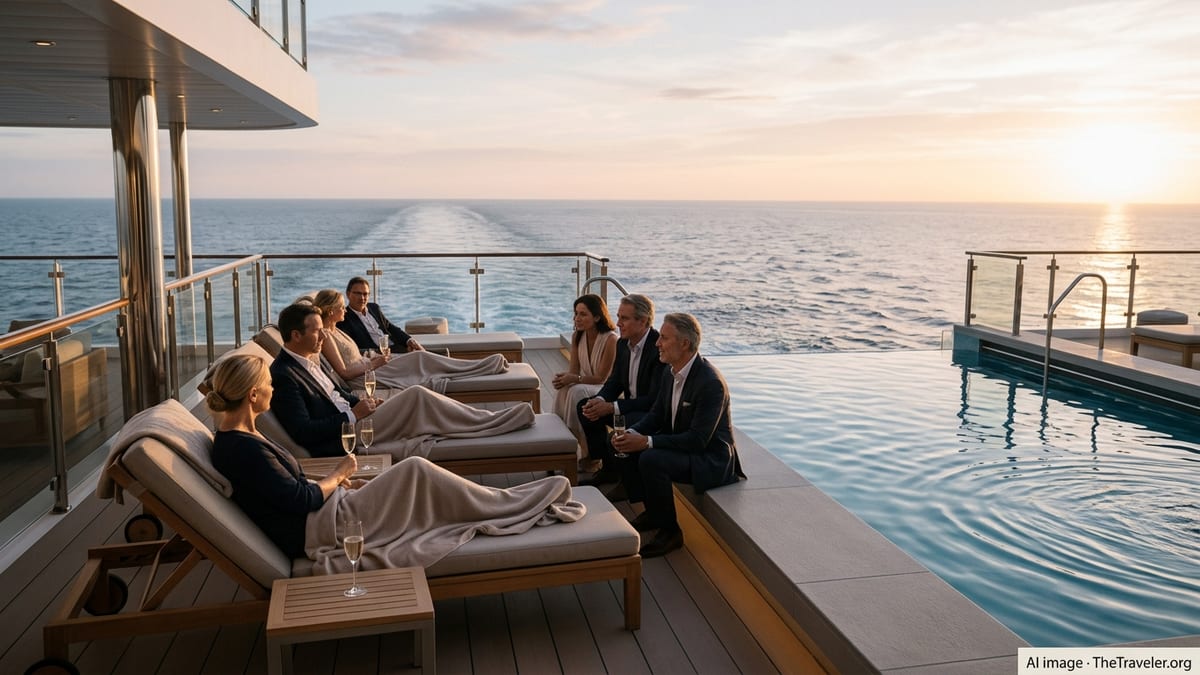
Newcomers frequently report that they can always find a quiet deck chair, a nearly empty lounge or a secluded nook in the observation lounge, even on sea days. The pool deck, a flashpoint for chair saving on mainstream ships, tends to be calmer, with padded loungers, attendants circulating with chilled towels and no loudspeaker announcements cutting through the sound of the water. For travelers used to navigating long buffet lines and busy atriums, the relative hush can be one of the voyage’s most striking features.
Cabin size is another revelation. Ultra-luxury suites and top-end accommodations on premium lines are often closer to boutique hotel rooms than standard ship cabins, with walk-in closets, full-sized bathrooms and separate living areas. Recent announcements of record-breaking suites have highlighted extras such as private in-suite spas, panoramic balconies and, in some cases, personal fitness areas. For first-time guests, the discovery that they can host small gatherings in their own living room at sea can shift the entire rhythm of the trip.
Little Luxuries That Add Up Quickly
Ultra-luxury cruising is frequently marketed as all-inclusive, but first-time guests are often surprised by the practical impact of that promise once on board. Industry comparisons between premium and ultra-luxury segments point out that many of the nickel-and-dime charges familiar on larger ships simply do not exist at the top end. Beverages, specialty coffees, multiple dining venues, gratuities and an array of shore excursions are often bundled into the fare, which can change how travelers behave day to day.
Instead of weighing whether to splurge on a second specialty dinner or an extra cocktail, guests find themselves free to try more experiences without watching the onboard account tally climb. Reports from recent sailings indicate that this can lead to a more relaxed attitude around dining and socializing, with passengers more willing to sample new wines, attend mixology classes or opt for a late-night snack in the lounge because there is no separate bill to sign.
Small, unexpected touches reinforce that sense of ease. Examples include complimentary laundry or pressing services, evening canapés delivered to the suite, or spontaneous treats such as caviar tastings and champagne welcome receptions. For a traveler on their first ultra-luxury cruise, these incremental perks can be as memorable as the headline amenities, combining to create a sense that almost everything they might reasonably want is already taken care of.