


More news on this day
A freight train struck a semi-truck at a rail crossing in southwest Atlanta, igniting a fire and disrupting transport in and around the neighborhood as emergency crews worked to secure the scene.
Get the latest news straight to your inbox!
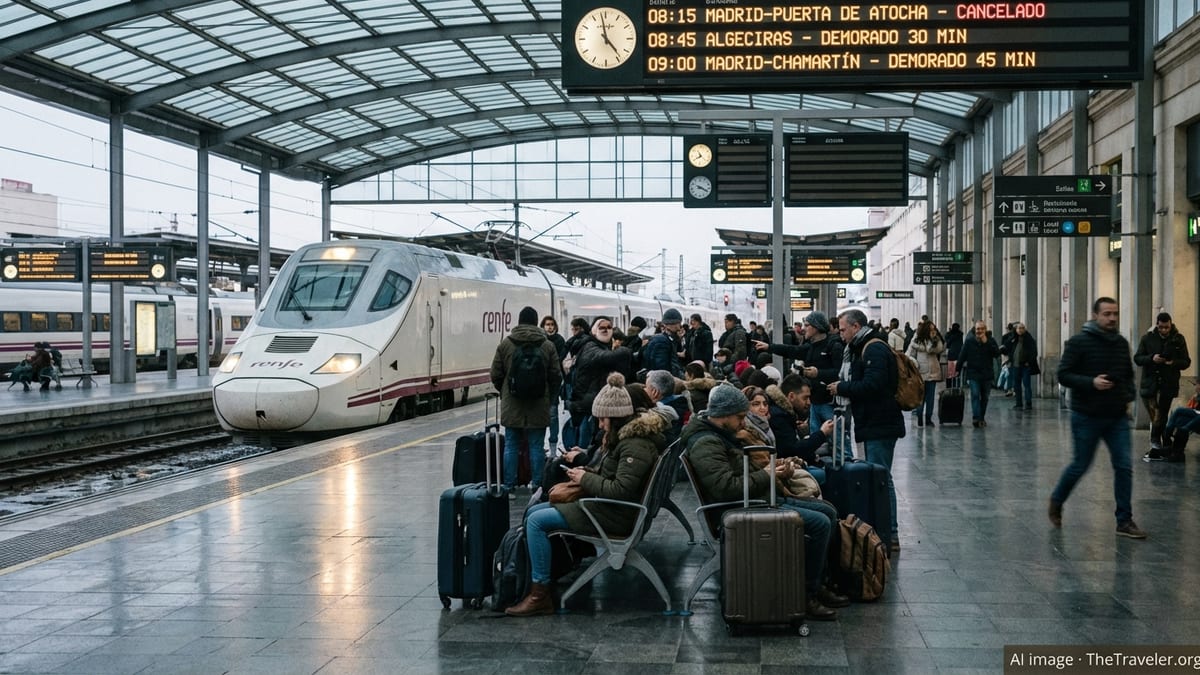
Collision Triggers Fire and Transport Disruption
Initial reports indicate the crash occurred at a grade crossing in a largely commercial and light industrial part of southwest Atlanta, where freight trains and heavy trucks regularly intersect. The impact between the locomotive and the semi-truck caused debris to scatter near the tracks and led to a fire that sent thick smoke into the air, visible from nearby streets and parking lots.
Publicly available information suggests the fire involved the truck and nearby trackside materials rather than the train’s cargo. Crews used water and foam to bring the flames under control, working to prevent the fire from spreading toward adjacent businesses and roadside vegetation. Drivers in the area reported delays as gridlocked traffic formed around blocked intersections.
Rail movement through the corridor was temporarily halted while responders checked for hot spots and assessed track conditions. Trains approaching the area were held or rerouted, affecting both freight schedules and, in some cases, connecting road traffic as more vehicles crowded alternate routes.
Early accounts do not indicate a mass-casualty scenario, but full details on possible injuries have not yet been made publicly available. Investigators are expected to review on-board train data and any nearby security camera footage as part of the crash review.
Busy Southwest Atlanta Freight Corridor
The section of southwest Atlanta where the collision occurred is part of a busy freight network that feeds warehouses, distribution centers, and industrial facilities around the metro area. Long trains routinely move through at varying speeds, intersecting with heavy truck traffic serving local businesses and regional logistics hubs.
Residents and commuters familiar with the area have described frequent delays at crossings as trains move through, sometimes coinciding with peak travel times. Commercial drivers often navigate tight turns, narrow approaches, and complex intersections as they move between interstates, surface streets, and loading docks.
Published coverage of prior incidents around Atlanta highlights the pressures on this shared infrastructure, where dense development has grown up along historic rail lines. Growth in regional freight volumes has added to the mix, with more trains and more trucks converging near the same junctions and corridors.
In this context, any disruption at a rail crossing can quickly ripple out, affecting not only local travelers but also long-distance movements of goods through one of the Southeast’s key transportation hubs.
What Is Known About the Semi-Truck Involvement
Early information describes the road vehicle as a semi-truck pulling a trailer, but specific details regarding its load, origin, and destination have not yet been made available. It remains unclear whether the truck became stuck, attempted to clear the crossing too late, or encountered other difficulties immediately before the impact.
Crash patterns documented in similar incidents elsewhere often involve trucks misjudging train speed or distance, becoming trapped in congestion on the tracks, or attempting to navigate low or angled approaches that complicate clearance. In some cases, long trailers can hang over rails if drivers miscalculate turning radius or ground clearance.
Reports from the scene in southwest Atlanta indicate that the truck was heavily damaged in the collision and fire. Depending on the final findings, investigators may examine issues such as signal visibility, roadway layout, and driver decision-making in the minutes leading up to the crash.
Insurance and liability questions typically follow, particularly when commercial freight is involved on both rail and road. The outcome of the official investigation will likely shape any subsequent civil actions and operational changes for carriers using the corridor.
Rail Safety Concerns for Travelers and Nearby Communities
For travelers and residents, the incident underlines the persistent risk at level crossings where trains and highway traffic meet. Even in urban areas familiar with rail activity, collisions can occur with little warning and can escalate quickly when fuel, cargo, or roadside structures catch fire.
Safety campaigns around Atlanta and nationwide often emphasize basic steps for drivers near tracks, including never stopping on the rails, avoiding attempts to beat descending gates, and leaving vehicles behind if they become stalled on the crossing. Crashes involving semi-trucks tend to be especially destructive due to the size and mass of the vehicles and the potential for hazardous or flammable loads.
Communities bordering freight lines frequently call for infrastructure improvements such as upgraded gates, clearer signage, better lighting, and, in some cases, grade separations that eliminate road-rail conflicts altogether. While such projects can be costly and complex, each new collision reinforces the conversation about where investments are most urgently needed.
The southwest Atlanta crash adds to a broader pattern of train and truck incidents reported across the country in recent months, and it may prompt renewed discussion about crossing safety standards, truck route planning, and enforcement of traffic rules at rail junctions.
Travel Impacts and What Drivers Should Expect
Following the collision and resulting fire, drivers in southwest Atlanta can expect lingering disruptions around the affected crossing while crews complete cleanup and rail inspections. Even after tracks are cleared for service, nearby roads may experience periodic closures as damaged equipment is removed and any necessary repairs to signals or pavement are performed.
Travelers moving through the area are likely to see detour signs and heavier volumes on parallel routes. Commercial drivers serving local businesses may face longer delivery and pickup times as they navigate alternate paths through the neighborhood.
For rail passengers and shippers, delays may persist while freight operators adjust schedules and routes to account for reduced track capacity during inspections. Passengers planning connections or time-sensitive trips through the Atlanta region are advised, based on publicly available advisories, to check for service updates before departure and build in extra time when possible.
As the investigation continues and more information is released, residents, commuters, and logistics operators will be watching closely for any recommended safety changes at the crossing where a routine day of travel was suddenly disrupted by a high-impact collision and fire.