


More news on this day
Colombia’s air transport system faced significant disruption as airports across the country, led by Bogotá’s El Dorado International, canceled 126 flights and delayed 242 more in a single day, affecting thousands of passengers and impacting the schedules of major regional and international airlines.
Get the latest news straight to your inbox!
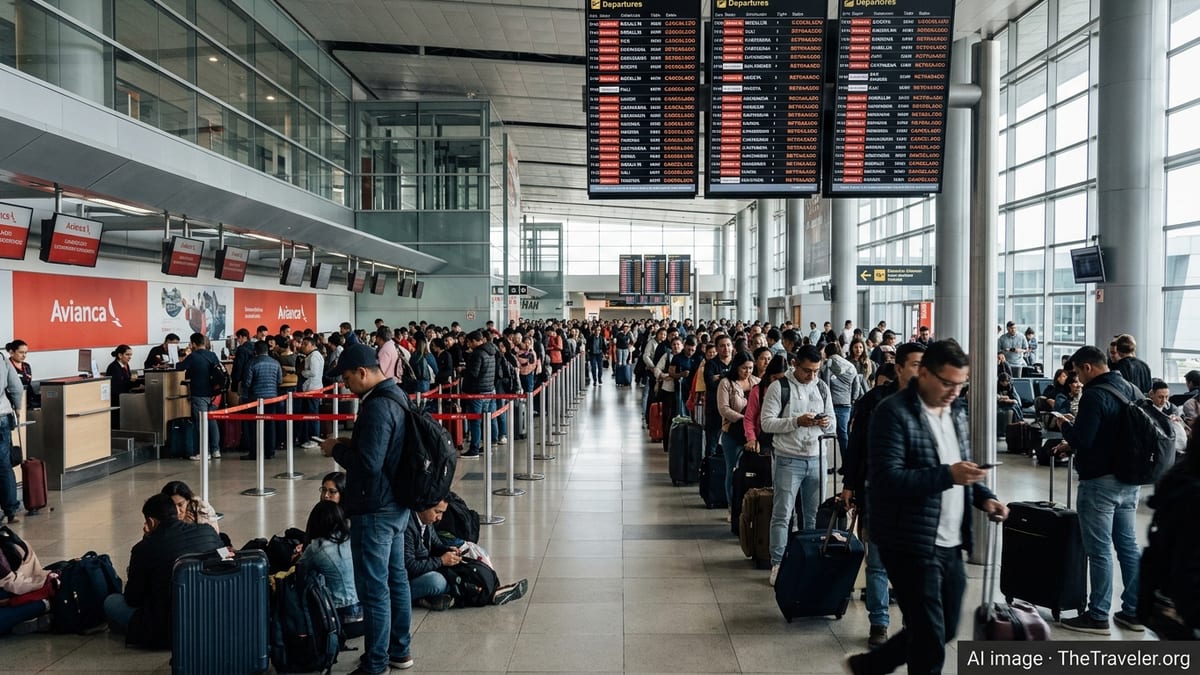
El Dorado at the Center of Widespread Disruption
Bogotá’s El Dorado International Airport, the country’s primary aviation hub, registered the largest share of cancellations and delays as poor weather and operational constraints rippled through already busy schedules. Publicly available tracking data show that more than half of the 126 cancellations involved services to or from the capital, with secondary cities such as Medellín, Cali and Cartagena also reporting knock on impacts.
El Dorado is one of Latin America’s busiest airports by passenger volume, and disruptions there tend to cascade quickly through Colombia’s domestic network. Airlines rely on tight turnaround times and multiple daily rotations of the same aircraft, so an early morning delay can echo through routes for the rest of the day, amplifying the total number of affected flights.
Reports indicate that airlines adjusted operations throughout the afternoon and evening, trimming some frequencies altogether and pushing other departures back by several hours. While most airport services continued functioning, the volume of schedule changes left many travelers facing missed connections, overnight stays and significant changes to their original itineraries.
Weather, Congestion and Operational Strain
Colombia’s complex geography and seasonal weather patterns often challenge aviation operations, and the latest wave of cancellations appears to reflect a combination of meteorological and logistical pressures. Low clouds and reduced visibility in high altitude Bogotá can force increased separation between aircraft, while thunderstorms affecting key regional airports further constrain routing and timing options.
Operational strain is another factor. Industry analysts note that airlines in Colombia, as in many markets, are operating close to capacity following a strong rebound in travel demand. When aircraft utilization is high and fleets are tightly scheduled, carriers have less flexibility to absorb unexpected events such as sudden storms, temporary runway restrictions or minor technical issues that require extra checks.
Air traffic management constraints can compound these problems. If controllers reduce arrival or departure rates into major hubs for safety reasons, airlines must decide which flights to prioritize and which to cancel. The result is often a pattern of scattered cancellations supported by a larger wave of delays, which appears to match the figures recorded across Colombia’s network during this disruption.
Impact on Major Airlines and Key Routes
The disruption has been particularly visible among major carriers using Bogotá as a connecting hub for both domestic and international traffic. Flag carrier and low cost operators alike saw services cut or rescheduled on some of the country’s most heavily traveled routes, including Bogotá connections to Medellín, Cali, Cartagena and several regional capitals.
International routes were not immune. Flights linking Bogotá with North and South America, as well as transatlantic services to European gateways, experienced knock on delays when inbound aircraft arrived late or crews reached their duty time limits. In some cases, airlines opted to consolidate services, moving passengers onto later flights to keep long haul operations viable within crew regulations.
For airlines, such disruptions carry both immediate and longer term costs. In the short term, carriers must manage rebookings, accommodation and compensation obligations where applicable under local and international regulations. Over time, repeated episodes of disruption can affect customer perception and loyalty, prompting carriers to reassess buffer times and schedule resilience on routes most exposed to weather and congestion.
Passengers Face Long Lines and Changing Plans
For travelers on the ground, the data translated into long lines at check in counters and customer service desks across Colombia. Social media posts and local coverage highlighted crowded departure halls at El Dorado and other major terminals as passengers sought alternative flights, refunds or overnight accommodation.
Many travelers with onward international connections faced particular uncertainty. Missed links can require complex rebooking across multiple carriers and alliances, especially when tickets involve a mix of domestic and long haul segments. In some cases, passengers reported being offered itineraries departing a full day later than originally planned, underscoring how tight capacity has become on some high demand routes.
Travel industry observers recommend that passengers with upcoming trips through Bogotá and other major Colombian hubs monitor flight status closely, allow extra time at the airport and consider travel insurance products that include coverage for extensive delays and missed connections. Flexibility in travel dates and a willingness to consider alternative routings within Colombia can also help reduce the risk of being stranded when schedules shift suddenly.
What the Disruption Signals for Colombia’s Aviation Network
The scale of cancellations and delays recorded in this episode highlights the sensitivity of Colombia’s aviation network to pressure at a few key nodes, especially El Dorado. As demand for air travel continues to grow, the balance between efficiently using existing capacity and building in resilience against disruptions is emerging as a central question for the sector.
Published planning documents and previous government statements have pointed to ongoing investments in airport infrastructure, including runway, terminal and air traffic management upgrades at major Colombian airports. However, such projects take time to deliver tangible improvements, and weather related disruptions will remain part of flying in a country with such diverse terrain and climate zones.
For now, the latest wave of cancellations and delays serves as a reminder that travelers across Colombia and beyond remain vulnerable to sudden shocks in the system. With 126 flights canceled and 242 delayed in a single day, even a short period of adverse conditions can reverberate widely, challenging airlines, airports and passengers alike.