


More news on this day
The United Kingdom has intensified its travel alert for Venezuela following a pair of powerful earthquakes in late June, with updated guidance highlighting the risk of ongoing aftershocks, damaged infrastructure and sharply reduced international flight options for tourists and other short-term visitors.
Get the latest news straight to your inbox!
Stronger UK Warning After Major June Earthquakes
Updated UK travel advice now places renewed emphasis on the impact of the late June 2026 earthquakes that struck northern and central Venezuela, including the capital region. Publicly available humanitarian and seismic reports describe two large quakes, with magnitudes above 7, that caused widespread damage across the Capital District and surrounding states, triggering a prolonged series of aftershocks.
Information compiled by international agencies indicates that more than a hundred aftershocks have been recorded since June 24, many of them strong enough to be felt in urban areas. This evolving seismic sequence has complicated efforts to restore essential services, assess structural damage and stabilise key transport hubs.
The UK’s Foreign, Commonwealth and Development Office had already advised against all but essential travel to most of Venezuela in recent years because of security, political and economic conditions. The latest refresh of the guidance strengthens the section on natural hazards, drawing attention to the recent earthquakes, the prospect of further significant aftershocks and the strain on emergency response capacity.
For British nationals considering trips that are not essential, the cumulative risks now include both longstanding security concerns and new uncertainty around basic infrastructure in the regions affected by the June events.
Aftershocks and Infrastructure Risks in Tourist Corridors
Seismologists note that major earthquakes of the size recorded in Venezuela on June 24 are typically followed by an extended period of aftershocks, which can last for weeks or even months. While many of these are smaller, a portion can reach damaging intensity, especially in areas where buildings were already weakened by the main shocks.
Situation updates from international organisations describe severe impacts in the central northern belt of the country, including coastal areas that serve as gateways for both business and leisure travellers. Residential buildings, public facilities and parts of the transport network have sustained damage, and assessments are continuing as engineers gain access to affected zones.
The UK advisory now urges visitors to familiarise themselves with safety procedures in hotels and other accommodation, to identify evacuation routes and to be prepared to move quickly if local authorities order an evacuation following strong shaking. Travellers are being encouraged to keep passports, essential documents and a small emergency kit easily accessible in case aftershocks occur at night or disrupt access to rooms and lobbies.
Given Venezuela’s recent history of seismic activity, including earthquake clusters in the country’s west, the reinforced messaging aims to remind tourists that many urban centres and coastal resorts lie in seismically active regions where preparedness is vital.
International Flights Limited as Caracas Hub Recovers
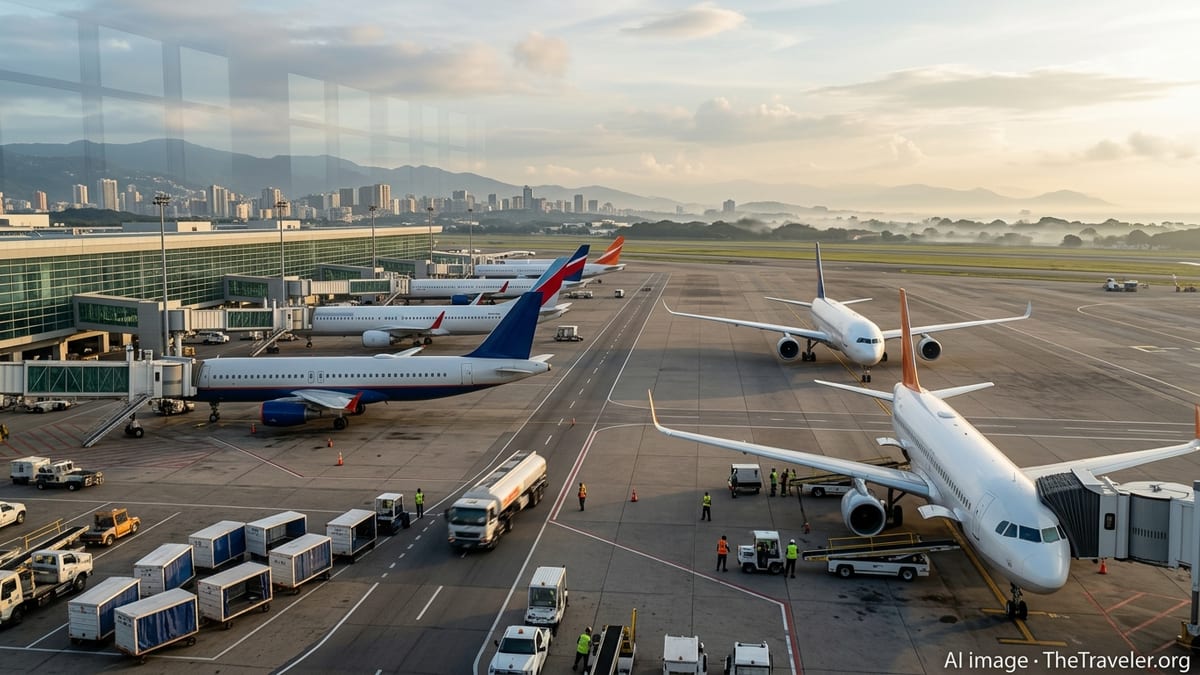
Air travel to and from Venezuela has been volatile for several years because of political tensions, aviation security concerns and economic pressures on airlines. The June 2026 earthquakes have added a new layer of disruption, particularly at Simón Bolívar International Airport, the main international gateway serving Caracas.
Accounts collated by aviation observers and humanitarian updates suggest that the airport temporarily halted operations after the quakes to allow structural inspections of terminals, runways and fuel systems. Video and eyewitness material shared publicly show aircraft and facilities experiencing intense shaking during the strongest event, underlining why engineers were required to carry out detailed checks before flights could safely resume.
Although some operations have restarted, the pattern of international service remains limited, with a reduced number of carriers and frequencies compared with pre-crisis years. Separate regulatory documents also indicate that, earlier in 2026, United States authorities moved to lift a longstanding ban on direct commercial flights between the two countries, but in practice only a small number of routes have begun returning and these have been further complicated by the earthquake-related disruption.
For UK travellers, this means that indirect routings through third countries are still the norm, and schedules are subject to sudden change. Travel industry reports point to short-notice cancellations, aircraft swaps and capacity constraints on regional links that feed into Venezuela, making flexible planning and robust travel insurance more important than ever.
What UK Tourists Need to Know Before Booking
Against this backdrop, the UK government’s message remains that any non-essential travel to Venezuela carries significant risk and should be carefully reconsidered. The combination of elevated seismic activity, damaged infrastructure, constrained healthcare capacity and ongoing security challenges creates a complex operating environment for visitors.
Prospective tourists are advised, in publicly available guidance, to monitor official travel bulletins up to and throughout their trips, as advice can change quickly in response to new aftershocks, landslides, flooding or airport disruptions. Travellers are also encouraged to maintain close contact with airlines and tour operators, who may adjust itineraries or reroute flights at short notice depending on airport inspections and airspace considerations.
Insurance providers may treat Venezuela as a high-risk destination, and some policies exclude cover for travel to countries under stringent government advisories or for claims arising from natural disasters. UK residents considering travel are therefore being reminded to check policy wording carefully, including clauses related to trip cancellation, curtailment, emergency medical care and evacuation.
Independent travel risk consultancies note that visitors who do decide to enter Venezuela should have contingency plans for extended stays if outbound flights are delayed, along with sufficient funds and medication to cope with potential disruption in local supply chains following further significant seismic events.
Regional Ripple Effects and Future Outlook
The June earthquakes in Venezuela have also had repercussions across the wider Caribbean and northern South America, with neighbouring countries monitoring seismic data and, in some cases, reviewing their own contingency planning for large regional events. Airspace coordination, diversion airports and humanitarian airlift capacity have all been subjects of renewed attention within regional aviation and disaster management circles.
For Venezuela itself, engineering assessments and reconstruction efforts are expected to take many months, especially in coastal and hillside communities where ground stability is a concern. The pace of recovery at airports, ports and key road corridors will be a central factor in determining how quickly tourism-related travel can normalise.
Analysts tracking the country’s transport sector note that, even prior to the earthquakes, Venezuela’s international connectivity had contracted significantly compared with a decade ago. The recent seismic crisis has further underlined the fragility of that network and the degree to which it depends on stable security conditions, clear regulatory frameworks and reliable infrastructure.
In the near term, UK travellers are likely to face a landscape of heightened caution, limited flight choice and evolving on-the-ground conditions. Those with essential reasons to visit are being guided to plan carefully, stay informed and remain ready to adjust their movements if aftershocks or renewed checks at airports and other critical facilities cause further disruption.