


More news on this day
American Airlines flight AAL2054, an Airbus A319 operating from Philadelphia to Chicago on August 9, diverted to Detroit Metropolitan Wayne County Airport after extended weather-related delays near Chicago raised fuel and scheduling concerns, according to publicly available flight-tracking information and media coverage.
Get the latest news straight to your inbox!
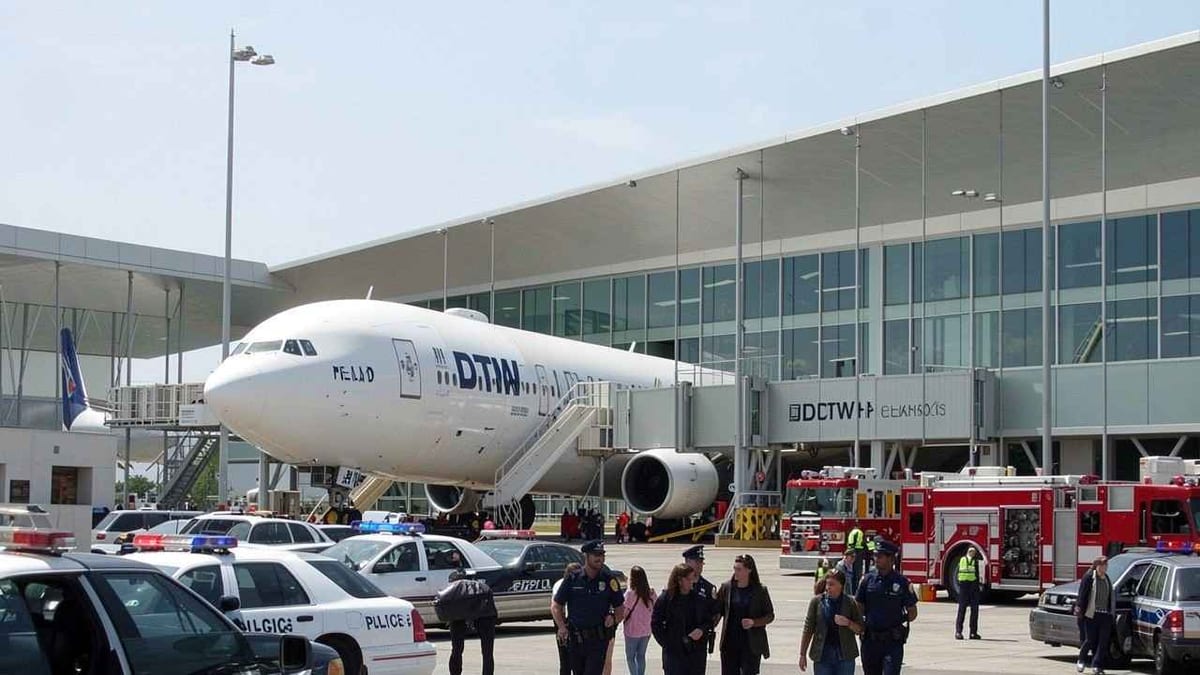
What Happened During Flight AAL2054 on August 9
Flight AAL2054 departed Philadelphia International Airport in the evening of August 9 local time, bound for Chicago O’Hare International Airport. The Airbus A319 followed its planned westbound route before encountering adverse weather in the Chicago area, which had already been affecting broader Midwest operations that day.
Publicly accessible flight-tracking data indicates that the aircraft slowed and altered its route as it approached the Chicago region, consistent with holding patterns and rerouting often ordered when storms or low visibility impact the terminal area. With traffic stacking up into O’Hare and arrival slots tightening, continuing toward Chicago became increasingly uncertain.
Instead of waiting indefinitely in a holding pattern, the flight turned toward Detroit, landing there without incident. Available information suggests the diversion decision was taken once it became clear that a timely arrival in Chicago would be difficult given the weather and air traffic conditions around O’Hare.
The diversion resulted in an unplanned intermediate stop, but reports do not indicate any onboard emergency. The Airbus A319 landed routinely in Detroit, with passengers remaining safe and the aircraft apparently undamaged.
Why Flights Divert: Weather, Fuel and Air Traffic Constraints
Weather is one of the most common reasons for diversions on domestic routes between major hubs such as Philadelphia and Chicago. Thunderstorms, low clouds, and reduced visibility can quickly limit the number of aircraft that can land each hour at a busy airport, prompting air traffic authorities to slow arrivals and impose spacing between flights.
When arrivals are delayed, flights approaching a congested airport may be placed into holding patterns or slowed down en route. Aircraft carry a calculated quantity of fuel that includes reserves for such contingencies, but this extra fuel is not unlimited. If holding is expected to continue for too long, or if the aircraft has already been in the air for an extended period, diverting to another airport becomes the safest and most practical option.
Operational constraints add another layer of complexity. Airlines must consider crew duty-time limits, gate availability, and the ripple effects on connecting passengers. Choosing a large alternate airport such as Detroit often allows an airline to refuel, swap crews if necessary, and re-accommodate passengers using established hub facilities.
In the case of AAL2054, the combination of weather near Chicago, increased arrival spacing, and typical fuel-management practices appears consistent with the decision to divert rather than risk extended airborne holding or further operational complications.
Impact on Passengers and How Rebooking Typically Works
The diversion of AAL2054 to Detroit meant passengers bound for Chicago faced additional travel time and uncertainty. Once an aircraft lands at an alternate airport, several factors determine how quickly travelers can continue: crew availability, aircraft turn time for refueling and inspections, and the broader status of the airline’s schedule at both the diversion point and the original destination.
When a diversion occurs for weather or broader operational reasons, travelers are commonly rebooked on later flights to their intended destination or, in some cases, offered ground transportation if the alternate airport is within reasonable driving distance. Large airports such as Detroit generally provide more options for onward connections than smaller fields, which can shorten delays.
Passengers may experience missed connections, overnight stays, and changes in seating assignments as the airline reshuffles itineraries. Publicly available guidance on American Airlines’ policies indicates that in weather-related disruptions, the carrier prioritizes placing customers on the next available flights, though compensation and hotel support can vary by circumstances and local availability.
For those aboard AAL2054, the diversion likely meant late arrivals into Chicago and, for some, missed onward flights. However, information currently in the public domain suggests the incident unfolded as a controlled operational response to challenging conditions rather than a sudden emergency.
Safety Context and How Diversions Fit Into Airline Operations
Diversions such as that of AAL2054 are a routine feature of commercial aviation and are designed to maintain safety margins rather than indicate heightened danger. Airlines and pilots are required to plan fuel loads that account for alternates and unexpected delays, and turning toward an alternate airport when conditions deteriorate is a standard risk-management step.
Major carriers operating dense networks between hub airports, including American Airlines, regularly adjust routes and schedules in response to storms and airspace constraints. Industry research and publicly available operational analyses show that integrated recovery decisions following a disruption can include flight rerouting, crew reassignment, and gate changes, all aiming to reduce the broader impact on the network.
Historical data on American Airlines and other large carriers demonstrates that the vast majority of diversions end with uneventful landings and no injuries. While disruptive for passengers in the short term, these decisions reflect conservative safety practices and regulatory requirements that prioritize stable landing conditions and adequate fuel reserves over on-time performance.
For travelers, incidents like the August 9 diversion of AAL2054 highlight the importance of building buffer time into itineraries, especially when connecting through weather-prone hubs, and staying informed through airline apps and airport information screens when conditions deteriorate.
What Travelers Can Take Away From the AAL2054 Diversion
The experience of AAL2054 reinforces several practical lessons for passengers flying between major hubs. First, weather-related disruptions can affect even short and mid-range routes on otherwise routine days, particularly in the summer when thunderstorms frequently develop around Chicago and other Midwest airports.
Second, a diversion is not necessarily a sign of a critical onboard problem. In most documented cases, including events similar to AAL2054’s route change to Detroit, diversions reflect a cautious response to external factors such as storms, air traffic flow restrictions, or runway availability.
Finally, maintaining flexible plans, monitoring flight status closely, and understanding basic airline policies on rebooking and accommodations can help travelers respond more calmly when their flight path suddenly changes. For passengers on AAL2054 and others in similar situations, a diversion generally represents a controlled adjustment in the journey rather than a compromise in safety.