


More news on this day
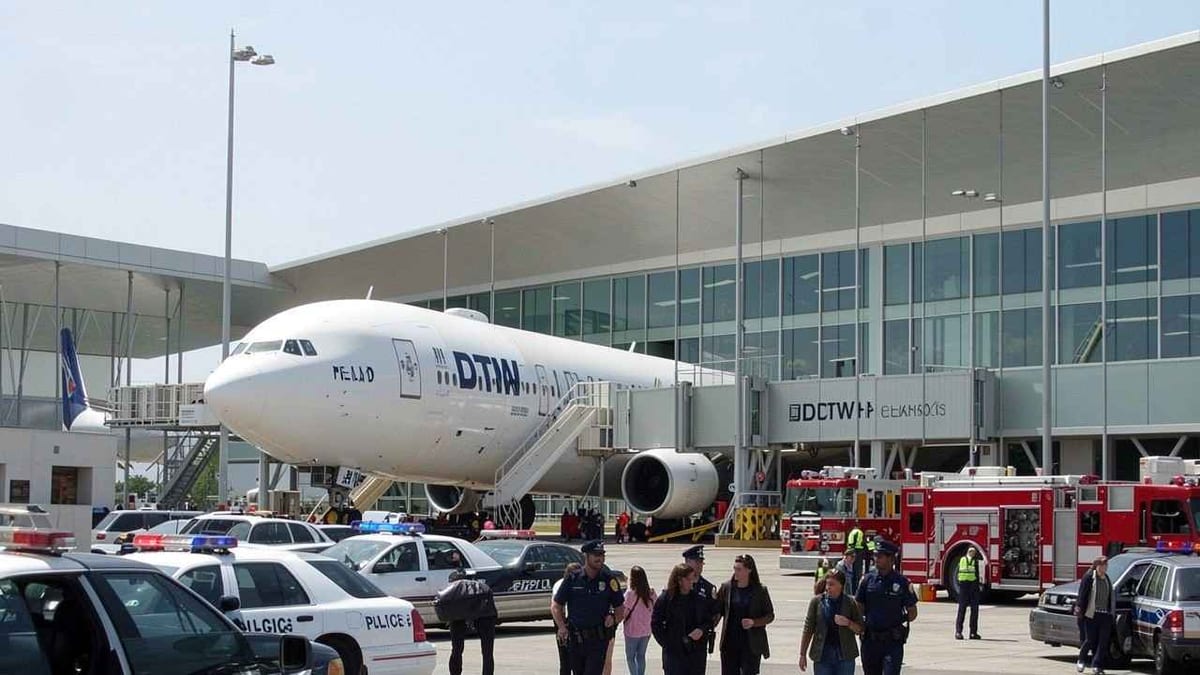
A United Airlines Boeing 737 operating Flight UA546 from Newark Liberty International Airport to Chicago O’Hare diverted to Detroit on August 9, prompting an unscheduled stop that left passengers temporarily stranded in Michigan while the airline arranged onward travel.
Get the latest news straight to your inbox!
What Is Known About Flight UA546’s Diversion
Publicly available flight-tracking data and media coverage indicate that United Airlines Flight UA546 departed Newark on the afternoon of August 9 bound for Chicago but did not complete its scheduled route. Instead, the Boeing 737 diverted to Detroit Metropolitan Wayne County Airport, touching down after a relatively short flight from the East Coast. The aircraft landed safely, with no immediate reports of injuries among passengers or crew.
Reports indicate that the diversion occurred while the aircraft was en route across the Great Lakes region, with the crew opting to turn toward Detroit rather than continue to Chicago. The reason for the change of course has not been detailed in official statements at the time of writing, but typical causes of such diversions include weather disruptions along the planned route, air traffic control constraints around a busy hub, or technical or operational issues affecting the aircraft.
Available information shows that the aircraft remained on the ground in Detroit while passengers awaited decisions on whether the flight would continue under the same number or whether travelers would be rebooked on later services to Chicago. Detroit is not a primary hub for United, which can add complexity to handling disrupted flights, from arranging gate space to securing connections on other aircraft.
Tracking data suggests that the diversion added several hours of uncertainty to the journey between the New York and Chicago metropolitan areas, but that the flight segment to Detroit itself was routine from an operational perspective, with a normal landing and standard ground handling once the aircraft reached the gate.
Possible Factors Behind the Decision to Divert
Flight diversions within the United States are typically driven by a limited set of factors, and the UA546 event fits into that broader pattern. Summer weather across the Midwest often leads to convective storms around Chicago O’Hare, resulting in ground stops, arrival metering, and extended holding patterns. When storms cluster directly over a hub or its approach paths, aircraft already in the air are sometimes rerouted to alternate airports with better conditions.
Another common trigger for diversions is a technical issue on board the aircraft. In such cases, pilots may decide that landing at the nearest suitable airport is the safest option, even if that airport is not a scheduled stop. Detroit’s long runways, extensive maintenance resources, and role as a major Midwest airport make it a logical choice for an unscheduled landing by a large narrowbody jet operating between Newark and Chicago.
Operational considerations can also play a role. When congestion builds at O’Hare, or when staffing and gate availability are strained, a diversion to a nearby large airport can sometimes allow an airline to reset its schedule more efficiently. While this strategy can be frustrating for passengers on the diverted flight, it can reduce the risk of extended airborne holding or delays that might otherwise threaten fuel reserves or crew duty-time limits.
Without detailed public disclosures about the specific cause for UA546’s diversion, the event is best understood as part of a familiar pattern in U.S. domestic aviation in which carriers make rapid decisions under changing operational and weather conditions to keep flights safe and manageable.
Impact on Passengers and Onward Travel
For passengers on UA546, the unplanned stop in Detroit meant disruption to travel plans that had been designed around a relatively short hop between two of the country’s busiest airports. Travelers expecting to land at Chicago O’Hare faced missed connections, rescheduled ground transportation, and additional time spent in terminals while waiting for new arrangements.
Publicly available information on United’s customer policies indicates that when a flight is diverted, the airline is responsible for transporting passengers to their original ticketed destination. In practice, this often means rebooking travelers onto later flights from the diversion airport, routing them through a different hub, or, in some cases, arranging ground transport if the diversion point is relatively close to the intended city.
In diversion scenarios, seating availability on later flights becomes a critical factor. Chicago-bound services are frequently busy, particularly on summer weekends, and securing same-day space for an entire planeload of passengers can be challenging. Some travelers may receive new boarding passes quickly through the airline’s mobile app, while others might wait longer for options that align with connections or specific arrival needs.
For those with tight schedules or important commitments in Chicago, the disruption caused by UA546’s diversion highlights the broader vulnerability of hub-to-hub routes to weather and operational challenges. Even on short domestic legs, travelers can experience significant delays when an aircraft must land somewhere other than its planned destination.
How United Typically Handles Diversions
United’s publicly available customer commitments and diversion guidance outline a general framework that likely shaped the response to Flight UA546’s situation. When a diversion occurs for reasons beyond the airline’s control, such as severe weather or air traffic restrictions, the carrier’s primary obligation is to provide onward transportation to the ticketed destination as soon as practical, rather than to offer financial compensation.
If the diversion stems from causes within the airline’s control, including certain mechanical or operational issues, United’s policy documents describe a broader set of potential remedies. These can include meal vouchers during extended delays, hotel accommodation if an overnight stay becomes unavoidable, and in some cases partial refunds or travel credits. The specific support offered depends on factors such as the duration of the disruption, the time of day, and local availability of rooms and transport.
United and other major carriers increasingly encourage passengers to manage disruptions digitally. In many diversion cases, updated flight options and rebooked itineraries appear first in airline apps or via text and email notifications, sometimes before gate agents can make detailed announcements. Travelers on UA546 would likely have been advised to monitor their mobile devices closely for updates on new departure times and gate assignments.
At airports where United has a smaller footprint, such as Detroit, some practical challenges can arise, including more limited staffing or fewer dedicated customer-service desks. However, remote support teams, call centers, and digital tools are designed to supplement on-the-ground resources so that rebooking and itinerary changes can proceed even if the diversion airport is not a primary hub.
What Travelers Can Learn From the UA546 Incident
The diversion of Flight UA546 illustrates how even relatively short domestic journeys between major hubs can be disrupted by factors beyond a traveler’s control. For those planning similar itineraries, the episode underscores the value of allowing additional time for connections, particularly when routing through weather-prone regions or during peak travel periods in summer and winter.
Experts and frequent travelers often recommend keeping essential items in carry-on baggage, including medications, chargers, and a change of clothes, so that a diversion or overnight delay at an unexpected airport is more manageable. The UA546 experience is a reminder that checked luggage may temporarily remain on the diverted aircraft or follow later on a separate flight, adding another layer of uncertainty for passengers.
Monitoring flights in real time through airline apps and independent tracking services can also help passengers stay informed. When a diversion decision is made, mobile notifications often arrive quickly, allowing travelers to begin considering alternate plans, updating contacts at their destination, or exploring rebooking options while still on board.
While diversions are relatively uncommon compared with the total number of daily departures across the United States, they are a routine part of airline operations. The UA546 case highlights how carriers balance safety, operational constraints, and customer care when a flight cannot proceed as planned, and why flexible, well-informed travelers are often best positioned to cope with sudden changes in their journey.