


More news on this day
An American Airlines flight from Chicago to Las Vegas diverted to Kansas City on August 9, interrupting the evening journey for scores of passengers and drawing renewed attention to how U.S. carriers manage in-flight disruptions.
Get the latest news straight to your inbox!
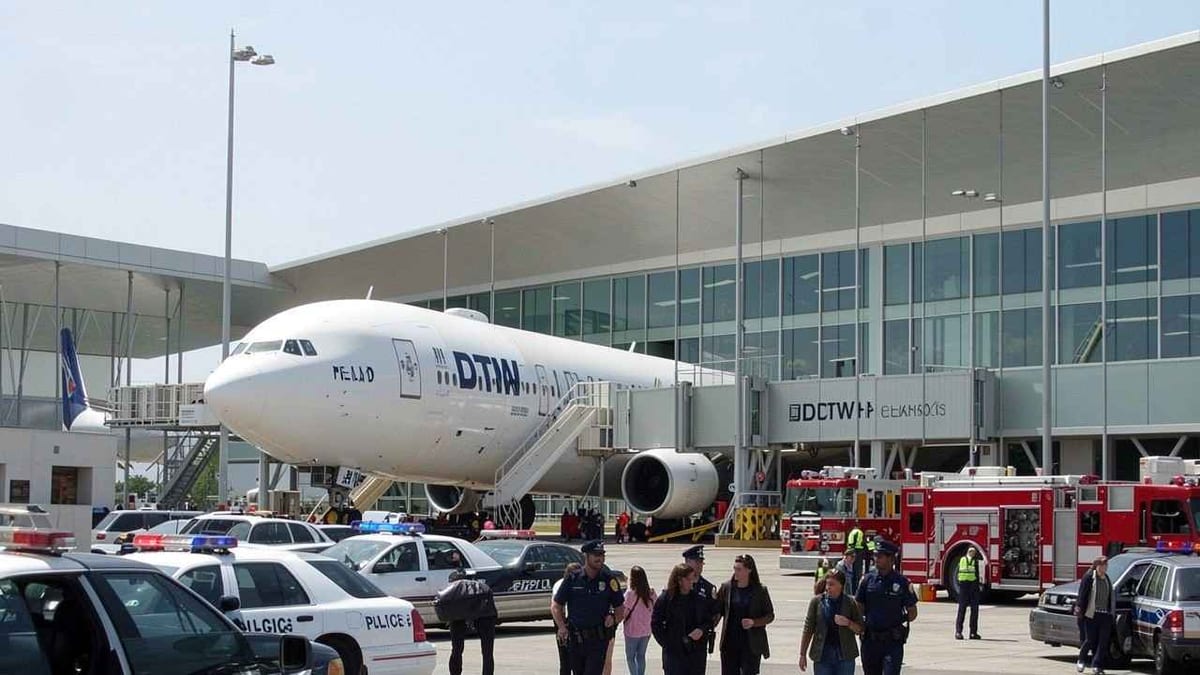
Chicago–Las Vegas Service Interrupted En Route
Publicly available flight-tracking information shows that American Airlines Flight AAL3292, operated by a Boeing 737-823, departed Chicago O’Hare International Airport on August 9 on a scheduled service to Las Vegas. Instead of continuing toward Nevada, the aircraft altered course mid-flight and landed at Kansas City International Airport, where the flight status was subsequently recorded as diverted.
Data from online flight-monitoring platforms indicates that the aircraft followed its initial westbound routing after takeoff from Chicago before turning southwest toward Missouri. The 737 then descended and landed in Kansas City, where it remained on the ground while passengers and airline operations dealt with the unscheduled stop. The Las Vegas arrival, originally expected later that day, was delayed as a result of the diversion and the need to reorganize the remainder of the journey.
American Airlines had not issued a detailed public statement on the specific cause of the diversion by the time of publication. In similar cases involving U.S. carriers, mid-route changes are commonly associated with technical concerns, medical situations, or evolving weather conditions along the planned route, but the precise trigger for Flight AAL3292’s diversion on August 9 has not been formally detailed in public sources.
What a Diversion Means for Travelers On Board
When a flight diverts to an unscheduled airport, passengers typically experience a cascading set of disruptions, from extended time on board to missed onward connections and late-night arrivals. Reports from recent American Airlines diversions on comparable domestic routes suggest that travelers may be asked to remain seated on the aircraft while the situation is assessed, or to disembark temporarily if a technical inspection, crew change, or security-related check is required.
In Kansas City, Flight AAL3292’s passengers would have encountered an airport that functions as a mid-continent hub for several domestic routes, but not as the primary gateway they expected for a trip bound for Las Vegas. Depending on the length of the delay and the availability of replacement aircraft or crews, some travelers may have continued on the same 737 after checks were completed, while others may have been rebooked onto alternative services to reach southern Nevada.
For travelers, diversions often raise practical questions about accommodations, meal vouchers, and rebooking options. Airline conditions of carriage and publicly available customer-service policies outline differing levels of support depending on whether a disruption is categorized as within the carrier’s control, such as most mechanical issues, or outside of it, such as severe weather or air traffic control constraints. Where a diversion leads to an overnight delay, passengers commonly report being offered hotel arrangements or assistance with new itineraries, although outcomes can vary case by case.
Operational Factors Behind Mid-Flight Course Changes
Airline operations specialists often point to a mix of technical, medical, and environmental triggers as the most frequent reasons for diversions on U.S. domestic services. Studies of flight operations and delay propagation across major hubs, including Chicago O’Hare, note that even minor issues discovered in the air can prompt conservative decisions to land at the nearest suitable airport where maintenance support and emergency services are readily available.
In the case of a Boeing 737-800 such as the aircraft assigned to Flight AAL3292, the airline’s internal procedures require crews to follow defined checklists whenever anomalies appear. If any concern cannot be resolved safely while airborne, pilots may request priority handling from air traffic control and divert to an airport with appropriate runway length, ground services, and the airline’s own maintenance or partner facilities. Kansas City, situated roughly midway between Chicago and many western destinations, is frequently used as an alternate or diversion point for transcontinental traffic.
Weather can also play a significant role. Summer flying in the central United States often involves thunderstorms, turbulence, and rapidly changing storm cells that can block or complicate westbound routes toward the Rockies and the desert Southwest. Although no single factor has been publicly confirmed for the August 9 event, historical data on diversions shows that carriers generally weigh onboard safety, fuel planning, and ground capability ahead of schedule considerations when deciding to alter a flight’s destination.
Impact on the Chicago–Las Vegas Corridor
The Chicago–Las Vegas corridor is one of the busier domestic leisure markets in the United States, with multiple daily flights from Chicago O’Hare operated by several major carriers. American Airlines uses Boeing 737 and Airbus A320-family aircraft on this route, tailoring capacity to fluctuating demand from business travelers, convention traffic, and tourists heading to Nevada.
Because of this density of service, disruptions on a single flight are often absorbed by the broader schedule, with airlines attempting to re-accommodate affected travelers on later departures the same day or early the next. However, passengers on Flight AAL3292 faced the additional complication of being hundreds of miles off their intended path in Kansas City rather than at a hub with a vast network of nonstop Las Vegas options. In such cases, travelers may need to connect through another hub or accept longer total journey times.
Air travel analysts note that diversions on high-frequency leisure routes can have knock-on effects, temporarily reducing available seats and pushing some travelers to red-eye or early-morning departures. For those with fixed hotel reservations or event tickets in Las Vegas, even a several-hour delay can lead to added costs, underscoring the importance for passengers of flexible booking terms at both airlines and hotels when traveling during peak seasons.
Passenger Rights and What Happens Next
For travelers on diverted flights such as American Airlines Flight AAL3292, understanding passenger rights and airline policies is a practical concern once the aircraft lands somewhere unexpected. Public information from U.S. carriers highlights that passengers are generally entitled to transportation to their ticketed destination, even if the journey involves additional connections or a rerouted itinerary after a diversion.
Financial compensation in the United States is more limited than in some other regions, but airlines may provide meal vouchers, hotel rooms, or travel credits when disruptions fall within their control and cause significant delays. Travelers affected by diversions are often encouraged by consumer advocates to keep documentation of boarding passes, receipts, and any written communication from the airline to support later customer-service requests.
In the wake of the August 9 diversion, Flight AAL3292 is expected to appear in operational statistics as a completed but diverted service, rather than a straightforward nonstop Chicago–Las Vegas leg. While the event adds to the tally of irregular operations affecting American’s network this summer, aviation safety specialists emphasize that diversions, while inconvenient, are one of the clearest indications that crews and airlines are prepared to prioritize safety and risk management over timetable performance when conditions change en route.