


More news on this day
A United Express flight operated by SkyWest Airlines from Akron to Chicago diverted to Milwaukee on August 9, underscoring how summer weather and operational constraints continue to disrupt regional air travel across the upper Midwest.
Get the latest news straight to your inbox!
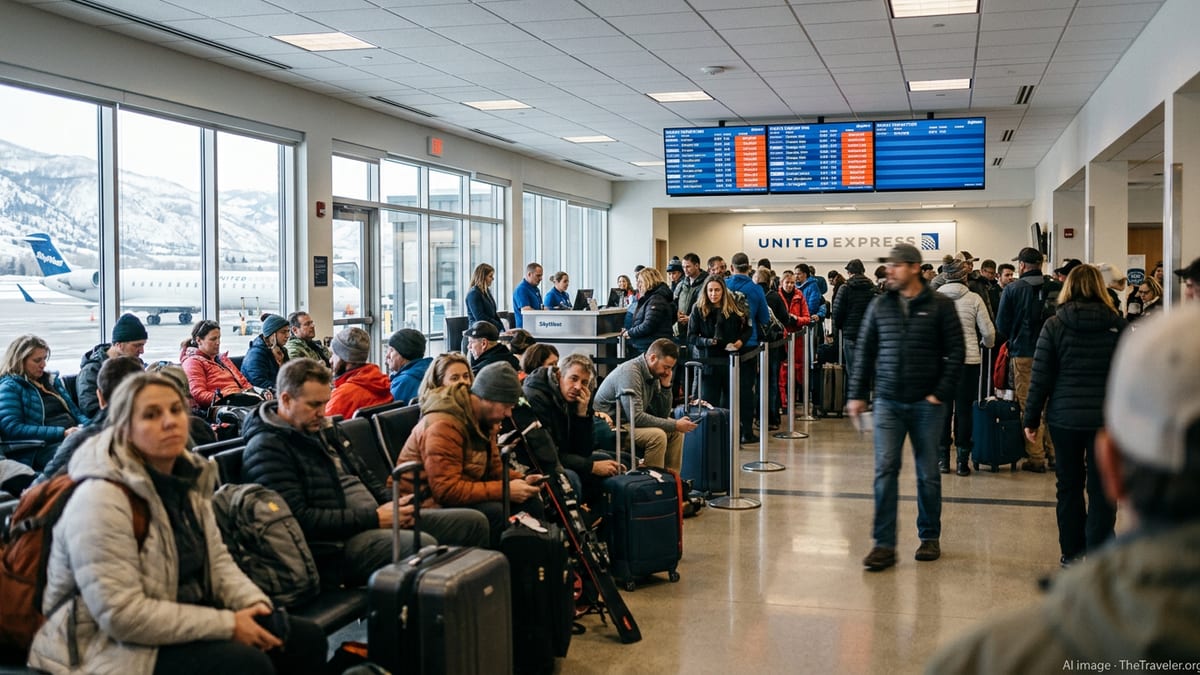
Regional Jet From Akron Changes Course En Route to Chicago
Flight information for August 9 shows United Express service SKW4698, operated by SkyWest with a Mitsubishi CRJ-200LR, departing Akron-Canton Airport on a scheduled route to Chicago O'Hare International Airport. Publicly available tracking data indicates that the regional jet did not complete its planned sector into Chicago and instead diverted to Milwaukee Mitchell International Airport.
The CRJ-200LR is a 50-seat regional jet frequently used by SkyWest on shorter domestic segments under its code-share agreements with major carriers. The Akron to Chicago routing is a typical regional connector serving both business and leisure travelers who rely on O'Hare as a hub for onward connections across the United States and beyond.
On this occasion, flight traces show the aircraft progressing normally along its route before altering course away from Chicago and continuing north toward Milwaukee. The change resulted in an off-schedule arrival for passengers expecting to land at O'Hare, placing them more than 80 miles from their intended destination.
Diverted operations of this kind have become a recurring feature of peak summer travel days as airlines contend with congested airspace, rapidly changing storm systems and tight regional-jet schedules.
Weather and Congestion Drive Diversions Into Milwaukee
Reports from travelers and aviation enthusiasts following upper Midwest operations on August 9 point to challenging conditions in the Chicago area. In this region, summer afternoons commonly bring convective weather patterns that can force capacity reductions, holding patterns and reroutes into and out of O'Hare.
Milwaukee Mitchell International Airport often acts as an alternate for flights bound for Chicago when conditions there deteriorate. Accounts shared by passengers and local observers in recent weeks describe multiple diversions into Milwaukee on days with storms or reduced visibility around Lake Michigan, noting crowded concourses and extended waits as crews and ground teams work through the disruption.
Operationally, a diversion to Milwaukee can provide a safer or more predictable option than extended airborne holding near Chicago, particularly for smaller regional jets with tighter fuel margins once delays accumulate. Airlines may also factor in gate availability, ramp congestion and expected recovery times at O'Hare when directing an aircraft to a nearby alternate.
While the decision to divert SKW4698 on August 9 has not been detailed in official operational summaries, the pattern aligns with broader traffic flows seen this summer, where a mix of thunderstorms, low ceilings and heavy demand has repeatedly pushed flights away from Chicago to nearby airports.
What a Diversion Means for Passengers and Crew
For travelers on SKW4698, the diversion to Milwaukee would have brought an abrupt change to their journey. Instead of arriving directly into O'Hare’s network of terminals with access to dozens of connections, passengers found themselves at a smaller airport that, while well connected by road and rail, requires additional planning to reach Chicago or make onward flights.
Recent accounts from diverted travelers across various airlines describe a range of outcomes following similar events. In some cases, aircraft remain on the ground only briefly before refueling and continuing to the original destination, while in others the flight is terminated at the diversion point and passengers are asked to deplane and rebook or arrange alternate transport.
For crews operating a regional jet, the choice between continuing to Chicago or ending the day in Milwaukee can depend on a series of technical and regulatory factors. Fuel planning, crew duty-time limits and the availability of maintenance or ground support all influence whether continuing to O'Hare is viable after a prolonged weather or congestion event.
SkyWest, like other regional operators, is graded by its major airline partners on reliability metrics that emphasize completed flights. Aviation industry analyses note that these performance pressures encourage operating flights whenever safely possible, but they can also result in last-minute route changes or diversions when conditions shift during a journey.
SkyWest’s Role in United’s Midwest Network
SkyWest operates one of the largest regional fleets in North America, flying under code-share agreements with major brands such as United. Corporate filings and schedule data show that the airline deploys aircraft including the CRJ-200LR across dense short-haul networks that feed hubs like Chicago O'Hare, Denver and other key connecting points.
In the Midwest, SkyWest’s operations are central to maintaining connectivity between smaller communities and large hub airports. Flights like SKW4698 from Akron to Chicago form part of a wider pattern of regional services that carry passengers from local markets onto trunk routes operated by larger mainline aircraft.
Milwaukee is also an important operational point within this ecosystem. The airport’s facilities and relative proximity to Chicago make it a practical choice as an alternate during irregular operations. Company disclosures highlight Milwaukee as one of several locations where SkyWest maintains a material operational presence, supporting both scheduled flying and contingency planning when disruptions arise.
As airlines continue to adjust their regional networks in response to demand and regulatory changes, diversions such as the August 9 event serve as a reminder of how tightly interlinked airports in the upper Midwest have become, with Milwaukee frequently absorbing traffic when Chicago’s capacity is constrained.
Continuing Summer Disruptions Across the Upper Midwest
Travelers flying through the region this season have reported a notable number of diversions, cancellations and last-minute schedule adjustments on days affected by storms or low visibility. Posts from passengers on social platforms describe crowded gate areas, extended waits for customer service and creative rerouting as airlines work to reposition aircraft and crews.
Industry observers have pointed to several contributing factors behind the recent pattern. Strong leisure demand, constrained pilot and crew availability, aging regional fleets and infrastructure limits at major hubs have combined with volatile summer weather to create a fragile operating environment. When one element falters, such as a line of storms over Lake Michigan, the resulting delays can ripple quickly through a carrier’s network.
Events like the diversion of SKW4698 from Akron to Chicago with an eventual arrival in Milwaukee highlight the importance for passengers of monitoring flight status closely, allowing extra connection time on peak travel days and remaining flexible when conditions deteriorate. For airlines and airports, these incidents reinforce the ongoing need for resilient scheduling, robust staffing and clear communication to manage the growing complexity of regional air travel.