


More news on this day
A United Express service operating as flight SKW5107 returned to Denver International Airport after encountering storm-related disruptions shortly after departure, underscoring how volatile summer weather patterns continue to affect flight operations across the central United States.
Get the latest news straight to your inbox!
Storm Disruption Sends Regional Flight Back to Hub
Publicly available flight-tracking information indicates that SKW5107, a United Express regional service operated by SkyWest Airlines, departed Denver bound for a Midwest destination before turning back to the Colorado hub after storms developed along its route. The aircraft landed back in Denver without reported injuries, but with passengers facing missed connections and overnight delays.
Initial tracking data shows the aircraft climbing out of Denver, leveling off briefly, and then reversing course as convective weather intensified. The return created a holding pattern of uncertainty for travelers already contending with a summer marked by frequent thunderstorms and operational strain at major hubs.
While details about the specific weather cells affecting SKW5107 have not been extensively documented, broader radar snapshots for the period show scattered but strong storm activity in the central corridor, including lightning, heavy rain, and pockets of turbulence. The decision to return to Denver appears consistent with standard procedures for avoiding severe convective activity that may affect passenger comfort and flight safety.
United and SkyWest had not issued detailed public statements specific to this flight at the time of writing, but information across airline and airport channels suggests that crews have been making frequent tactical adjustments as storms repeatedly form along heavily traveled routes.
Summer Weather Patterns Put Pressure on Operations
The disruption to SKW5107 is the latest illustration of how summer storms are influencing U.S. airline schedules, particularly at hub airports such as Denver International. Seasonal convective systems can develop quickly along the Front Range and across the Plains, prompting reroutes, ground stops, and airborne diversions that ripple through already busy networks.
Denver airport operations reports and passenger-traffic summaries for recent seasons show that United and its regional partners operate thousands of monthly movements through the hub, making the network especially sensitive to even short-lived ground holds or airspace constraints. When thunderstorms arrive during peak departure banks, modest slowdowns can translate into widespread missed connections.
Online discussions among travelers and aviation enthusiasts during recent weather events describe long delays and a rise in last-minute cancellations or diversions at major hubs, including Denver, Chicago, and East Coast gateways, whenever storm lines develop near key arrival and departure corridors. Observers note that airlines increasingly adjust schedules in advance based on convective forecasts in an effort to keep flights moving, but sudden changes in storm intensity can still catch operations mid-bank.
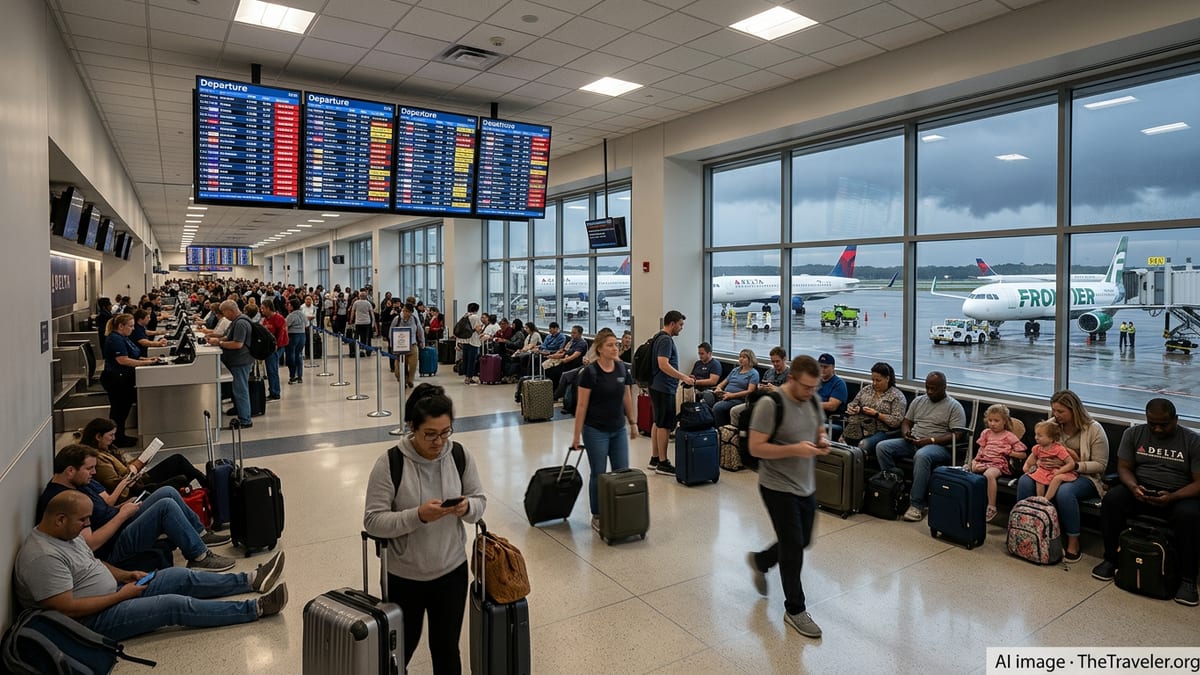
For passengers, the impact typically shows up as rolling departure-time changes on airport information screens, congested gate areas, and longer lines at customer-service counters as airlines work to rebook disrupted travelers on later flights.
How Airlines Manage Storm-Related Returns
When flights such as SKW5107 encounter stronger-than-anticipated storms, flight crews rely on a combination of onboard weather radar, air traffic control advisories, and dispatch guidance to determine whether to continue, divert, or return to the departure airport. Returning to a familiar hub like Denver can simplify maintenance checks and rebooking for passengers compared with diverting to a smaller field with limited facilities.
Aviation safety guidance underscores that convective weather poses multiple challenges, including turbulence, wind shear, lightning, and hail. Modern aircraft and airline procedures are designed to avoid the most intense cells rather than fly through them, which can result in longer routing, fuel considerations, or decisions to delay or abandon a segment entirely when workable paths around storms are not available.
Storm-related returns often mean that aircraft and crews end up out of position for subsequent flights, creating additional knock-on disruptions. Regional jets operating for mainline carriers typically cycle through multiple short segments in a day, so a single unscheduled return can cascade into schedule changes for passengers who never experienced the original weather event.
In the case of SKW5107, the return to Denver fits a broader pattern of tactical weather responses by regional carriers during this summer’s convective season, where maintaining operational safety margins has taken priority over on-time performance metrics.
Passenger Experience and Rebooking Options
Travelers aboard SKW5107 reportedly faced the same challenges familiar to many summer flyers: uncertainty about connection times, questions about hotel accommodations, and limited seat availability on later departures as airlines work close to capacity during peak travel weeks.
Airline customer guidance for weather-related disruptions generally directs passengers to use mobile apps or self-service kiosks to rebook onto the next available flight, while gate agents focus on complex itineraries and travelers with special needs. In high-impact storm periods, carriers sometimes publish travel waivers that allow affected customers to move their trips within a defined date range without change fees, though such waivers typically cover broader regions rather than individual flights.
Social-media and forum posts from recent storm events across the United network describe mixed experiences, with some passengers rebooked quickly and others encountering longer waits for available seats, particularly on routes with limited daily frequencies. Travelers connecting from regional flights like SKW5107 to long-haul services often face the most difficult rebooking scenarios when missed onward flights involve only one daily departure.
Experts in consumer travel advice frequently recommend that passengers build extra connection time into itineraries involving storm-prone hubs and consider earlier departures during the day, when possible, to provide more fallback options if disruptions occur.
Storm Season Outlook for Denver and United Travelers
Forecast discussions for the central United States suggest that active convective patterns are likely to persist through late July and into August, with the potential for more days of scattered thunderstorms near major airports, including Denver. That outlook points to continued schedule volatility for United and other airlines relying on the region’s hubs for domestic and international connections.
Denver’s location on the High Plains means that afternoon and evening thunderstorms are a regular feature of summer, often building quickly as warm, moist air from the south interacts with cooler, drier air from higher terrain. Even when storms remain relatively localized, air traffic managers may adjust arrival and departure flows, temporarily reducing capacity and forcing airlines to prioritize certain flights.
For travelers planning upcoming trips through Denver and other weather-sensitive hubs, publicly available flight trackers and airline mobile apps can provide early warnings of developing delays. Watching for patterns in day-of-travel schedule adjustments, especially in mid to late afternoon, can help passengers anticipate potential disruptions and proactively explore alternate routings.
The experience of United Express flight SKW5107 returning to Denver after encountering storms highlights how quickly conditions can change during the peak of storm season, and how closely airline operations remain tied to the evolving summer weather picture.