


More news on this day
On some of the world’s most competitive long-haul corridors, airlines are quietly retiring widebody aircraft in favor of new single-aisle jets in 2026, reshaping what passengers can expect on flights that stretch well beyond traditional short-haul ranges.
Get the latest news straight to your inbox!
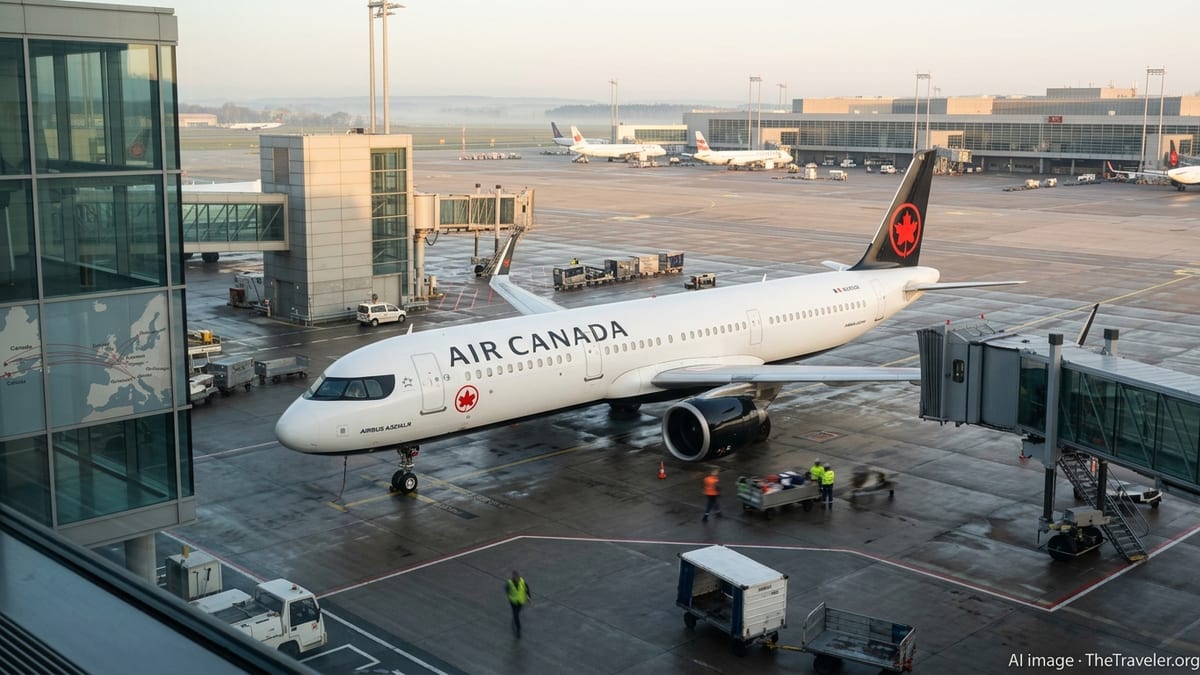
Air Canada Refines Transatlantic Strategy With A321XLR
Among the first movers in 2026 is Air Canada, which is using the Airbus A321XLR to recalibrate parts of its transatlantic network. According to scheduling data and industry reports, the carrier is assigning the long-range narrowbody to routes that previously relied on larger twin-aisle jets, particularly in shoulder seasons when demand softens. The aircraft’s range allows nonstop links comparable to older widebodies, but with fewer seats and lower fuel burn.
On some Europe-bound services from Montreal and Toronto, the A321XLR is being scheduled in place of widebody aircraft for selected days or months, especially on routes with strong but not daily widebody-level demand. Publicly available information indicates that certain A330 and Boeing 787 frequencies are being trimmed or converted to mixed operations, where the A321XLR assumes part of the schedule while widebodies remain on peak days. The shift lets the airline maintain connectivity without the risk of flying half-empty larger jets.
Air Canada has positioned the A321XLR with a two-cabin interior, including a lie-flat business offering intended for overnight and transatlantic sectors. Industry coverage notes that the narrowbody cabins are designed to mimic aspects of the widebody experience, but with a leaner footprint that suits thinner city pairs. For passengers, the change means more consistency in schedule and route availability, though some will experience a narrower fuselage in place of twin-aisle space on flights that can exceed seven hours.
Analysts view Air Canada’s fleet moves as part of a broader trend in 2026, where high-capital widebodies are concentrated on trunk routes and densest bank structures, while A321XLRs backfill secondary city links. That strategy helps preserve network breadth at a time of volatile fuel prices and evolving corporate travel, and it positions the carrier to pivot capacity more quickly than with traditional long-haul aircraft.
Iberia’s Madrid–San Juan Swap Highlights Leisure Market Shift
Across the Atlantic, Iberia is also leaning into narrowbody long-haul on routes that once relied almost entirely on widebodies. Recent schedule changes for the Madrid to San Juan, Puerto Rico service show the Airbus A330-200 giving way on multiple frequencies to the A321XLR in late 2026, according to traveler reports and published coverage referencing booking displays. The change underscores how leisure-heavy markets are becoming early test beds for long-haul single-aisle deployments.
The Madrid–San Juan corridor, historically flown with widebody aircraft to accommodate both passengers and belly cargo, is now seeing a gradual pivot. Industry observers note that select rotations are being reassigned to the A321XLR, creating a mixed-fleet pattern where widebodies operate on the busiest days and narrowbodies cover shoulder periods and off-peak seasons. This allows Iberia to keep the route continuous without committing daily A330 capacity year-round.
For travelers, the most visible change is the cabin environment. Iberia’s long-range A321 configurations are equipped with lie-flat seats in the forward cabin and modern in-flight entertainment, but they lack the twin-aisle spaciousness and larger galleys of widebodies that frequent flyers associate with transatlantic trips. Nonetheless, reports suggest that load factors and yields on these services can be better aligned with demand profiles when a smaller-gauge aircraft is used.
Route analysts point out that San Juan is unlikely to be the only example. They expect the Madrid hub to see more long-haul narrowbody substitutions on mid-size Caribbean and northern Latin American routes as further A321XLRs enter the fleet. The 2026 transition on Madrid–San Juan offers an early case study of how leisure-focused long-haul can be sustained with fewer seats but higher flight frequency.
United Targets Secondary European Cities With Single-Aisle Jets
United Airlines is also rethinking how it serves secondary transatlantic markets in 2026. The carrier has framed its incoming Airbus A321XLR fleet as a tool to maintain and expand service to smaller European cities that previously relied on Boeing 757s or, in some cases, older widebodies. Corporate materials and aviation industry reports describe plans to deploy the type on routes where demand is steady but insufficient to justify a daily Boeing 767 or 787.
Cities such as Split and Bari, which have seen seasonal or limited-frequency widebody operations in past years, are frequently cited by analysts as candidates for upgauging from narrowbody transatlantic operations or downgauging from widebodies, depending on the season. Scheduling projections for summer 2026 indicate that some of these thinner European routes may transition from occasional 767 service to more regular A321XLR flights, preserving nonstop connectivity from United’s U.S. hubs while avoiding the risk of structurally low seat factors on larger jets.
United is fitting its A321XLRs with an all-aisle-access Polaris business cabin and premium-heavy layouts intended to replicate much of the widebody product level on a single aisle. Publicly available information on the interiors highlights features like full-flat seats, enhanced privacy and upgraded inflight entertainment, designed to soften the perception gap between traditional long-haul aircraft and the new narrowbody transatlantic missions.
Industry watchers note that this strategy also frees United’s widebody fleet for higher-volume or ultra-long-haul flying, where twin-aisle economics are harder to replicate. By 2026, the airline’s shift of select secondary European routes from widebodies to the A321XLR illustrates how U.S. network carriers are segmenting their long-haul portfolios more granularly than in the past.
Saudia Rebalances Regional Long-Haul Across Europe And Africa
In the Middle East, Saudia is moving in a similar direction by assigning the Airbus A321XLR to international routes that have long been the domain of widebody jets. Operational plans for 2026 highlighted in aviation trade coverage indicate that the carrier intends to place the long-range narrowbody on select services from Saudi Arabia to European capitals and key points in North and East Africa, some of which have historically been operated by widebody aircraft.
By switching certain rotations from twin-aisle aircraft to the A321XLR, Saudia can maintain or even add frequencies while trimming total seat capacity. Analysts suggest that this is particularly attractive on routes with strong premium demand but fluctuating economy loads, or where bilateral and slot constraints make additional daily widebody flights impractical. The narrowbody’s lower trip cost lets the airline sustain links that might otherwise be candidates for seasonal suspension or down-gauging to shorter-range aircraft with fuel stops.
Saudia’s configuration choices further blur the line between narrowbody and widebody experiences. Industry reports describe a fully lie-flat business cabin on the A321XLR, aimed at frequent business and religious travelers connecting through the kingdom’s hubs. That product positioning allows Saudia to present the shift away from widebodies as an upgrade in some respects, even as the fuselage gets narrower and total seat counts fall.
The redeployment of widebodies released from these routes is expected to support higher-growth long-haul opportunities and religious peak operations. As 2026 schedules develop, observers see the Europe and Africa adjustments as an example of how Gulf and regional carriers can use narrowbody long-haul to fine-tune networks without surrendering international reach.
Leisure And Niche Markets Test The Limits Of Narrowbody Long-Haul
Beyond these headline examples, a wider pattern is emerging across 2026 schedules in which leisure and niche markets become proving grounds for replacing widebodies with long-range narrowbodies. Carriers in Europe, North America and the Middle East are all using aircraft like the A321XLR and high-gross-weight 737 variants to stretch well into ranges that were once a near-exclusive domain of twin-aisle jets. Reports tracking global schedules point to transatlantic sectors exceeding seven hours, as well as missions in the Middle East to South and Southeast Asia, now flown by single-aisle aircraft that substitute for widebodies on selected days or seasons.
The common thread is risk management. Airlines are under pressure to keep emissions and unit costs in check while preserving geographic breadth. Narrowbody long-haul offers a compromise by enabling nonstops with fewer seats, particularly valuable on routes with strong seasonality or fragmented demand patterns. In several cases, published coverage notes that widebodies remain in the market on peak days, but are supplemented or partially replaced by narrowbodies in off-peak periods.
For passengers, the trade-offs in 2026 are nuanced. Many of the new-generation narrowbodies carry upgraded cabins, personal screens and lie-flat seating in premium classes to narrow the comfort gap with traditional long-haul aircraft. At the same time, travelers lose some advantages associated with twin aisles, such as roomier galleys, more spacious feeling cabins and additional lavatories. As more routes quietly transition from widebody to narrowbody service, these comfort and perception issues are likely to become a talking point in traveler forums and airline marketing alike.
Industry analysts expect that the experimentation seen in 2026 will set the pattern for the rest of the decade. The routes where widebodies are quietly giving way to narrowbody long-haul aircraft provide an early map of how airlines intend to balance flexibility, sustainability objectives and competitive pressure, especially on city pairs that sit just on the edge of traditional narrowbody mission profiles.