


More news on this day
More than 1,454 flights across the United States were delayed and at least 102 were canceled as a fresh wave of disruptions rippled through major airports, straining already busy summer travel and leaving passengers facing long lines, missed connections and rapidly changing itineraries.
Get the latest news straight to your inbox!
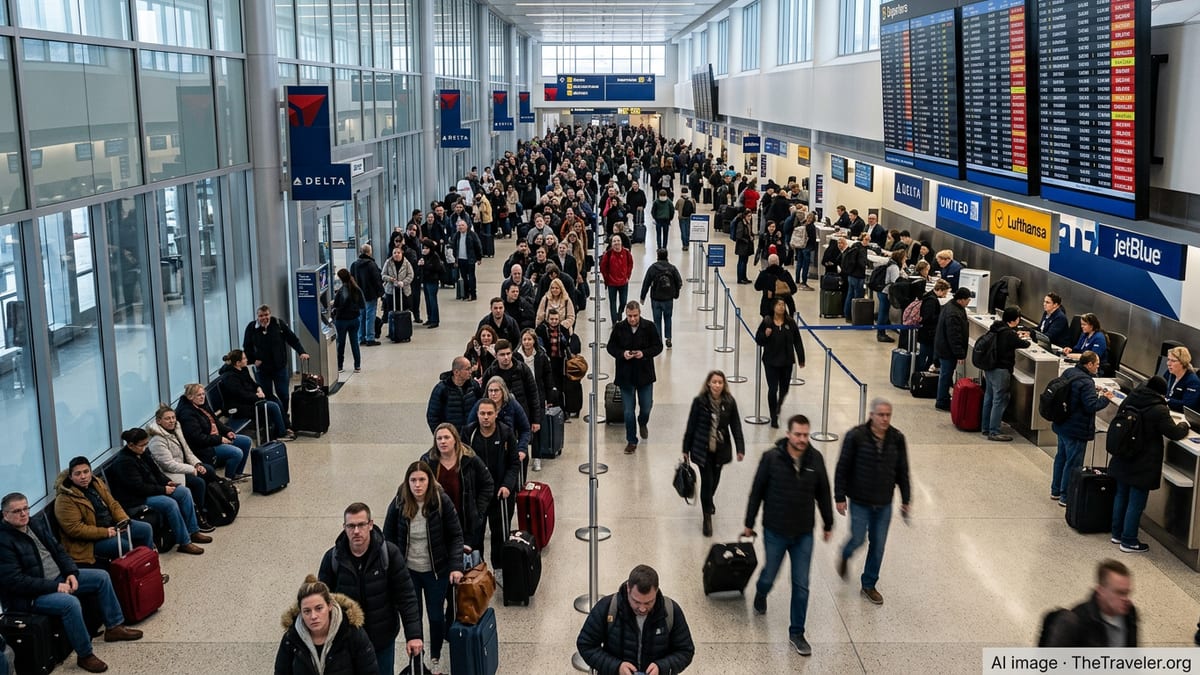
Delays Mount Across Major U.S. Airports
Flight tracking data for Thursday showed more than 1,454 flights within, into or out of the United States running behind schedule, alongside at least 102 cancellations, underscoring how fragile airline operations remain during peak season. The disruptions affected a wide range of carriers and airports, from large coastal hubs to inland connection points.
Airports serving New York City, Chicago, Atlanta and Dallas experienced some of the heaviest operational strain, with rolling delays that built through the day as early timing slips cascaded into later departures. Passengers reported crowded terminals, long waits at customer service desks and challenges rebooking as remaining seats on alternative flights quickly filled.
The latest wave of disruption follows a series of weather and operational events this summer that have repeatedly tested airline schedules. Even when cancellation totals remain relatively modest, the accumulation of delayed flights has created persistent uncertainty for travelers trying to make tight connections or same‑day returns.
Publicly available aviation data indicates that, compared with typical midweek patterns, the share of delayed flights on this day was noticeably elevated, particularly at large hub airports where traffic volumes are already close to or above pre‑pandemic levels.
Weather, Congested Skies and Tight Schedules Converge
Reports indicate that a combination of weather systems, airspace congestion and tightly packed airline schedules contributed to the latest disruptions. Summer thunderstorms and low‑visibility conditions frequently trigger ground stops or flow restrictions at key hubs, which can quickly reverberate through the national network.
When storms force temporary pauses in arrivals and departures, aircraft and crews can end up out of position, and even short suspensions of activity can take hours to unwind. Airlines have limited spare planes and personnel during peak travel periods, meaning there is less flexibility to recover when weather or air traffic control initiatives slow operations.
Industry data and previous federal consumer reports also highlight how high load factors and full flights leave little room to accommodate displaced passengers. When one departure is canceled, there may be few or no open seats on subsequent flights, increasing the likelihood that travelers will be stranded overnight or rerouted through multiple connections.
Operational complexity has further increased as carriers add seasonal routes and densify schedules to meet strong demand. While these additions boost capacity, they can also reduce resilience, since any delay at a hub can ripple into many spokes served by the same aircraft rotations.
Travelers Face Longer Lines and Tight Connections
The immediate impact for passengers has been seen in longer security and check‑in lines, crowded gate areas and heightened anxiety around connections. With so many flights departing late, travelers have reported boarding after scheduled takeoff times, only to sit on the tarmac as congestion or weather restrictions limit movements in and out of busy airports.
Missed connections have become a recurring concern. Passengers on delayed inbound flights often arrive just minutes after their onward flights have closed doors, particularly at large hubs where gate changes and long walking distances are common. Rebooking can be especially challenging for those traveling to smaller regional airports that have only a handful of daily departures.
Travel forums and social media updates show that many passengers have begun adding extra time buffers into their itineraries, including overnight stays at connection points, to guard against last‑minute changes. Others are opting for earlier departures in the day, seeking to reduce the risk that accumulated delays later in the schedule will disrupt their plans.
Families, infrequent travelers and those on time‑sensitive trips such as weddings, cruises or international connections are among the most affected when same‑day recovery options are limited. For these groups, even a single delayed or canceled leg can require substantial changes to hotel bookings, ground transportation and other arrangements.
What the Disruptions Reveal About U.S. Air Travel Resilience
The current pattern of delays and cancellations highlights broader questions about the resilience of the U.S. air travel system. While severe storms and other weather events remain a central factor, consumer advocates and transportation analysts have also pointed to staffing constraints, maintenance bottlenecks and aging air traffic control infrastructure as ongoing challenges.
Recent federal air travel consumer reports have documented episodes in which prolonged tarmac delays, diversion patterns and elevated cancellation rates clustered around the same airports over multiple months. These patterns suggest that certain hubs are especially vulnerable when traffic peaks coincide with adverse conditions.
Published coverage of earlier disruptions has also shown how quickly an isolated event can escalate. A single outage, software issue or extended thunderstorm line can strand crews and aircraft away from their next scheduled flights, triggering rolling delays that may last several days before schedules return to normal.
As airlines continue to rebuild and expand networks, the balance between maximizing capacity and maintaining operational cushions remains a central focus for industry observers. The latest count of more than 1,454 delayed flights and over 100 cancellations serves as another reminder that even routine midweek travel can be significantly affected when multiple stress points align.