


More news on this day
Passengers at Boise’s Gowen Field Airport faced a frustrating start to the weekend as a string of delays and cancellations involving Horizon Air, SkyWest, Southwest Airlines, United Airlines and other carriers disrupted travel on key routes linking Boise with Seattle, Denver, Dallas and Salt Lake City.
Get the latest news straight to your inbox!
Operational Disruptions Ripple Across Western Network
Publicly available flight-tracking data and airport status boards on Saturday indicated that Boise Airport was contending with a cluster of 18 delayed flights and three outright cancellations affecting multiple carriers that operate under the Horizon Air, SkyWest, Southwest Airlines and United Airlines brands. The disruptions concentrated on short and medium haul services, including key connectors to Seattle, Denver, Dallas and Salt Lake City that many travelers rely on for onward connections.
The pattern at Boise mirrors a broader uptick in operational strain seen at several U.S. airports this week, where tight aircraft and crew rotations have left little room to absorb late-arriving aircraft, weather constraints en route or congestion at larger hubs. When combined, those factors can quickly cascade into knock-on delays for regional departures from airports such as Boise, even when local conditions appear routine.
Horizon Air and SkyWest, which both operate large portfolios of regional flights under major airline brands, play a central role in Boise’s connectivity to western hubs. Delays on those regional links can cause passengers to miss tightly timed connections to long-haul services, prompting rebookings and, in some cases, same-day cancellations when schedules can no longer be recovered.
Southwest and United, which serve Boise with a mix of point-to-point and hub-feeding routes, were also among the carriers recording schedule changes on Saturday, according to real-time status services that aggregate airline and Federal Aviation Administration data feeds. While most flights continued to operate, altered departure times and gate changes contributed to congestion in the terminal and uncertainty for travelers.
Passengers Face Missed Connections and Overnight Stays
The disruptions at Gowen Field had an immediate impact on passenger itineraries, particularly for those relying on Boise as the starting point for multi-leg journeys across the United States. With 18 flights recorded as delayed, travelers reported extended waits at departure gates, shifting departure estimates and difficulty securing timely alternative routing when their original connections were no longer viable.
Flights linking Boise with Seattle and Denver appeared to be among the most heavily affected within the regional network. Those routes serve as primary gateways to the broader domestic and international systems of the major airlines that contract with Horizon and SkyWest. When departures out of Boise left late, some travelers arriving at hub airports found that onward flights had already boarded or departed, resulting in missed connections and rebookings onto later services.
Dallas and Salt Lake City services also experienced schedule pressure. Both cities function as major connecting points in their respective airline networks, and delays on Boise departures can quickly translate into overnight stays for passengers facing limited late-evening options onward to smaller markets. With three cancellations recorded, some travelers were left with no same-day alternatives from Boise and had to rely on hotel accommodation or accept rerouting on next-day flights.
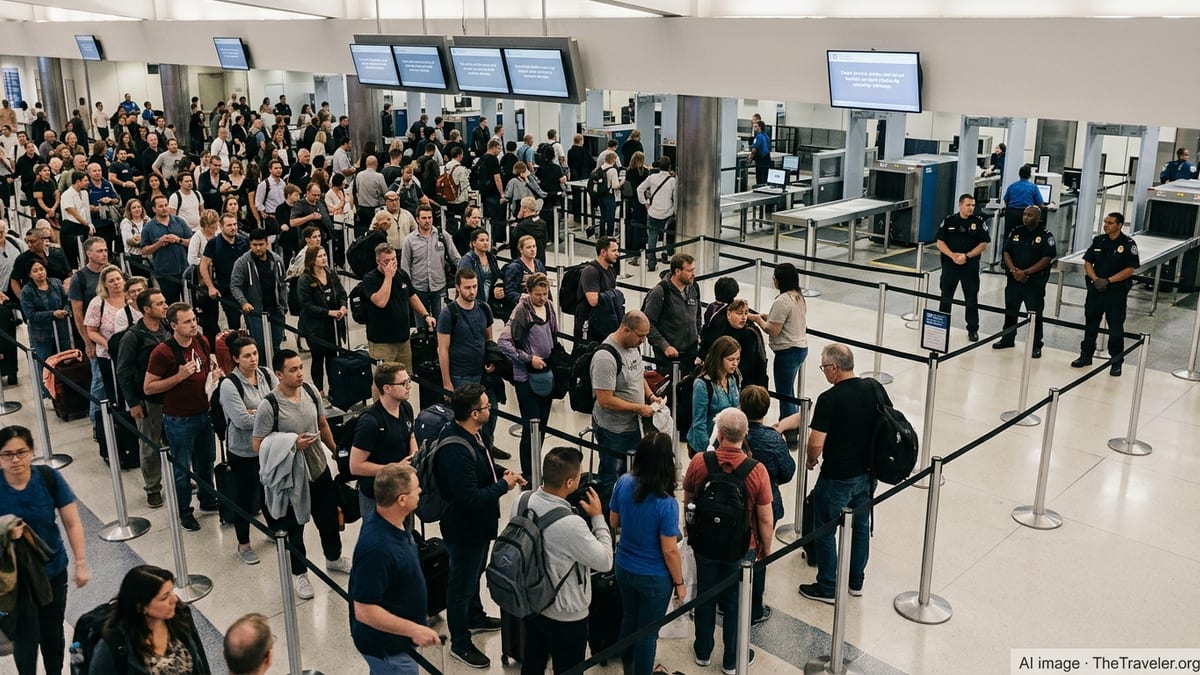
Terminal activity at Boise remained steady through the disruptions, with busy check-in counters and boarding areas reflecting the effort by carriers to re-accommodate disrupted passengers. Publicly available images and accounts from recent days at other U.S. airports experiencing similar issues suggest that even modest clusters of delays can produce long lines at customer service desks and strain limited seating areas near departure gates.
Weather, Staffing and Tight Schedules Under Scrutiny
Although specific causes for the cluster of delays and cancellations at Gowen Field on Saturday varied by carrier and route, analysts point to a familiar mix of contributing factors across the U.S. system. Tight crew scheduling, limited spare aircraft, en route weather and traffic management programs at large hubs can all feed into reduced on-time performance for smaller airports such as Boise.
Recent coverage from multiple U.S. markets has highlighted how quickly staffing challenges and air traffic control constraints can escalate into widespread delays. In some cases, the Federal Aviation Administration has implemented traffic management initiatives at busy hubs, which can slow the flow of arrivals and departures and force regional flights to hold or depart later than planned. When these restrictions occur at airports that sit at the center of a carrier’s network, ripple effects can stretch for hundreds of miles.
Industry data compiled by federal transportation agencies for recent months also shows that airlines are operating in a high-demand environment, with many routes flying near capacity. While that has supported strong passenger volumes through airports like Boise, it has also left little margin to absorb unexpected operational issues. When a flight cancels, it can be difficult to find empty seats on alternative services the same day, particularly on popular weekend departures.
Regional operators such as Horizon Air and SkyWest, which link smaller markets into the larger networks of major airlines, face particular pressure during such events. Their aircraft and crews are tightly scheduled to maintain frequent service on shorter routes. When a single leg suffers a substantial delay, subsequent sectors can be affected, leading in some cases to last-minute cancellations when crew duty time limits or late-arriving aircraft make a turnaround infeasible.
Boise’s Role as a Regional Connector Amplifies Impact
Boise’s Gowen Field Airport has grown steadily in recent years as a regional connector for Idaho and neighboring states, with a network heavily oriented toward flights to major western hubs such as Seattle, Denver and Salt Lake City. Publicly available airport and schedule data indicate that carriers like Horizon Air and SkyWest handle a substantial share of Boise’s traffic through their code-sharing arrangements with larger airlines.
This role magnifies the impact when even a relatively small number of flights run late or are canceled. Travelers departing from Boise often rely on one or two key daily departures to reach their connecting hub in time for national or international services. When those departures slip or are removed from the schedule for the day, affected passengers can find that the next available options leave them arriving at their final destination many hours later than planned.
Boise’s physical layout and scale, while generally regarded as convenient for routine travel, can also concentrate the effects of disruptions. With a limited number of gates and fewer redundant services compared with major coastal airports, gate holds and aircraft waiting for clearance can quickly translate into crowded boarding areas and backlogged ground handling operations.
Despite these challenges, Boise has historically been viewed as a manageable and efficient airport for most travelers. Industry statistics for recent years have placed several of the regional carriers serving the city among the stronger performers on on-time departures. Periodic clusters of disruptions, such as those seen this weekend, underscore how dependent regional airports remain on the broader health and resilience of the national air traffic system.
What Travelers Can Do During Disruptions
While passengers at Gowen Field on Saturday had limited control over the immediate causes of the delays and cancellations, industry guidance and past experience across the U.S. network offer several practical steps for coping with similar events. Travel experts generally recommend monitoring flight status frequently through airline channels and independent trackers, especially on days when reports indicate elevated delays at major hubs.
Passengers connecting through hubs such as Seattle, Denver, Dallas or Salt Lake City may benefit from longer planned connection times, particularly during peak travel seasons or periods of unsettled weather. Building extra time into itineraries can provide a buffer if a first-leg flight from Boise departs behind schedule, reducing the risk of missed onward flights.
In disruption scenarios involving multiple carriers, travelers are also encouraged to familiarize themselves with airline rebooking policies and any available travel alerts or waivers. When significant operational issues arise, airlines sometimes allow passengers to switch to alternative flights or dates without additional change fees. According to public guidance from consumer advocates and transportation agencies, passengers may also have certain rights to refunds when a flight is canceled and they choose not to travel.
Saturday’s events at Gowen Field illustrate how quickly routine travel days can be upended even at mid-sized regional airports. As airlines and regulators review performance data from the latest round of disruptions, attention is likely to focus on how to build more resilience into tight schedules so that isolated issues at busy hubs translate into fewer stranded passengers in cities like Boise.