


Finnish Lapland is a dreamscape of fells, frozen forests, and summer nights that never get dark. Yet your experience can vary dramatically depending on where you go. Two very different options sit a few hours apart: Aavasaksa, a quiet hilltop overlooking the Tornio River Valley, and Levi, Finland’s largest and liveliest ski resort. Choosing between them is less about which is better and more about which fits your travel style. Here is how they really compare on the ground, with concrete examples to help you decide.
Get the latest updates straight to your inbox!
Getting There: How Remote Do You Want Your Lapland?
Levi is built for easy access. Most international visitors fly into Kittilä Airport, which in winter has direct seasonal flights from cities like London, Manchester, and several European hubs, plus connections via Helsinki. From Kittilä it is about a 15–20 minute taxi or shuttle ride to Levi village, so you can realistically land in the afternoon and be on the slopes the same evening. In peak winter, shared airport buses run frequently and cost roughly what you would expect for a short regional transfer in the Nordics, often comparable to a mid-range taxi ride in a European city.
Aavasaksa, by contrast, feels like stepping off the main tourist map. The nearest bigger gateway is usually Rovaniemi or Kemi-Tornio, both reachable by train from Helsinki. From Rovaniemi, many travelers rent a car and drive about three hours northwest to Ylitornio and then up the hill to Aavasaksa. Public transport is possible but slower, typically involving a train or long-distance bus plus a regional bus or taxi for the final stretch. This extra effort is part of the appeal: when you arrive on the hill, you understand quickly why there are no crowds.
If you value stress-free logistics and minimal transfers, Levi clearly has the edge. Families with children, first-time winter travelers to the Arctic, and short-break visitors often choose Levi specifically because they can avoid long winter driving in the dark. If you are comfortable hiring a car, enjoy scenic road trips and are happy to navigate snowy highways, then getting to Aavasaksa adds to the adventure and puts you in a far quieter corner of Lapland.
Timing also matters. In deep winter, the roads to Aavasaksa are well maintained, but temperatures can drop well below freezing and visibility can change quickly. Levi’s short transfer from Kittilä means less time on potentially icy roads, which is worth considering if you are not used to winter driving but still want an Arctic holiday.
Landscape and Atmosphere: Resort Buzz vs Hilltop Silence
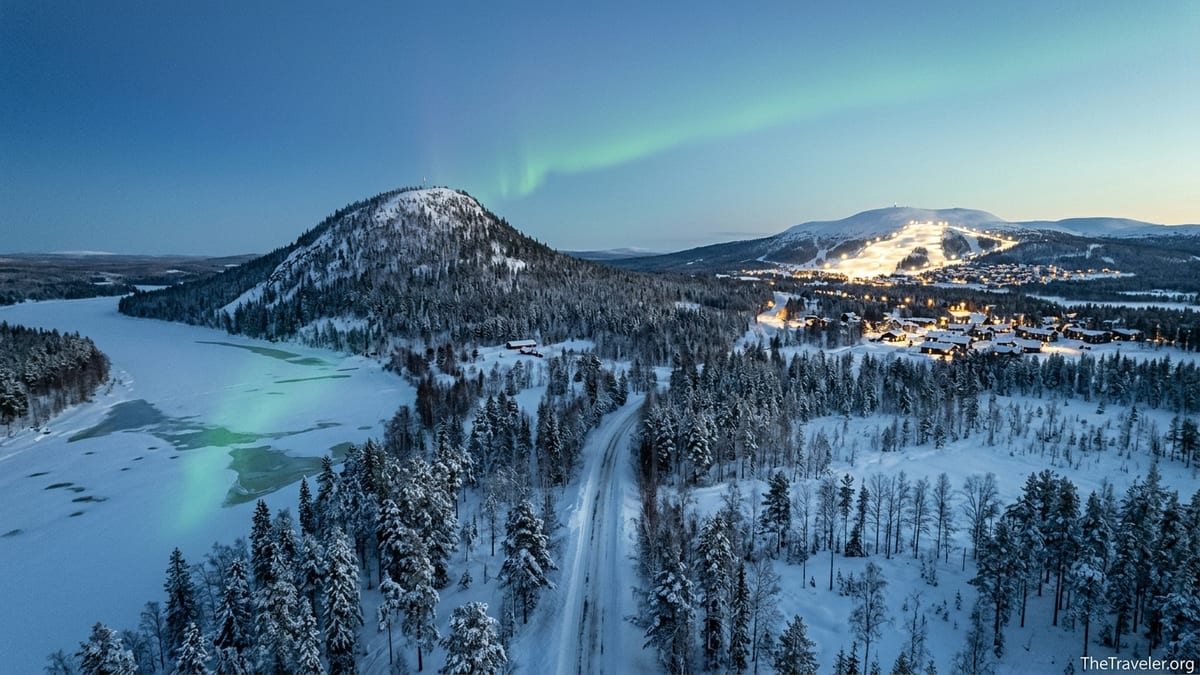
Levi is a classic fell resort shaped by ski lifts, hotels, and a compact village of bars, restaurants, and shops. The main fell rises above the village, its slopes lit in winter evenings, giving the whole place an Alpine feel on a smaller Finnish scale. In winter, the atmosphere is energetic: you will hear multiple languages in the supermarkets, see ski buses looping around, and find apres-ski terraces playing music in the late afternoon. Even in summer, hiking and biking trails are busy enough that you rarely feel alone on the mountain.
Aavasaksa is the opposite: a single sharp-edged hill rising above the Tornio River Valley, surrounded by forest and small villages rather than a developed resort. The summit area has viewing platforms, a café or seasonal services depending on the time of year, and a smattering of accommodation nearby, but after the tour buses leave it is often just you, the wind, and the vast view over Finland and Sweden. In early summer, you might stand on the hilltop at midnight and see the sun hanging low but never setting, with almost no other people around.
If you picture Lapland as wilderness and silence, with only the crunch of snow under your boots, Aavasaksa delivers that feeling far more consistently. You might stay in a simple riverside cottage in Ylitornio, drive up to the hill in the evening, and have the lookout nearly to yourself. On a clear winter night, you could watch the northern lights dance over a dark valley without the glare of a ski village below.
On the other hand, if your ideal Lapland evening includes walking to a different restaurant every night, browsing gear shops, or dropping into a bar with live music, Levi aligns better with your expectations. Picture finishing your ski day, hopping into a supermarket that stocks everything from cloudberry jam to international snacks, then choosing between a Lappish grill house, a pizza place, or a more upscale Nordic bistro for dinner. The trade-off is that you rarely have the fell to yourself.
Winter Activities: High-Energy Resort or Quiet Snow Country
In winter, Levi behaves like a full-scale ski and activity hub. The resort offers over forty marked slopes and more than two dozen lifts, including a gondola and chairlifts, plus hundreds of kilometers of maintained cross-country ski tracks and marked snowmobile routes. You can rent downhill skis, snowboards, fat bikes, and snowshoes directly in the village, often within a few minutes walk of most hotels and cabins. A typical day for an active visitor might start with a few hours on the slopes, followed by a guided husky safari in the afternoon and a northern lights snowshoe tour in the evening.
Levi’s activity companies bundle packages geared to different styles. For example, a family might book a two-hour reindeer sleigh ride, including hot berry juice by a campfire, while a group of friends could opt for an evening snowmobile tour across the fells, with all winter clothing provided: insulated overalls, boots, mittens, and helmets. It is common to see visitors who have brought almost no technical clothing beyond base layers, relying instead on rental outerwear from local tour operators and hotels.
Aavasaksa has far fewer commercial activities but more unstructured snow country. Here, winter travel typically involves self-guided exploration: snowshoeing in the forest around the hill, cross-country skiing on local trails if they are maintained that season, and simply walking up to the viewpoints to watch the low Arctic sun or the northern lights. There may be local operators offering smaller-scale experiences, such as reindeer farm visits or snowmobile excursions, but they operate at a quieter, more community-based level than in Levi.
This makes Aavasaksa appealing for travelers who already enjoy winter outdoor activities and do not need a packaged program for every day. For example, an experienced cross-country skier might stay in a rented cabin for a week, using the hill as a daily viewpoint and spending the rest of the time exploring nearby river ice, frozen forests, and village tracks. Evenings are likely to revolve around cooking in your accommodation and watching the sky for auroras rather than scheduled excursions.
Summer and Shoulder Seasons: Midnight Sun vs Year-Round Resort
Levi’s summer season has grown quickly. The fell becomes a bike park with downhill and enduro trails, serviced by lifts that carry mountain bikes up the slope. Hikers can follow marked routes to viewpoints and nearby fells, and the resort’s adventure park adds zip lines and rope courses. In July, events such as outdoor festivals and biking weekends draw Finnish and international visitors. It is entirely possible to spend a summer week in Levi without a car, using lifts, rental bikes, and organized excursions to lakes and rivers.
In practical terms, a summer visitor to Levi might buy a day ticket for the lifts, rent a full-suspension mountain bike from a village shop, and spend hours riding flow trails, then finish the day at a lakeside sauna. Another traveler might book a guided midnight sun hike, walking under orange skies at 1 a.m. and returning to a hotel that feels as busy as a small Alpine town in July. Cafés and restaurants stay open late, and supermarkets remain well stocked for self-caterers in apartments.
Aavasaksa, meanwhile, is a classic midnight sun and scenic viewpoint destination. In early summer, visitors drive or hike up the hill to watch the sun skim along the horizon without setting. This is a traditional viewpoint in Finland for observing the phenomenon, and on clear evenings locals from nearby villages may arrive with thermos flasks and cameras. Daytimes lend themselves to gentle hikes in the surrounding forest, berry picking in late summer, and fishing or paddling on the Tornio River below.
In the quieter shoulder seasons, such as late September or early October, Aavasaksa can feel almost entirely yours. The birch trees turn yellow, the air becomes crisp, and the chances of northern lights increase on darkening nights. Levi is still attractive at this time, with autumn hiking and early-season events, but many visitors are already thinking ahead to the ski season. If your main interests are foliage, photography, and tranquil walks, Aavasaksa’s low-key infrastructure means you stay close to nature and far from resort-style noise.
Budget and Accommodation: Cottages, Cabins, and What You Get for Your Money
Levi offers the full spectrum of tourist accommodation: ski-in ski-out hotels, apartment complexes, glass-roofed aurora cabins, traditional log chalets with private saunas, and more basic hostel-style beds. Pricing fluctuates widely with season. During Christmas and New Year, a central hotel room can cost as much as upscale city accommodation in Western Europe, whereas in April or early summer you might find modern self-catered apartments at far more modest nightly rates. Package deals from tour operators sometimes include flights, transfers, accommodation, and a handful of activities, which can make budgeting simpler for first-time visitors.
Spending power in Levi goes beyond lodging. Dining out typically costs more than in southern Finland due to location and seasonality, but the variety of restaurants means you can choose your level. A casual dinner of pizza or burgers might cost similar to a mid-range meal in a Nordic city, while a higher-end Arctic tasting menu will naturally push the budget up. Self-catering is popular: many cabins include fully equipped kitchens and private saunas, and supermarkets in Levi village carry everything from fresh produce to specialty Lapland ingredients like smoked reindeer and Arctic char.
Aavasaksa and the Ylitornio area lean toward cottage and small-guesthouse stays rather than large hotels. You are more likely to find traditional wooden cabins on or near the river, with basic but cozy interiors, wood-burning stoves, and often private saunas. Nightly prices can be noticeably lower than in Levi during peak season, especially if you travel outside Christmas and school holiday weeks. However, you may need a car, as services like large supermarkets, fuel stations, and restaurants are spread across small villages rather than concentrated in a resort center.
The trade-off is value in space and atmosphere. For what you might pay for a compact hotel room in Levi over Christmas, you could potentially rent a whole cottage near Aavasaksa outside those peak dates, with river views and direct access to forest trails. But you will not find the convenience of ski lifts at your doorstep, nor a queue of tour companies ready to pick you up. Your budget decision therefore doubles as a decision about independence versus packaged convenience.
Travel Style Match: Who Belongs in Aavasaksa and Who Thrives in Levi
Consider Levi if you love the idea of a full-service mountain resort where everything is organized for you. It suits travelers who want a busy program: downhill skiing by day, guided husky safaris, reindeer visits, and northern lights hunting by night. Families with children often appreciate the smooth logistics: easy airport transfers, clear meeting points for activities, and rental clothing that simplifies packing. Social travelers and groups of friends also thrive here, enjoying apres-ski bars, nightclub options, and the chance to meet others on the slopes or in tour groups.
Levi is also a practical choice for first-time Arctic visitors worried about extreme cold and darkness. Streetlights, heated indoor walkways in some complexes, and well-marked trails reduce the sense of isolation. If temperatures drop severely on a given day, you can retreat to cafés, indoor play areas, or spa facilities without feeling that your entire trip is wasted. In this way, Levi acts as a gentle introduction to Lapland, combining real winter landscapes with modern resort infrastructure.
Aavasaksa, on the other hand, rewards travelers who value stillness and authenticity over amenities. Photographers, writers, and nature lovers might base themselves in a riverside cabin and treat the hilltop as a recurring subject, catching it under sunrise, midday blue light, and auroras. Couples seeking privacy can spend their evenings in a private sauna and their nights watching the sky from a dark yard rather than sharing space with bus tours.
Experienced outdoors enthusiasts who are comfortable planning their own routes, checking weather forecasts, and carrying suitable clothing will find Aavasaksa a playground of subtle experiences rather than obvious attractions. Instead of booking a northern lights tour, you might simply step outside your cottage at midnight to check the sky. Instead of renting a fat bike on a marked resort trail, you might strap on snowshoes and wander into the forest, listening to the snow-laden trees creak in the cold. The reward is an intimacy with Lapland that is harder to achieve in a large resort.
The Takeaway
The choice between Aavasaksa and Levi is less a question of which destination is better and more a matter of what kind of Lapland you are seeking. Levi offers a refined, highly organized resort experience: many slopes, abundant tours, lively nightlife, and simple access via Kittilä Airport. It is designed to make the Arctic straightforward and fun, even if you have never seen real snow before or do not own winter clothing.
Aavasaksa provides almost the opposite: a sharp-edged hill in a quiet corner of Lapland, famous for its views over the Tornio River Valley and its long history as a midnight sun lookout. Here, the draw is not a list of paid activities but the feeling of being almost alone under a huge sky, whether lit by the midnight sun in June or by the northern lights in January. You trade convenience for solitude, ski lifts for forest trails, and restaurant districts for home-cooked meals in a warm cottage.
If your ideal holiday centers on skiing, ready-made excursions and evenings out, Levi will likely fit your travel style better. If, instead, you dream of silence, self-guided days and long moments watching the sky change color, Aavasaksa may be your Lapland. Many travelers eventually experience both in separate trips, starting with Levi for an easy introduction and later seeking out Aavasaksa when they are ready for a slower, more personal relationship with the Arctic north.
FAQ
Q1. Is Aavasaksa or Levi better for seeing the northern lights?
Levi offers many guided aurora tours and easy access to dark areas just outside the village, which is convenient for first-time visitors. Aavasaksa can be even darker and quieter, with excellent hilltop views, but you must organize everything yourself and be prepared to monitor the forecasts and drive or walk to good viewpoints.
Q2. Which destination is more suitable for families with young children?
Levi is generally more family friendly because of its short airport transfer, wide range of beginner ski slopes, children’s play areas, and packaged winter activities that include clothing and equipment. Aavasaksa suits families who are comfortable self-catering, driving in winter and creating their own daily program without resort-style facilities.
Q3. Do I need a rental car in Levi or Aavasaksa?
In Levi, you can manage without a car if you stay near the village center, as many hotels, lifts, and activity providers are within walking distance and tours include pick up. In Aavasaksa, a car is highly recommended, especially in winter, because services and viewpoints are spread across the Ylitornio area and public transport is limited.
Q4. Is either destination suitable for travelers who do not ski?
Yes. Levi has many non-ski activities such as husky safaris, reindeer sled rides, snowshoe tours, spa visits, and northern lights excursions, so you can easily fill a week without skiing. In Aavasaksa, non skiers can enjoy winter walks, photography, stargazing and quiet time in a cottage, but there are fewer organized alternatives if the weather turns difficult.
Q5. How do prices compare between Aavasaksa and Levi?
Levi, as Finland’s largest ski resort, usually commands higher prices during peak winter weeks for accommodation, dining out, and activities. Aavasaksa and nearby villages often offer more modest rates for cabins and guesthouses, especially outside holidays, but you may spend more on car rental and fuel because services are spread out.
Q6. When is the best time of year to visit Levi?
For skiing and classic winter experiences, many travelers choose late January to mid March, when snow conditions are usually reliable and daytime light is longer than in December. If you prefer milder temperatures and a quieter atmosphere, April can be attractive, while summer from June to August is ideal for hiking, biking and midnight sun experiences.
Q7. When is the best time to visit Aavasaksa?
For midnight sun and long, bright nights, late June and early July are ideal, when the sun barely dips below the horizon. For northern lights, darker months from roughly September to March work best, with clear, cold nights in midwinter offering some of the most dramatic displays if the solar activity is favorable.
Q8. Which destination feels more authentic or local?
Levi, despite being a major resort, still reflects local culture, but its center is very tourism focused and busy in winter. Aavasaksa sits within a quieter river valley community where everyday life continues around a modest tourism scene, so interactions may feel more like visiting a small Finnish town than a purpose built holiday village.
Q9. Can I combine Aavasaksa and Levi in one trip?
Yes, if you are willing to drive a few hours between them or plan your route via Rovaniemi or other Lapland towns. Some travelers begin with several nights in Levi to enjoy ski resort comforts, then move to a cottage near Aavasaksa for a slower, more contemplative finale with views over the Tornio River Valley and, in season, the midnight sun or auroras.
Q10. Which destination is better for a quiet romantic getaway?
Aavasaksa usually wins for pure quiet and privacy, especially if you book a standalone riverside cabin with a private sauna and spend evenings watching the sky from your porch. Levi can also be romantic, particularly if you choose a secluded chalet outside the village center, but the general atmosphere is more animated and resort like, especially in peak winter weeks.