


High above the Torne River Valley in Finnish Lapland, the forested hill of Aavasaksa has quietly watched over traders, explorers and solstice pilgrims for centuries. Officially listed as one of Finland’s national landscapes and part of a UNESCO World Heritage chain, it offers sweeping river views, midnight sun vistas and rich cultural history. Yet compared with big‑name Lapland resorts, Aavasaksa still flies under the radar, making it one of the country’s most rewarding and overlooked scenic destinations.
Get the latest updates straight to your inbox!
A Hill With Big Scenery and Almost No Crowds
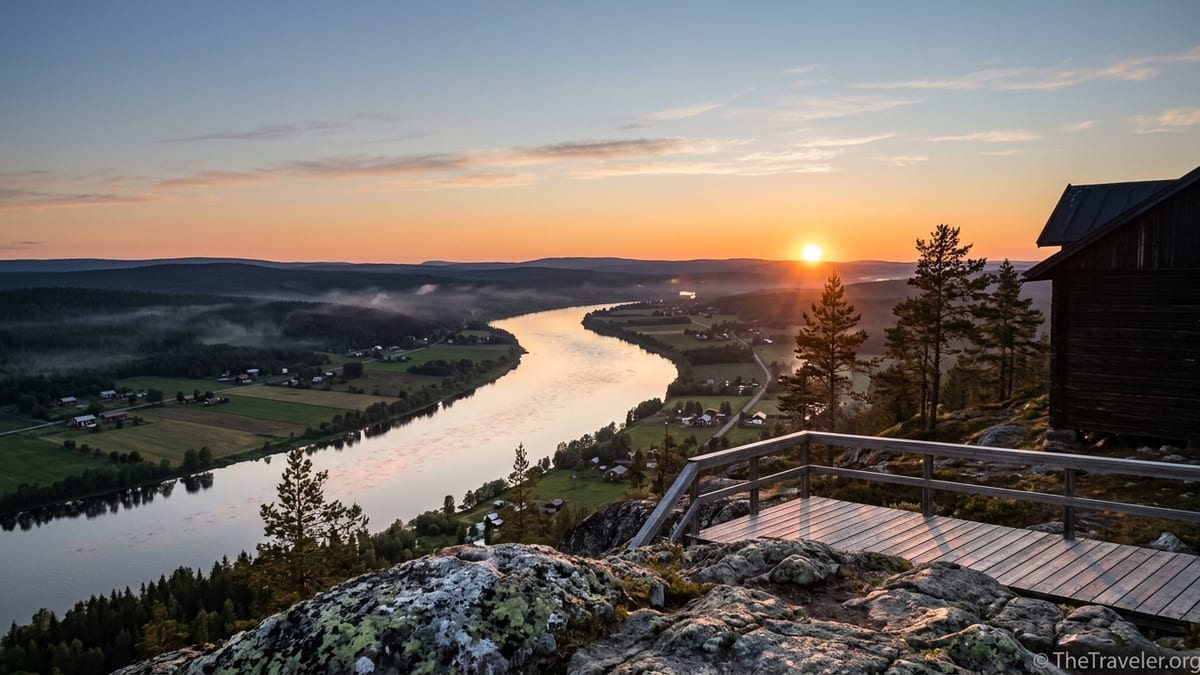
Aavasaksa rises to around 242 meters above sea level in the municipality of Ylitornio, close to the Swedish border. The surroundings are mostly low, flat river country, so the hill feels much higher than the numbers suggest. From the open rock slabs and wooden decks at the summit, the Torne River glitters far below, snaking between Finland on one bank and Sweden on the other, while smaller rivers like the Tengeliönjoki loop through dense spruce and pine forests. On clear days you can see far into both countries, with patchwork fields, village church spires and distant fells layered along the horizon.
What makes Aavasaksa special is how quiet it remains. In summer, popular Lapland viewpoints such as Pyhä or Levi often host tour buses, guided groups and zip‑line crowds. At Aavasaksa, you might share the sunset with a handful of local families grilling sausages at a shelter, a couple of road‑trippers who followed a small brown “Aavasaksa” sign off Highway 21, and maybe a lone camper van parked in the forest clearing. Even at Midsummer, when Finns flock here to watch the nightless night, it feels more like a village festival than a mass tourism event.
The sense of space is amplified by the layout of the crown park on the hilltop. Observation platforms, picnic tables and fire pits are scattered among natural rock outcrops and lichen‑covered pines rather than grouped into one fenced‑off terrace. You can easily wander a few hundred meters from the main lookout to find your own quiet corner of the cliff, where the only sounds are wind in the treetops, the distant murmur of the river and the soft clink of reindeer bells somewhere down in the valley.
National Landscape, World Heritage Hill
Aavasaksa is officially recognized as one of Finland’s 27 national landscapes, a list chosen to represent the country’s most iconic and culturally important views. Here that status is not just about pretty scenery. For centuries, this hill has been a reference point for science, navigation and the mapping of the north. In the 1730s, French scientist Pierre Louis Maupertuis used Aavasaksa as one of his main observation points while measuring the shape of the Earth along the Torne Valley. Later, the same ridge became part of the Struve Geodetic Arc, a chain of survey points stretching over 2,800 kilometers from the Black Sea to the Arctic that helped define the size of the planet with remarkable precision.
Today, the Struve Arc is a UNESCO World Heritage Site, and Aavasaksa is one of the few stations accessible without serious hiking or mountaineering. At the summit area, near a modern wooden observation tower, a modest monument marks the historical measurement spot. The marker itself is simple, but standing there with the broad valley spread below gives a real sense of why surveyors chose this hill. For science‑minded travelers or families with school‑age kids, walking between the viewpoint and the monument turns into an easy, tangible lesson about how people once measured the world using nothing but angles, stars and distant peaks.
For Finnish visitors, Aavasaksa is also steeped in cultural memory. From the 19th century onward it appeared in travel accounts and paintings as a northern gateway, where the low farmlands of the south give way to the wilder landscapes of Lapland. In the 1990s, the Finnish Environment Ministry invested in restoring the crown park buildings and trails, reinforcing the site’s dual identity as both a protected landscape and a living, accessible recreation area for locals and visitors. Yet despite these layers of recognition, it somehow avoided developing into a crowded resort, preserving its low‑key, almost nostalgic atmosphere.
Experiencing the Midnight Sun Without the Hype
Aavasaksa sits roughly on the latitude often described as the southern edge of Finland’s true midnight sun. In practice, this means that around the summer solstice, roughly from late June into early July depending on the year, the sun either skims the horizon without setting or dips only briefly below the tree line while the sky remains bright. Because the hill stands higher than the surrounding terrain, you often get a clearer view of the sun’s low arc than you would from the flat riverside villages, even when the official tables say sunset occurs.
On a typical June evening, you might start your climb or drive up the hill around 10 pm. The light becomes warm and golden, turning the Torne River into a ribbon of brass and lighting up the whitewashed farmhouses and red barns along its banks. By midnight, the sun slides just above the northern horizon, casting impossibly long shadows from the scattered pines and the ImperiaI Lodge. The air cools sharply, but the sky stays a soft blue instead of darkening to black. Locals sometimes bring thermoses of coffee, folding chairs and even small portable grills to the summit, settling in for hours of quiet conversation while children clamber over the rocks without ever needing a flashlight.
Compared with famous midnight sun points further north, like the slopes above Rovaniemi or the fjord viewpoints in Norway, there is very little infrastructure aimed at selling you the moment. No organized midnight sun safaris are required here. You drive up, park in the gravel lot, follow a short path past a log shelter and wooden stairs, and the view opens suddenly in front of you. The experience feels more intimate, especially when low cloud or river mist add subtle pastel tones to the sky. On cooler nights you may have the entire main deck almost to yourself, watching the sun hover and then slowly climb again as birds begin their early‑morning calls far below.
Practical details remain pleasantly simple. If you are staying at a riverside cottage or small guesthouse in Ylitornio, such as family‑run log cabin complexes with saunas and boat rentals along the Torne, you can easily time your visit according to the local weather forecast rather than a booked tour schedule. Many travelers pair a late‑night visit with a relaxed sauna session and quick dip in the river earlier in the evening, turning the whole night into a Finnish ritual of heat, cold and endless light.
Hikes, Viewpoint Trails and Everyday Nature
Although Aavasaksa is often visited as a simple drive‑up viewpoint, it rewards anyone who slows down to explore the forest paths and nature trails that loop around the hill. One of the most popular options is the marked viewpoint trail that climbs gently from the lower parking area through mixed spruce, birch and pine woods to the open crown park. The route is short enough that local parents routinely walk it with school‑age children, but the changing terrain makes it feel like a real mini‑hike, with boardwalk sections over damp ground, rocky steps and occasional side tracks leading to quiet ledges overlooking the Tengeliönjoki River.
In summer, the undergrowth along the trail is full of bilberry and lingonberry bushes, and by late July you may find locals stopping every few meters to pick a handful of ripe berries straight into their mouths. The forest floor is thick with bright green moss and soft white reindeer lichen, especially in the slightly higher, drier sections of the ridge. Because Aavasaksa lies just south of the core reindeer herding region, you occasionally glimpse small groups of semi‑wild animals wandering on the access roads or grazing in clearings below the viewpoint, a reminder that you are already at the cultural edge of Lapland.
Outside the peak light season, Aavasaksa becomes a distinctly local outdoor playground. In September and early October, the hillside birches flare yellow and the low blueberry shrubs turn deep red, making this one of the most atmospheric spots in the Torne Valley for photographing autumn colors without having to trek deep into the wilderness. Many residents of Ylitornio come up after work with thermos coffee to watch mist rising off the river as the sun sets behind the Swedish side. In winter, when the road is maintained but the facilities are quieter, locals use the slopes for sledding, snowshoe walks and occasional backcountry skiing, especially on days when clear skies promise long views over a white, frozen landscape.
History in the Pines: From Imperial Dreams to Rustic Cabins
Hidden among the trees at the summit is one of Aavasaksa’s most curious structures: the wooden Imperial Lodge, known locally as Keisarinmaja. The building looks like a small hunting castle perched above the river, with steep gables, decorative trim and a veranda facing the valley. Construction started in the 19th century in anticipation of a possible visit by Tsar Alexander II of Russia, who never actually made the trip. The lodge instead became a symbol of unrealized imperial ambition at the fringe of the empire, a romantic relic of an era when the exotic far north fascinated courts and scientists across Europe.
These days, the lodge is typically open only during the summer season for limited events and small exhibitions, and at other times it is simply admired from the outside as part of the hill’s silhouette. The surrounding crown park buildings, including older log cabins, shelters and storerooms, tell a quieter story of early tourism in Lapland. In the late 1800s and early 1900s, visiting Aavasaksa to see the midnight sun was already fashionable among educated Europeans traveling via Tornio, long before charter flights and Instagram reels existed.
If you walk the short loop paths that connect the lodge, the observation tower and the picnic shelters, you will notice small details that speak to this layered history: stone steps carved into the rock, old boundary markers near the tree line and commemorative plaques describing Maupertuis’ measurements and early visitors who scratched their names into the stones. For travelers used to heavily packaged historical experiences, Aavasaksa’s low‑key interpretation panels and mostly unguarded monuments feel refreshingly trusting and authentic.
Slow Travel on the Torne Valley Route
One reason Aavasaksa remains overlooked is its position slightly off the main tourist circuits. Many visitors to Finnish Lapland fly directly to Rovaniemi for Santa‑themed experiences or push north toward more famous fell resorts. The Torne Valley, straddling the E8 highway, tends to attract road‑trippers, long‑distance cyclists and train travelers crossing the border. Aavasaksa sits about 10 to 15 kilometers from the municipal center of Ylitornio, close enough for a quick detour but rarely signposted in glossy brochures.
For independent travelers, this is precisely its charm. It fits naturally into a slow journey along the valley, where you might stay in a simple riverside cabin, cook your own meals and use local supermarkets and small cafes rather than resort buffets. From Ylitornio’s village center, with its supermarket, fuel station and modest selection of restaurants serving dishes like salmon soup and reindeer stew, you can reach the hilltop in under 20 minutes by car. In summer, some visitors arrive by bicycle, climbing the final forest road switchbacks at their own pace before coasting back down toward the Torne.
Accommodation around Aavasaksa tends to be small scale: log cabins with shared saunas, family‑run guesthouses and rental cottages scattered along the river. Nightly rates vary by season, but many cabins that sleep two to four people remain significantly cheaper than equivalent chalets in more famous Lapland resorts, especially outside Christmas and peak Midsummer weeks. For budget travelers, camping is an option as long as you follow Finnish “everyman’s rights” responsibly, keeping to existing clearings, respecting private yards and using established fire pits and shelters where provided.
How to Visit Responsibly and Comfortably
Although Aavasaksa feels wild from the viewpoints, it is in fact a carefully managed nature and cultural site that benefits from respectful visitor behavior. The access road is paved most of the way, with a final section of maintained forest road leading to several small parking areas. Basic facilities typically include dry toilets, picnic tables and public fire pits stocked periodically with firewood. Bringing your own matches, rubbish bags and perhaps a grill grate is recommended, as there is no on‑site shop at the summit. Most travelers pick up supplies at supermarkets or service stations in Ylitornio before heading up.
The weather can change quickly, even in summer. Warm days in late June can reach above 20 degrees Celsius, but a breeze at the exposed summit after midnight often feels close to single digits, especially when you stand still to watch the sun. Layered clothing, a windproof jacket, hat and gloves make the experience far more comfortable. Good walking shoes are wise, as the rock slabs can be slick after rain and some unofficial paths wander over roots and uneven ground. In early summer, mosquitoes in the forest sections can be persistent, so carrying repellent and light long sleeves is sensible if you plan to linger on the trails before climbing to the open, breezier viewpoints.
Respecting the environment and local culture is straightforward but important. Fires should be lit only in designated rings or fireplaces, and carefully extinguished before you leave. Litter, including food scraps and cigarette butts, should be packed out, as waste collection is minimal. Reindeer and other wildlife should be given plenty of space, especially along access roads where sudden crossings are common. Finally, remember that for residents of Ylitornio and nearby Swedish villages across the river, Aavasaksa is both a tourist site and a cherished local recreation area. Keeping noise reasonable late at night, even in the thrill of the midnight sun, helps protect the hill’s uniquely peaceful atmosphere.
The Takeaway
Aavasaksa combines the drama of a national landscape, the quiet authority of a World Heritage survey point and the gentle rituals of local outdoor life on a single forested hill. It offers everything many travelers hope to find in Lapland: wide horizons, bright summer nights, golden autumn forests and a sense of being close to both nature and history. Yet it packages these experiences in a modest, almost shy way, without the crowds or commercialization that define so many northern hotspots.
For road‑trippers heading along the E8, rail passengers breaking their journey in the Torne Valley or anyone curious about the borderlands between Finland and Sweden, Aavasaksa rewards even a brief detour with expansive views and a strong feeling of place. Linger longer, and you discover trails laced with berries, old survey markers in the rock and a community that still uses the hill the way earlier generations did: as a lookout, a gathering place and a quiet front‑row seat to the midnight sun.
FAQ
Q1. Where exactly is Aavasaksa located?
Aavasaksa is a forested hill in the municipality of Ylitornio in Finnish Lapland, overlooking the Torne River Valley near the border with Sweden.
Q2. Why is Aavasaksa considered a national landscape?
It is officially listed among Finland’s national landscapes because its views over the Torne River and surrounding villages are both scenically striking and culturally significant.
Q3. Can you really see the midnight sun from Aavasaksa?
Around the summer solstice, the sun stays above or just skims the horizon, and the hill’s elevation often makes the midnight sun visible in clear weather.
Q4. How difficult is it to reach the summit?
You can drive most of the way up on a maintained road and walk a short path to the main viewpoints, or hike longer forest trails that climb more gradually.
Q5. Are there services or restaurants on top of Aavasaksa?
Facilities are basic, usually limited to parking, toilets, fire pits and picnic areas, so visitors typically bring food and supplies from Ylitornio.
Q6. What is the Imperial Lodge on Aavasaksa?
The Imperial Lodge is a decorative wooden building on the summit, originally planned for a tsar’s visit and now a historic landmark sometimes used for summer events.
Q7. Is Aavasaksa suitable for families with children?
Yes, the short summit paths, picnic spots and gentle viewpoint trail make it an easy and engaging outing for families, with care taken near cliff edges.
Q8. When is the best time of year to visit?
June and early July are ideal for the midnight sun, while September and early October offer colorful autumn foliage and clear, crisp valley views.
Q9. Can you visit Aavasaksa in winter?
In winter, the hill is quieter but still accessible by road in most conditions, and locals use it for short walks, sledding and enjoying snowy panoramas.
Q10. Do I need a guided tour to visit Aavasaksa?
No, most visitors explore independently by car, bicycle or on foot, following local signs and marked trails, which keeps the experience flexible and low key.