


Far above the Arctic Circle in Finnish Lapland, two very different places compete for travelers chasing a "real" Arctic: Utsjoki on the Norwegian border and Inari on the shores of vast Lake Inari. Both promise northern lights, deep winter and Sámi culture, but they deliver that authenticity in very different ways. Choosing between them is less about which is objectively better and more about what kind of Arctic experience you want.
Get the latest updates straight to your inbox!
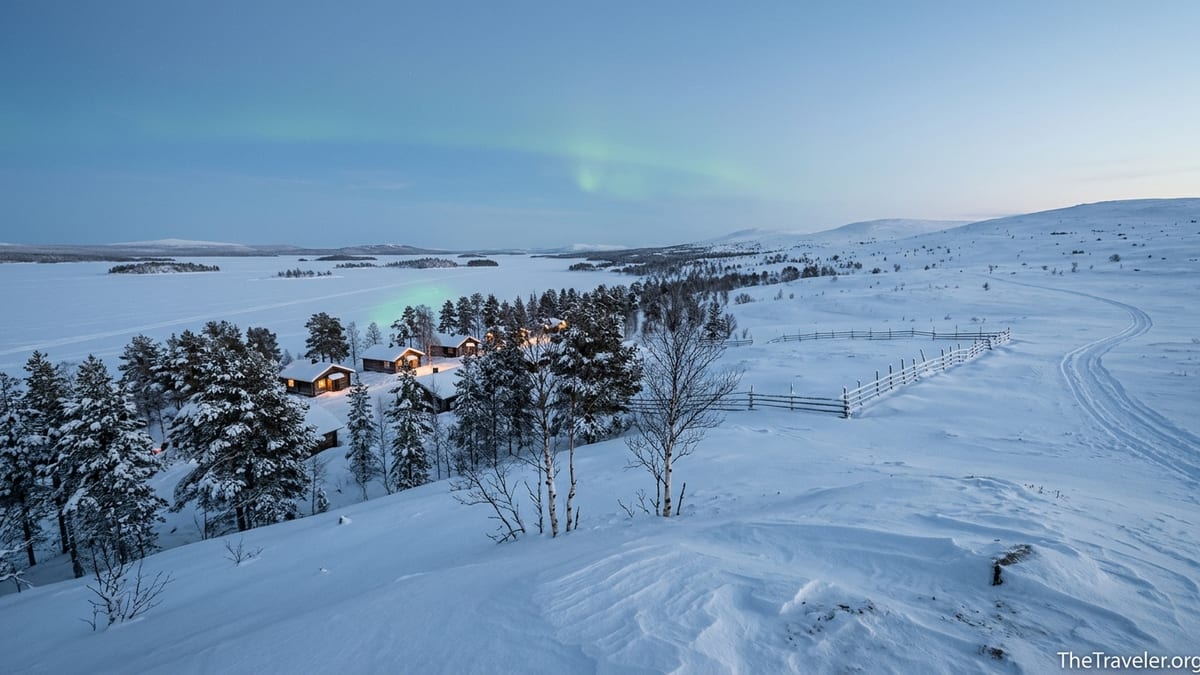
Getting Your Bearings: Where Utsjoki and Inari Sit on the Map
Utsjoki and Inari are both in Finland’s far north, but their locations and surroundings shape the kind of trip you will have. Inari is a small village on the western shore of Lake Inari, one of Finland’s largest lakes, about 300 kilometers north of the Arctic Circle and roughly 40 kilometers north of Ivalo Airport by road. The village is the heart of the broader Inari municipality, which also includes Ivalo and the ski and resort hub of Saariselkä. For visitors, that means easier access, more infrastructure and a steady flow of independent travelers and small groups year-round.
Utsjoki sits even farther north, roughly 450 kilometers above the Arctic Circle, on the banks of the Teno (Tana) River that marks the border between Finland and Norway. It is Finland’s northernmost municipality and one of its most sparsely populated. The main village feels small and low-key, and many visitors notice immediately that everyday life here still revolves around reindeer herding, river fishing and cross-border connections with nearby Norwegian communities like Tana Bru. The sense of remoteness is much stronger than in Inari.
Travelers typically reach both destinations via Ivalo Airport. From there, the drive to Inari village is around 40 minutes on the E75 highway, often served by scheduled shuttle buses. Reaching Utsjoki usually means renting a car and driving about 170 kilometers north, or combining bus legs via Inari or Karigasniemi. In practice, this means Inari is realistic even for a short 3 to 4 day Lapland trip, while Utsjoki makes more sense if you can spare at least 4 to 6 nights in the region.
Because both lie well above the Arctic Circle, you can expect classic high-latitude phenomena in each: polar night in midwinter, a low blue twilight around midday, and the midnight sun in summer. The further north you go, however, the longer both dark season and midnight sun last, which slightly favors Utsjoki if your priority is a profoundly Arctic atmosphere.
How “Authentic” Is the Atmosphere Day to Day?
For many travelers, authenticity is about whether a place still feels primarily like a community that tourists visit, rather than a destination built around tourism. By that measure, both Utsjoki and Inari rank high compared with busier Lapland hubs such as Rovaniemi, Levi or Saariselkä. But there are differences in feel.
Inari has a noticeable but not overwhelming tourism presence. A handful of hotels such as Hotel Inari and wilderness-style properties along the lakefront, plus activity companies running aurora tours, snowmobile safaris and husky trips, give the village a low-key resort character in winter. At the same time, it remains the administrative and cultural center for Finland’s Sámi, home to the Sámi Parliament at Sajos and the Sámi Museum and Nature Center Siida. You are likely to share cafés and supermarkets with local residents running errands, school groups visiting Siida and reindeer herders coming through town, which keeps the place grounded in local life.
Utsjoki, by contrast, feels far more like a living village with a tourism layer lightly added on top. The majority of residents are Sámi, and reindeer herding is still a central livelihood. You might stay at a family-run place like Holiday Village Valle on the riverbank, where the owner also works as a reindeer herder and guide, or join a reindeer farm visit led by someone who spends most of their year managing real herds rather than catering solely to visitors. There are fewer restaurants, bars and shops; evenings can be extremely quiet outside of local events. The absence of large resorts, combined with limited lighting, can make even a simple walk from your cabin feel immersed in wild Arctic surroundings.
In practice, if you like the idea of chatting with locals in a small grocery store, seeing snowmobiles parked outside the post office and occasionally joining community events, both destinations will appeal. If, however, you want to feel that you have stepped into an Arctic village where tourism is still secondary to traditional livelihoods, Utsjoki has the edge.
Sámi Culture: Everyday Life Versus Structured Experiences
When it comes to understanding Sámi culture, Inari offers the most structured and accessible experiences, while Utsjoki offers more immersion in everyday realities, provided you are willing to be patient and respectful. These are complementary rather than competing strengths.
In Inari village, the Sajos cultural and administrative center houses the Finnish Sámi Parliament and hosts events, exhibitions, concerts and conferences tied to Sámi issues. A short walk away, Siida, the Sámi Museum and Nature Center, presents permanent and rotating exhibitions on Sámi history, languages, dress, handicrafts and livelihoods, alongside information about the surrounding Arctic nature and protected areas. You can easily spend half a day moving between these venues, listening to audio guides, viewing historical photos and examining traditional tools such as reindeer sleds and fishing gear. For visitors new to Sámi culture, this combination offers a clear, respectful introduction.
Inari also hosts cultural festivals that are relatively accessible to visitors. Events like Ijahis Idja, an Indigenous music festival held in August, draw Sámi musicians from across the Nordic region. Reindeer races and winter gatherings on or near Lake Inari give a glimpse into modern community life, though some are primarily local affairs where tourists are welcome but not the focus. For many travelers, timing a visit to coincide with such events adds depth without needing insider connections.
Utsjoki, with its Sámi majority, can feel more like living inside the culture rather than visiting a museum about it. Road signs and everyday conversations feature Sámi language alongside Finnish. Reindeer fences cut across the tundra, and herders move animals seasonally between grazing areas. Several local operators offer experiences like small-group reindeer farm visits, guided storytelling evenings about traditional life, and fishing or hiking trips that emphasize cultural connections to the land. For example, you might join a local guide for a day walking in the Paistunturi or Kaldoaivi wilderness areas and learn how weather patterns, vegetation and reindeer migration routes shape decisions throughout the year.
However, this immersion comes with responsibility. In Utsjoki, tourism is more intimately intertwined with sensitive livelihoods like reindeer herding, and there have been local debates about the impact of snowmobile routes and mass-market aurora tourism. Visitors should be prepared to follow local guidelines about not disturbing reindeer, respecting grazing lands and supporting Sámi-owned businesses where possible. If you are happy to approach things on local terms, Utsjoki can feel uniquely authentic; if you prefer structured, museum-style learning, Inari is easier.
Nature, Wilderness and the Feeling of Remoteness
Both destinations sit in landscapes that feel vast and sparsely populated, but the character of the wilderness around them is different. Inari is defined by Lake Inari and surrounding forests and low fells. From the village, you can join boat tours in summer to visit islands with old Sámi sites, rent kayaks or canoes to explore sheltered bays, or in winter head out on snowmobile routes and guided snowshoe trips across frozen terrain. The lake itself, dotted with thousands of islands, often freezes by early winter, creating a white expanse under the northern lights that is easy to access with a guide.
Several national parks and wilderness areas are within day-trip range of Inari. Lemmenjoki National Park, to the west, is accessible via road and trails from villages like Inari and Inari’s neighboring communities, offering marked hiking routes and boat trips in the summer season. To the south, Urho Kekkonen National Park, reached more easily from Saariselkä, can be visited as a day outing if you are based in Inari for a longer stay. In winter, guided cross-country ski excursions from Inari often use portions of these protected areas, giving visitors a taste of Lapland’s open fells and birch forests without multi-day expeditions.
Utsjoki, by contrast, is flanked by some of Europe’s largest roadless wilderness areas, including the Kaldoaivi and Paistunturi wilderness areas. Once you leave the village and main roads, the landscape quickly opens into treeless fells, tundra and river valleys that stretch toward the Norwegian coast. In good winter conditions, guided snowmobile or ski tours can push deep into these areas, where you may not encounter anyone outside your group for days. In summer and autumn, multi-day hikes with tent camping or stays in simple wilderness huts are possible, though they require preparation and often benefit from local guiding.
This difference in scale and accessibility affects how the wilderness feels. Inari’s nature is wild but gently framed: marked trails, boat routes and day tours keep you in landscapes that are easy to exit if weather changes. Utsjoki feels much more like the edge of the Arctic tundra, where weather can shift quickly, distances are long and navigation skills matter. For travelers who dream of standing on a windswept fell with no lights or settlements in sight, Utsjoki can deliver a stronger sense of frontier. Those who want deep quiet but within easier reach of amenities may find Inari a better match.
Activities, Comfort Levels and Practicalities
On a practical level, Inari supports a wider range of activity providers and accommodation options, which is important if you value choice or are traveling with family members of different comfort levels. In winter, you can book classic Lapland experiences such as husky sledding, reindeer sleigh rides, snowmobile safaris and aurora hunting tours through several local operators. There are also cross-country ski tracks and snowshoe routes starting close to the village. Packages often bundle transfers from Ivalo Airport, half-board meals and two or three activities over a few days, making logistics straightforward for first-time Arctic visitors.
Accommodation in Inari ranges from simple hotel rooms in places like Hotel Inari to lakeside cabins and higher-end options that may include glass-roofed aurora cabins or boutique “wilderness hotels” a short drive away. Sample winter rates for a comfortable mid-range room can sit around the equivalent of mid-range European city prices per night during peak northern lights season, with packages including activities costing more. Importantly, there are also self-catering apartments and cabins that suit longer stays or budget-conscious travelers.
Utsjoki has far fewer providers, but many of them are rooted in long-standing local livelihoods. You might stay in a cabin overlooking the Teno River or a family-run guesthouse that combines accommodation with guiding and meals based on local ingredients like river fish and reindeer. Winter activities focus on smaller-scale experiences such as visiting a working reindeer herd, taking part in a low-key aurora watch on a nearby fell or trying ice fishing under the guidance of a local host. In summer, fishing on the Teno River, berry picking, and hiking in the nearby wilderness areas are typical draws.
Because of its size and remoteness, Utsjoki offers far fewer restaurant choices and shops. Expect perhaps one supermarket, a fuel station and a small number of cafés or eateries. If you rely on varied dining, indoor attractions and backup activities in bad weather, this can feel limiting. It also affects cost control: with fewer options, you may find that you rely more heavily on full-board packages or meals with your hosts. By contrast, Inari’s small cluster of restaurants, bars and supermarkets lets you mix some meals out with cooking in your accommodation, and you have the option of day-tripping to nearby Ivalo or Saariselkä if you crave a change of scene.
Northern Lights, Seasons and When to Go
From a purely astronomical perspective, both Utsjoki and Inari lie beneath the auroral oval, and on clear winter nights both offer excellent chances to see the northern lights. The main differences come down to light pollution, weather patterns and the longer dark season farther north. Utsjoki, with its extremely small population and sparse development, has very little artificial light outside the village center. If you stay in a riverside cabin or on a fellside property, you may be able to see the aurora directly from your doorstep whenever the sky is clear, with minimal need to drive away from lights.
Inari is also relatively dark by global standards, especially once you move a short distance from the village. Many hotels on the lakefront deliberately keep outside lighting low to favor aurora viewing from shorelines or frozen lake surfaces. Several local companies run aurora-chasing tours by minivan or snowmobile, choosing nightly locations based on cloud cover. For travelers who want guiding, photography tips and warm shelters on bitterly cold nights, this organized approach can be reassuring.
Seasonality is another important factor. In midwinter, from roughly early December to early January, both destinations experience polar night, when the sun does not rise. In Utsjoki, this dark season is a little longer and deeper, producing dramatic blue twilight and more hours of potential aurora visibility, but also more challenging light and weather conditions for those not used to Arctic winters. Inari, slightly farther south, gets a hint more daylight in the shoulder weeks, which can make sightseeing and outdoor activities feel more manageable for first-timers.
Summer brings the midnight sun, again slightly longer in Utsjoki. Inari’s Lake Inari becomes a base for boating, canoeing, lake island hikes and camping, while Utsjoki’s river valleys and high tundra attract hikers, anglers and road trippers driving toward Norway’s Arctic Ocean coast. Autumn in both places is short but intense, with golden birch forests and good aurora potential before heavy snow arrives. If you want balanced conditions for outdoor activities plus decent aurora chances, late February to late March is often a sweet spot for both destinations.
So Which Feels More “Authentic” for You?
Choosing between Utsjoki and Inari is really about choosing between two flavors of authenticity. Inari is ideal if you want a strong cultural framework, comfortable infrastructure and a mix of wilderness and convenience. Utsjoki is better if your priority is immersion in a Sámi-majority community and the feeling of standing at the edge of almost untouched Arctic landscapes, even if that means fewer choices and more self-reliance.
For a first visit to Finnish Lapland focused on learning about Sámi culture, seeing the northern lights and trying classic winter activities without complex logistics, Inari is often the more practical option. You can fly into Ivalo, take a shuttle to the village, check into a hotel, walk to Sajos and Siida, and book guided excursions without renting a car. The experience can still feel authentic, especially if you choose Sámi-owned businesses and give yourself time to explore quietly rather than stacking back-to-back excursions.
Utsjoki comes into its own for travelers who have already seen more touristed parts of Lapland or who are specifically motivated by Indigenous cultures and remote wilderness. Renting a car, driving the long road north, staying in a family-run riverside lodge and joining a local reindeer herder for a day on the fells can be powerful experiences. The trade-off is that, if weather is poor or activities are fully booked, there are fewer backup options than in Inari.
Some travelers combine both: a few nights in Inari for museums, cultural events and lake-based activities, followed by several days in Utsjoki for deep quiet and tundra landscapes, often continuing into Norway afterward. If your schedule and budget allow, this pairing can deliver the fullest sense of what “authentic Arctic Lapland” can mean in different communities.
FAQ
Q1. Which destination is better for a first-time winter visit to Lapland, Utsjoki or Inari?
Inari usually suits first-time visitors better because it has easier access from Ivalo Airport, more accommodation options and a wider range of activity providers, all while still feeling small and grounded in local life.
Q2. Is Utsjoki really more authentic than Inari?
Utsjoki feels more like a traditional Sámi village where tourism is secondary to reindeer herding and local livelihoods, while Inari blends Sámi culture with a modest but established tourism scene. Whether that feels “more authentic” depends on your expectations and how comfortable you are in very remote places.
Q3. Do I need to rent a car for either Utsjoki or Inari?
For Inari, it is possible to manage without a car if you use airport shuttles and guided tours. For Utsjoki, renting a car is strongly recommended because public transport is limited and distances to trailheads, viewpoints and services can be long.
Q4. Where are my chances higher to see the northern lights?
Both sit under the auroral oval and offer excellent aurora chances in winter when skies are clear. Utsjoki’s greater remoteness and lower light pollution can make displays feel more dramatic, but Inari’s organized aurora tours can help you find clearer skies on cloudy nights.
Q5. Which place offers more structured Sámi cultural experiences?
Inari offers more structured experiences through the Sámi Museum and Nature Center Siida, the Sajos cultural center and organized cultural events. Utsjoki offers a stronger sense of everyday Sámi life, primarily through local guides and hosts rather than formal museums.
Q6. How do accommodation prices compare between Utsjoki and Inari?
Inari generally has a wider range of price points, from simpler hotel rooms and apartments to higher-end lakeside and glass-roof cabins. Utsjoki has fewer options, often small-scale guesthouses and cabins, which can be similarly priced to mid-range Lapland stays but with less variety.
Q7. Is either destination suitable for families with children?
Both can work for families, but Inari is usually easier: more activity choices, shorter transfers and better backup options such as museums and cafés for bad-weather days. Utsjoki is best for families who are used to quiet, remote trips and are happy with simpler infrastructure.
Q8. Can I visit both Utsjoki and Inari on the same trip?
Yes. Many travelers spend a few nights in Inari for cultural sites and organized activities, then drive north to Utsjoki for deeper wilderness and quiet. Allow at least a week in Lapland if you want to include both without rushing.
Q9. Which destination is better in summer rather than winter?
In summer, Inari is excellent for lake-based activities such as boating, canoeing and island visits on Lake Inari, while Utsjoki is strong for hiking, fishing and road trips toward Norway’s Arctic coast. Both benefit from the midnight sun, with Utsjoki enjoying a slightly longer period of continuous daylight.
Q10. How can I travel responsibly and respectfully in these Sámi areas?
Choose Sámi-owned operators where possible, follow local guidance around reindeer and grazing lands, avoid disturbing herds, keep to marked routes when advised, and approach cultural experiences as a guest rather than a spectator. Taking time to learn about Sámi history and present-day issues, especially at institutions in Inari, also supports more thoughtful travel.