


More news on this day
Travelers moving through Phoenix Sky Harbor International Airport faced widespread disruption as flight-tracking data and published reports pointed to roughly 100 delays, prompting renewed reminders for passengers to check airline flight status before arriving at the terminals.
Get the latest news straight to your inbox!
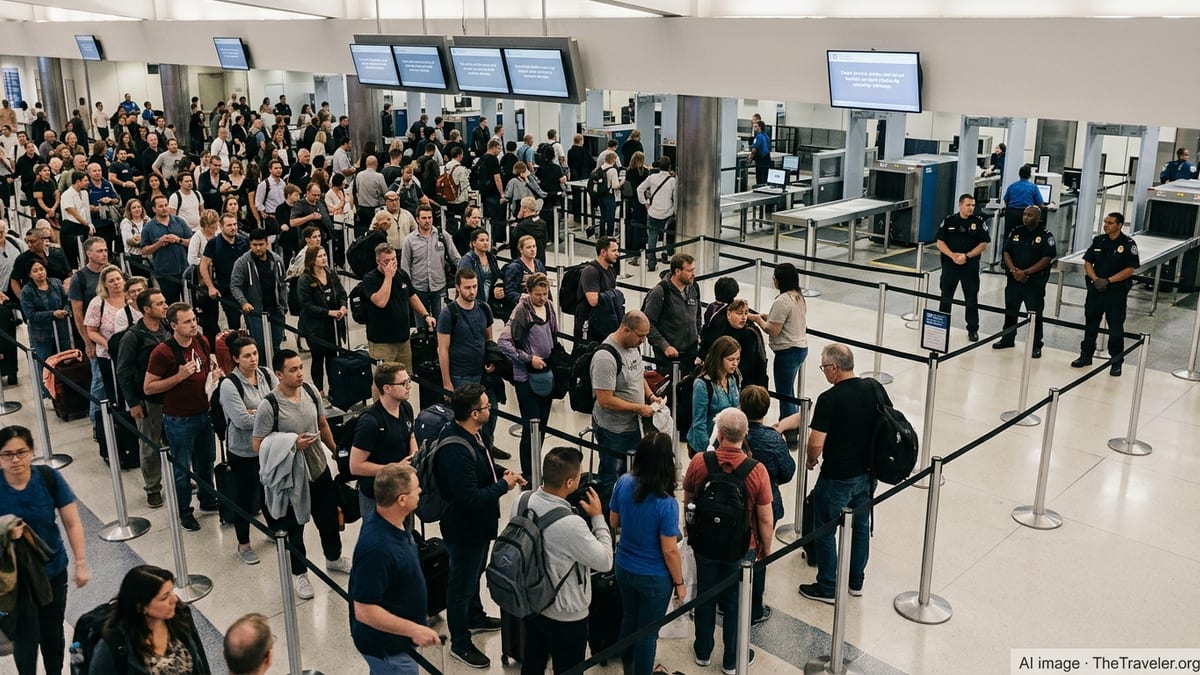
What travelers are seeing at PHX right now
Publicly available flight-tracking statistics for Phoenix Sky Harbor (PHX) showed about 100 total delays for today, alongside a small number of cancellations. The snapshot underscores how quickly conditions can shift at a major hub, especially during busy travel periods and when air traffic flow constraints ripple through airline schedules.
Published coverage describing the disruption indicated that some delays stretched into multiple hours, with certain domestic flights delayed by around two hours and some international itineraries facing delays closer to three hours. For passengers, that can mean missed connections, later arrivals, and longer waits at gates as airlines juggle aircraft and crew rotations.
At the same time, the Federal Aviation Administration’s airport status page for PHX showed only limited general arrival and departure delays in the early hours of September 22, 2026, reflecting that airport-wide conditions can look modest even while individual airline operations and specific flight banks experience heavier disruption.
Why “100 delays” can happen even without a full airport shutdown
Even when an airport is not formally under a ground stop, delays can mount from a combination of air traffic management constraints, weather impacts in the region or along key routes, and airline network factors such as late-arriving aircraft. Any one of those can create a domino effect for later departures, particularly at airports that handle dense schedules throughout the day.
In Phoenix, summer and early fall can add another variable: storms in the area can lead to temporary flow restrictions and delays that continue after the most active cells move away. Recent coverage in Arizona has highlighted how thunderstorms can trigger FAA actions that disrupt inbound and outbound operations, sometimes with knock-on delays across the day.
Separately, localized issues such as gate availability, ramp congestion, or aircraft swaps can push delays higher in a way that is not always visible in generalized airport status summaries. That is one reason passengers are frequently directed to airline-specific tools that reflect the latest operational decisions for a particular flight number.
What Phoenix Sky Harbor and the FAA tools show, and how to use them
For travelers trying to make decisions in real time, it helps to compare multiple sources. The FAA’s airport status page provides a broad view of system conditions and general delay advisories at PHX. That can be useful for understanding whether there is an airport-wide issue such as significant arrival spacing or a program affecting departures.
However, the most actionable information tends to come from airline notifications and flight-specific tracking, especially when disruptions are tied to aircraft positioning or crew scheduling. PHX’s official airport site offers a flight lookup feature, while flight-tracking services can show rolling delay totals and the status of individual arrivals and departures.
Because these feeds update continuously, passengers are generally better served by re-checking status close to departure time rather than relying on earlier screenshots or a single update. For international departures, travelers should also verify whether any schedule shift affects check-in cutoffs, baggage acceptance windows, or connection timing.
Practical steps for passengers heading to the airport today
If your flight is delayed, the most time-sensitive question is often whether the delay is holding steady, increasing, or shrinking. Airline apps and text alerts typically provide the earliest notice of gate changes, revised boarding times, and rebooking options, and they can be more current than airport monitors when multiple flights are moving at once.
Travelers with tight connections through Phoenix may want to check onward flights as well, since a late inbound aircraft can set off additional delays. If you are traveling with checked bags, confirm your airline’s baggage cutoffs and consider arriving with extra time in case lines build when multiple delayed departures begin boarding around the same window.
For those already at PHX, keeping an eye on gate assignments and monitoring any terminal-specific congestion can help. Sky Harbor’s layout and airline distribution across terminals means a gate change can sometimes require a longer walk or use of the airport’s train system, which becomes more important when boarding times shift without much notice.