


Ask ten Great Smoky Mountains regulars whether Abrams Falls or Laurel Falls is the better waterfall hike and you will likely get ten different, very passionate answers. Both trails lead to classic cascades, both sit on the Tennessee side of the park, and both see heavy visitation. Yet the actual hiking experience could not feel more different. Choosing between them comes down to what kind of day in the Smokies you want, how far you are willing to drive, and who is in your group.
Get the latest updates straight to your inbox!
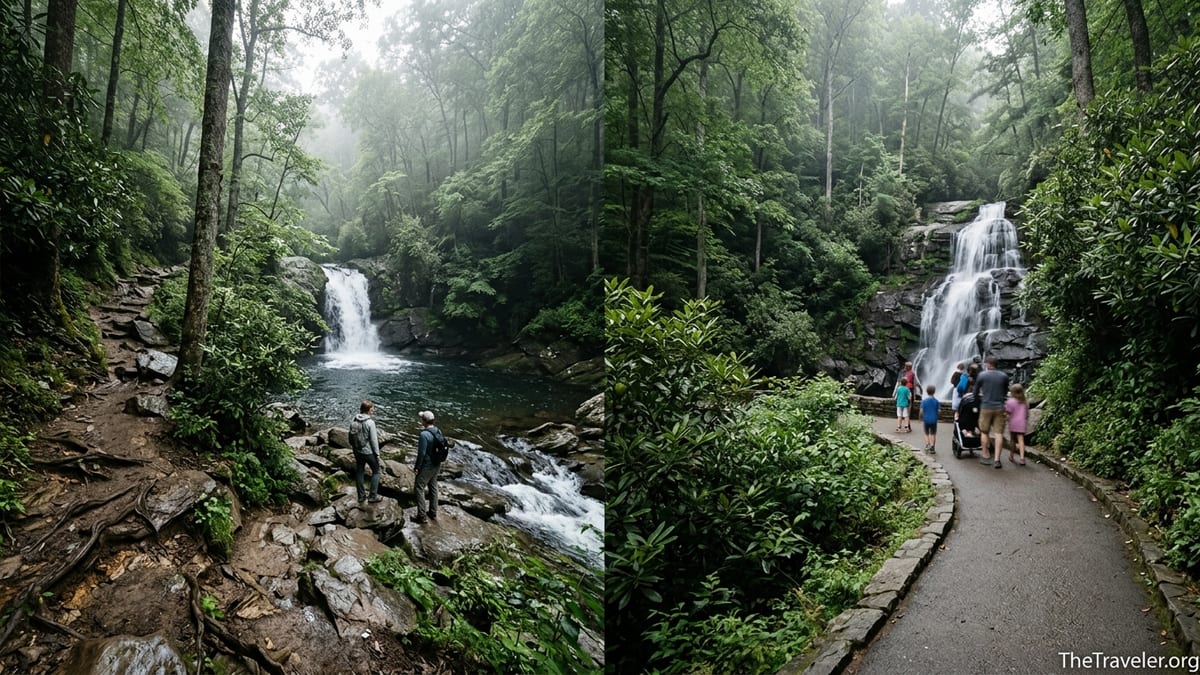
Abrams Falls vs Laurel Falls at a Glance
Abrams Falls and Laurel Falls are two of the most sought out waterfall hikes in Great Smoky Mountains National Park, but they cater to different kinds of hikers. Abrams Falls is a roughly 5 mile round trip dirt trail starting from Cades Cove, usually described as moderate with rolling climbs, rocky footing and roots underfoot. Laurel Falls, by contrast, is about 2.6 miles round trip on a mostly paved path from Fighting Creek Gap near Gatlinburg, with a gentler grade for the section most visitors hike.
On the waterfall side, Abrams is shorter in height but powerful and wide, dropping into a deep plunge pool on Abrams Creek. Laurel Falls is a taller, tiered cascade that fans down mossy rock ledges in two main drops, with a narrow footbridge splitting the upper and lower sections. In photos, Laurel looks more delicate and lacy, while Abrams feels muscular and loud, particularly after rainfall.
From a logistics perspective, Abrams Falls demands more commitment. Reaching the trailhead requires driving partway around the one way Cades Cove Loop Road, which can take 45 minutes or more in summer and fall traffic even though the mileage is short. Laurel Falls is far quicker to reach from Gatlinburg and Pigeon Forge lodgings, but parking fills early and congestion can be intense, especially on weekends and holidays.
In deciding which hike is better, you are really deciding between a more immersive half day adventure anchored in Cades Cove and a shorter, family friendly waterfall walk close to town. The answer will change if you are hiking with small children, older relatives, or serious hikers who want to avoid crowds at all costs.
Trail Stats: Distance, Elevation and Difficulty
The Abrams Falls Trail is commonly listed at about 5 miles round trip with a few hundred feet of total elevation gain spread out over rolling hills. You will climb and descend several times as the path follows Abrams Creek, contouring around ridges instead of heading straight up a mountain. For reasonably fit adults, most parties report taking between 2.5 and 4 hours including time at the falls, especially in summer heat.
Underfoot, Abrams is a classic Smokies dirt trail: rocks, roots, short steep pitches and muddy sections after rain. There are a couple of narrow spots where the trail cuts into a slope above the creek, and hikers often mention that the constant little ups and downs make it more tiring than the statistics suggest. Lightweight trail runners or hiking shoes with good grip, and a small daypack with water and snacks, make a noticeable difference in comfort.
Laurel Falls feels very different. The main section that most visitors hike to the waterfall is a paved path of about 1.3 miles each way, with roughly 300 feet of elevation gain from the trailhead to the falls. The grade is steady but rarely steep. Families routinely push sturdy jogging strollers for at least part of the route, and you will see plenty of visitors in sneakers or even casual sandals, though closed toed shoes are still wise around wet rock near the falls.
Beyond the falls, the Laurel Falls Trail continues as a traditional backcountry path up Cove Mountain, and that upper section is a genuine hike, not a stroll. However, the vast majority of visitors turn around at the bridge in front of the falls, making this a 1.5 to 2 hour outing for most groups, including time for photos and a snack break.
Access, Parking and Current Closures
Abrams Falls trailhead sits along the Cades Cove Loop Road, one of the most popular scenic drives in the entire national park. To reach it, many visitors start from Townsend, Tennessee, enter the park and follow Laurel Creek Road to the start of the loop, then continue about halfway around until they see the signed turnoff for the Abrams Falls parking area. Because the loop is one way, there is no quick shortcut if you miss the turn.
In practical terms, this means you should think of Abrams Falls as part of a full or half day in Cades Cove rather than a quick in and out hike. On peak October foliage weekends, for example, simply driving the loop can take well over an hour. A common strategy is to start the drive at sunrise, hike Abrams Falls while crowds are still relatively light, then use the afternoon to tour the historic cabins and churches scattered around the cove.
Laurel Falls trailhead is far more convenient if you are staying in Gatlinburg or Pigeon Forge. It lies along Fighting Creek Gap Road, sometimes signed as Little River Road, a short drive from Sugarlands Visitor Center. The approach is straightforward, and the parking area is quite close to town, but that convenience comes with a cost: parking spaces can be full not long after sunrise in high season, and the shoulder of the road is frequently blocked off to prevent unsafe roadside parking.
As of mid 2026, Laurel Falls has been undergoing an extended renovation project focused on the trail surface, retaining walls, and expanded parking area, which has meant rolling closures and detours. Before building a trip around this waterfall, check the latest conditions on the Great Smoky Mountains National Park official information channels, since closure dates and access patterns can shift with construction progress and seasonal storms. When the trail is open, be prepared for temporary traffic controls or shuttle systems if the park is testing congestion management options.
Scenery, Atmosphere and Wildlife
Scenic payoff is where Abrams Falls shines for many hikers. The trail closely follows Abrams Creek, one of the park’s most substantial streams, and passes through a mix of pine, hemlock and hardwood forest. In late April and early May, wildflowers and blooming rhododendron light up the understory, and in October the surrounding ridges glow with gold and crimson foliage. The sound of flowing water is a near constant companion, punctuated by birdsong and the occasional splash of a trout rising in the creek.
The waterfall itself is not especially tall, but it is impressively wide and powerful, funneling a high volume of water into a broad pool. After several miles of hiking, emerging at the rocky amphitheater around the falls feels like entering a hidden pocket of the cove. On summer weekdays you may find room to sit on boulders near the waterline for a picnic, while on holiday weekends visitors often spread out along both sides of the pool, soaking in the cool mist.
Laurel Falls offers a different aesthetic. Named for the mountain laurel that grows thickly in the area, the trail passes through lush, shady forest that feels especially inviting on hot days. When the laurel blooms in late spring, clusters of pink and white flowers frame sections of the path. The main attraction is an 80 foot tall, multi tiered waterfall that splits around a rock outcrop, with a narrow concrete footbridge at the midpoint. From the bridge, you can photograph the upper falls tumbling toward you and look back down at the lower cascade dropping into a shaded ravine.
Because the Laurel Falls path is easier and closer to town, the human atmosphere can feel more like a promenade than a quiet backcountry hike. Expect to hear multiple languages, see everything from toddlers to grandparents on the trail, and navigate a steady flow of people taking photos at the bridge. Wildlife sightings still happen, especially black bears moving through the forest in early morning or evening, but this is rarely a place of solitude during normal daylight hours.
Crowds, Safety and the Realities of Popular Trails
Neither Abrams Falls nor Laurel Falls counts as a secret. On a sunny Saturday in June, both see hundreds of visitors. However, the way those crowds manifest is different. At Abrams, the combination of a longer hike and the Cades Cove drive tends to filter out the most casual visitors. You are still likely to encounter groups at regular intervals on the trail and a good number of people around the falls, but the overall density often feels lower than at Laurel, especially in shoulder seasons and on weekdays.
Safety is a bigger concern at Abrams Falls than many visitors realize. The trail itself is moderate and manageable for prepared hikers, but the deep plunge pool and powerful current at the base of the falls have contributed to several drownings over the years. The inviting water looks like an ideal swimming hole, particularly on steamy summer afternoons, yet submerged rocks, strong undertows near the base of the falls, and surprisingly cold temperatures make it risky. Rangers consistently urge visitors to enjoy the water from the shore and keep children well away from the slick rock edges.
Laurel Falls presents a different set of safety challenges. The paved path can give a false sense of security, leading some visitors to treat it more like a city sidewalk than a mountain trail. Wet leaves, algae on the concrete, and icy patches in winter all turn sections of the path into slip hazards. Around the waterfall itself, the narrow bridge, steep drop offs and constant crowding create opportunities for accidents, especially when people climb over railings or step onto slick rocks for a better photo.
On very busy days, you may find yourself waiting your turn to stand in the classic photo spot on the bridge at Laurel, with a line of hikers behind you. For some travelers, this is a minor annoyance compared to the chance to see an iconic Smokies waterfall without committing to a long hike. For others, the congestion and noise undermine the sense of being in a national park. If your idea of the perfect waterfall experience involves quiet contemplation, Abrams or a less famous alternative like Hen Wallow Falls or Indian Creek Falls may be the better bet.
Best Seasons and Ideal Times of Day
Abrams Falls is hikeable year round, but conditions vary dramatically by season. In spring, snowmelt and rain feed a robust flow over the falls, and wildflowers brighten the forest floor. Trails can be muddy and creek levels high, so waterproof footwear and trekking poles help on slippery sections. Summer brings lush greenery and longer days, along with heat and humidity. Many hikers time their start for early morning, beginning the loop drive at or shortly after sunrise to avoid traffic backups and midday temperatures.
Autumn is arguably prime time for Abrams Falls. Cades Cove becomes a patchwork of orange and gold, and cool, crisp air makes the rolling hills more comfortable. The flip side is that October weekends are among the most crowded times in the entire park, so plan for delays on the loop road and consider weekday visits if your schedule allows. In winter, thinner crowds and better visibility through leafless trees reward hardy hikers, but icy patches in shaded sections and cold spray around the falls call for traction devices and warm layers.
Laurel Falls follows a similar seasonal pattern but with its own nuances. Spring is lovely when the laurel and other flowering shrubs bloom around the trail, and the waterfall is usually strong. Because access from Gatlinburg is straightforward, however, spring weekends can already feel crowded. Summer mornings and late afternoons are pleasant if you start early or go late enough to miss the midday peak.
One major advantage of Laurel Falls, when open, is that the relatively short, paved distance makes it more accessible during shoulder season weather windows. For example, on a March day when upper elevation trails around Newfound Gap are still snow covered, you might find bare ground or light slush on the Laurel Falls path, making it a viable outing with older relatives or kids. Winter hikers should still be alert to black ice on shaded sections and check for short term trail closures after storms when crews are clearing fallen trees or assessing rockslides.
Which Hike Is Better for You?
If you are visiting Great Smoky Mountains National Park for the first time, staying in Gatlinburg, and traveling with a mix of ages and fitness levels, Laurel Falls is often the more practical choice provided the trail is open. You can leave a downtown hotel after breakfast, reach the parking area in 15 to 20 minutes in light traffic, and be back in town by lunchtime. The hike offers a satisfying sense of accomplishment for young children without overtaxing them, and the paved surface reduces tripping hazards for grandparents or anyone less steady on their feet.
On the other hand, if your group includes regular hikers who want a more immersive day on the trail, Abrams Falls makes a stronger case. Starting from a rental cabin near Townsend, for instance, you might drive into Cades Cove for a sunrise wildlife viewing loop, then park at the Abrams trailhead and spend the late morning hiking through forest to the falls. The outing feels like a full hike rather than an extended stroll, and you come away with both scenic drive memories and waterfall photos.
Time constraints matter as well. Travelers squeezing the Smokies into a single day from Knoxville or Asheville might not be able to justify the potential traffic delays of Cades Cove. In that situation, prioritizing Laurel Falls or another roadside accessible waterfall along Little River Road can make more sense. Conversely, visitors on a weeklong cabin vacation in Townsend, Wears Valley or Pigeon Forge often plan multiple hikes, tackling Abrams Falls one day and using Laurel Falls as an easier outing after a more strenuous trek like Alum Cave or Chimney Tops.
Personality plays a role too. Some hikers are energized by the shared excitement of a busy trail and enjoy chatting with other visitors from around the world at Laurel Falls. Others seek solitude, even if it is only partial on such popular routes, and appreciate the relative quiet between groups on the Abrams trail. Before you decide which hike is “better,” be honest about whether you would rather trade a longer drive and moderate effort for a bit more space, or accept dense crowds in exchange for convenience.
The Takeaway
In a direct contest between Abrams Falls and Laurel Falls, there is no single, universal winner. Abrams delivers a more substantial hike with a powerful creekside waterfall, wrapped into the broader experience of visiting Cades Cove. Laurel offers a shorter, more accessible path to a picturesque, tiered cascade that has become one of the park’s most photographed spots.
For relatively fit hikers who have half a day and want their waterfall to feel like the reward at the end of a true trail, Abrams Falls usually comes out on top. For families with strollers, mixed ability groups, or travelers with only a few hours to spare near Gatlinburg, Laurel Falls tends to be the smarter choice when open and safely accessible. Many repeat visitors eventually hike both and find that each occupies a different niche in their personal Smokies story.
If you have time on your itinerary and the conditions line up, the best answer to the question of which waterfall hike is better may be “both.” Start with the trail that fits your group and your schedule this trip, then leave the other as a reason to return. In a park with hundreds of miles of trails, the real victory is simply finding a safe, rewarding way to be near moving water in the woods.
FAQ
Q1. Which hike is easier, Abrams Falls or Laurel Falls?
Laurel Falls is easier for most visitors, with a shorter round trip distance and a mostly paved surface. Abrams Falls is longer, has more elevation changes and rougher footing, and feels like a moderate backcountry hike rather than a casual walk.
Q2. Is Abrams Falls or Laurel Falls better for young children?
Laurel Falls is generally better for families with young kids because of the shorter distance and smoother path, but parents still need to supervise closely around the narrow bridge and steep drop offs near the waterfall.
Q3. Can you swim at Abrams Falls or Laurel Falls?
Swimming is strongly discouraged at both waterfalls. The plunge pool at Abrams has strong currents and hidden hazards that have led to drownings, and rocks around both falls are slippery and dangerous.
Q4. Which trail is less crowded?
In practice, Abrams Falls usually feels less crowded along the trail than Laurel Falls, although both are popular. Laurel’s proximity to Gatlinburg and its short distance concentrate large numbers of visitors into a relatively small area.
Q5. Do I need special permits or reservations for either hike?
At present, you do not typically need a specific trail reservation for Abrams Falls or Laurel Falls, but both are within a park that requires paid parking tags, and Laurel may occasionally use timed or managed parking systems during congestion or construction projects.
Q6. How much time should I budget for each hike?
Most groups should allow 3 to 4 hours for Abrams Falls, including the drive around Cades Cove, hiking time and a break at the waterfall. For Laurel Falls, 1.5 to 2 hours is usually sufficient when the trailhead is easily accessible and parking is available.
Q7. Which waterfall is more photogenic?
Both waterfalls are photogenic in different ways. Laurel Falls offers a classic, tiered cascade framed by laurel and a convenient bridge viewpoint, while Abrams provides a wider, more powerful curtain of water in a deeper, creekside setting.
Q8. What is the best time of day to hike these trails?
Early morning is ideal for both hikes, especially on weekends and during peak seasons. Starting around sunrise helps with parking, reduces heat and humidity in summer, and increases your chances of a quieter experience.
Q9. Are dogs allowed on Abrams Falls or Laurel Falls trails?
Dogs are not allowed on most Great Smoky Mountains National Park trails, including Abrams Falls and Laurel Falls. Visitors traveling with pets should plan alternative activities or use approved pet walking areas.
Q10. If I only have one day in the Smokies, which hike should I choose?
If convenience and inclusivity for all ages are your top priorities, choose Laurel Falls when it is open. If you want a more traditional half day hike combined with a scenic drive and do not mind extra effort, Abrams Falls is likely the more rewarding choice.