


More news on this day
Travellers across Europe are facing fresh disruption as a mix of timetable cuts and day-of-travel cancellations affects flights in and out of major hubs in Germany, the Netherlands, Italy and the United Kingdom, with carriers including Lufthansa, Ryanair and KLM adjusting schedules and scrapping dozens of departures.
Get the latest news straight to your inbox!
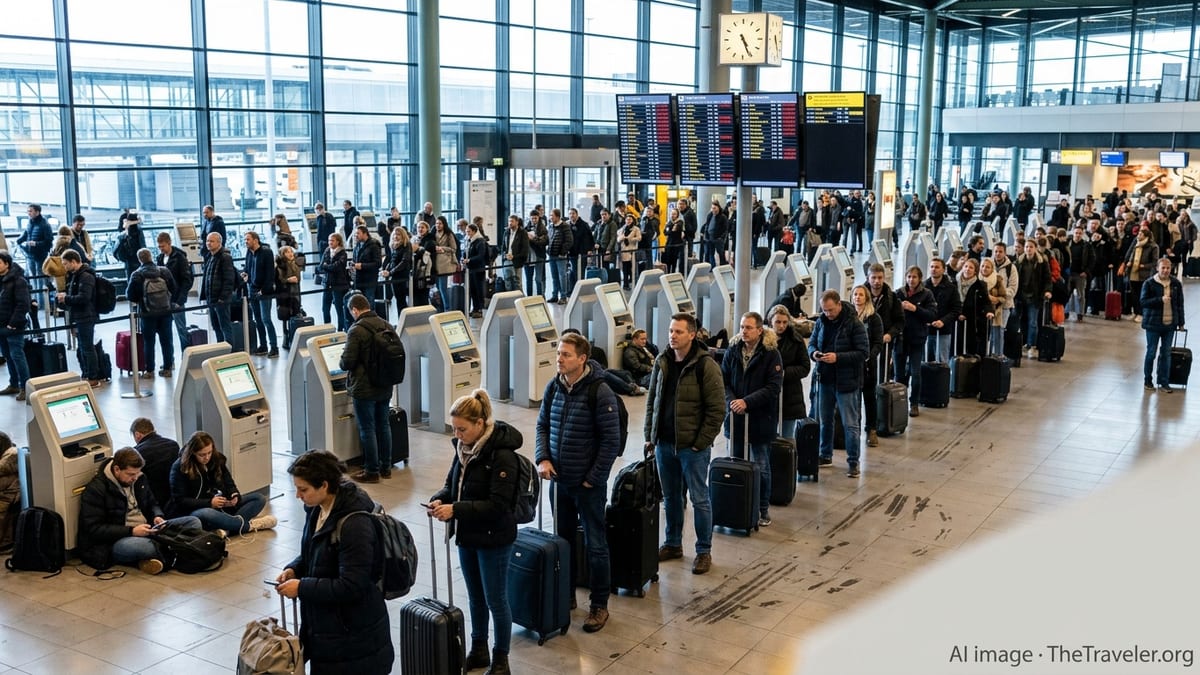
Network Strain Spreads Across Key European Markets
Published information from aviation data trackers and industry briefings shows that the current wave of disruption is concentrated around some of Europe’s busiest aviation markets, notably Germany, the Netherlands, Italy and the UK. While the headlines are dominated by large carriers such as Lufthansa, KLM and Ryanair, the knock-on effects are visible across a wider web of European and transatlantic services.
In Germany, Frankfurt and Munich continue to feel the impact of a heavily revised summer schedule at Lufthansa. The group has already confirmed that it cut around 20,000 flights from its wider 2026 programme following the closure of its regional arm CityLine, with additional tactical cancellations on short-haul routes in June intended to create more operational buffers. This restructuring has reduced overall frequencies and made individual cancellations more visible to passengers booked on once-frequent domestic and European links.
The Netherlands is seeing a similar pattern of pressure centred on Amsterdam Schiphol. KLM has been using travel alerts to signal rolling adjustments across its European network, and passenger accounts on public forums indicate that a significant number of June flights have been cancelled or retimed as the airline reshapes its schedule. For travellers, that can mean rebookings onto later services, longer connection times and, in some cases, overnight delays when alternative options are limited.
Italy, meanwhile, has experienced targeted disruption on peak travel days. Monitoring by passenger-rights platforms shows that in mid-May more than 60 flights were cancelled in a single day across several Italian airports, with Lufthansa, KLM and other European carriers among those affected. Operational challenges and aircraft being out of position after earlier delays elsewhere in Europe were cited as key factors, underlining how quickly local issues can spill across the continent.
London, Frankfurt and Other Hubs See Knock-On Cancellations
The current disruptions are particularly visible at major hubs where multiple affected airlines overlap. Frankfurt, Lufthansa’s main base, has seen waves of cancellations and severe delays this month, with one widely reported incident at the beginning of June involving more than 150 cancelled flights and hundreds of additional delays in a single day. Those issues rippled outward to secondary German airports and onward to destinations across Europe.
London’s main airports, especially Heathrow, play a similar role in the network. When aircraft and crews are delayed elsewhere, departures to and from London are often adjusted to rebalance schedules. Publicly available trackers and recent reports from airport observers highlight repeated instances of flights to Germany, the Netherlands and Italy being delayed or cancelled at short notice, affecting both point-to-point passengers and those connecting onto long-haul services.
At Amsterdam, London and Frankfurt, even a relatively small number of cancellations can create outsized disruption because of the volume of connecting traffic. Airlines typically respond by consolidating lightly booked flights, rerouting passengers through alternative hubs or shifting them to partner carriers. While that strategy helps to keep the wider network moving, it can leave individual travellers facing missed connections, extended layovers and uncertainty around their onward journeys.
On busy summer travel days, a sequence of relatively modest schedule cuts can therefore translate into dozens of cancelled or significantly delayed flights across the main European hubs. Industry data cited in recent European aviation summaries already points to tens of thousands of flights affected by air traffic flow restrictions and staffing constraints since the start of June, suggesting that the current disruption may not be a one-off event.
Lufthansa, KLM and Ryanair Respond With Schedule Adjustments
Each of the major airlines involved is taking a slightly different approach to managing the strain. Lufthansa has framed its summer 2026 timetable as a streamlined crisis plan, prioritising core hub routes and trimming frequencies on shorter European sectors. Reports indicate that the group is also prepared to implement further targeted reductions on short-haul services where economically justified, in order to preserve reliability on higher-yield long-haul and key feeder routes.
KLM, closely tied to Amsterdam’s constrained operating environment, has leaned on advance schedule pruning and same-day retiming. Travellers have reported receiving notifications of cancellations weeks ahead of departure in some cases, but there are also accounts of last-minute changes where aircraft availability or crew-hours limits force the airline to drop or merge flights. The carrier’s public guidance stresses that affected customers can seek rebooking or refunds, particularly when delays exceed several hours.
Ryanair, which is less hub-focused and operates a large point-to-point network, has generally maintained that it is among the most resilient airlines when it comes to cancellations. Nonetheless, it is not immune to broader European constraints: air traffic control limits, local strikes and weather events can all force the low-cost carrier to delay or cancel departures in key markets such as Italy and Germany. Travel commentary notes that Ryanair often prefers short diversions and quick turnarounds to keep aircraft moving, but on high-pressure days some services are still withdrawn entirely.
Across the sector, analysts suggest that early and visible schedule cuts may be preferable to optimistic timetables that later unravel under operational pressure. However, for passengers who booked months in advance, a flight removed from the schedule can be just as disruptive as a day-of-travel cancellation, particularly when alternative options are already heavily booked.
Passengers Confront EU261 Rights and Limited Alternatives
The recurrent disruption has pushed passenger rights back into the spotlight. Under EU261 rules, travellers departing from European airports or flying with European carriers have defined entitlements in the event of long delays or cancellations. Consumer advocates emphasise that compensation depends on the cause: issues within an airline’s control, such as crew planning or technical problems, are treated differently from extraordinary circumstances like severe weather or airspace closures.
Recent consumer guidance highlights several scenarios playing out in the current disruption wave. Some travellers have been rebooked onto alternative flights a day or more later, raising questions about entitlement to hotel accommodation and meal vouchers. Others have accepted refunds and arranged their own alternative transport, which can be costly when last-minute fares surge on competing airlines and rail services.
Publicly available case studies show that passengers sometimes struggle to distinguish between schedule changes introduced weeks in advance and genuine last-minute cancellations. That distinction matters, because airlines are less likely to owe compensation when they inform customers of a cancellation well ahead of departure and offer a reasonable alternative. In practice, the line can feel blurred when itinerary changes cascade close to the travel date.
With summer demand building, travel advisers recommend that passengers monitor their bookings frequently, use airline apps to track gate and schedule changes, and keep records of all communication and expenses in case they later pursue a claim. For those connecting through hubs such as London, Frankfurt or Amsterdam, allowing extra time between flights may provide a buffer against missed onward connections.
Summer Outlook: A Tense Season for European Air Travel
Network reports from European aviation bodies indicate that flight volumes across the continent are now at or above pre-pandemic levels, with particularly strong growth on routes touching Italy, Türkiye, the UK and the main North Atlantic gateways. At the same time, air traffic control capacity and airport staffing have not always kept pace, resulting in higher rates of air traffic flow management delays and ground congestion.
Germany and the Netherlands illustrate this tension clearly. Lufthansa’s decision to cut thousands of flights from its planned schedule and reorganise its route network following the end of CityLine operations speaks to a broader challenge of matching capacity to operational reality. KLM’s rolling advisories and frequent alerts around Amsterdam departures show how one bottlenecked hub can shape travel patterns across an entire region.
Italy and the UK are also likely to remain under scrutiny as the season unfolds. Italian airports have already experienced clusters of cancellations tied to operational issues, while the major London hubs must absorb both local demand and connecting traffic flowing between North America, Europe and beyond. Any localised disruption in these markets can quickly propagate, affecting flights that never touch the original problem airport.
For now, industry observers suggest that travellers should view the European summer as a period of heightened risk rather than guaranteed chaos. With careful planning, flexible itineraries and close monitoring of airline updates, many journeys will still proceed with manageable delays. Yet the combination of dense schedules, capacity constraints and fragile operations means that when disruption strikes, it can escalate quickly, leaving dozens of flights cancelled and thousands of passengers searching for alternatives at some of Europe’s busiest airports.