


The Acropolis of Athens is one of those rare places that lives up to its reputation. Perched on a rocky hill above central Athens, the Parthenon and its surrounding temples are the city’s defining landmark and a highlight of any trip to Greece. This guide explains where the Acropolis is, how to get there, what you will actually see inside, the character of nearby neighborhoods, and how to plan a smooth, rewarding visit.
Get the latest updates straight to your inbox!
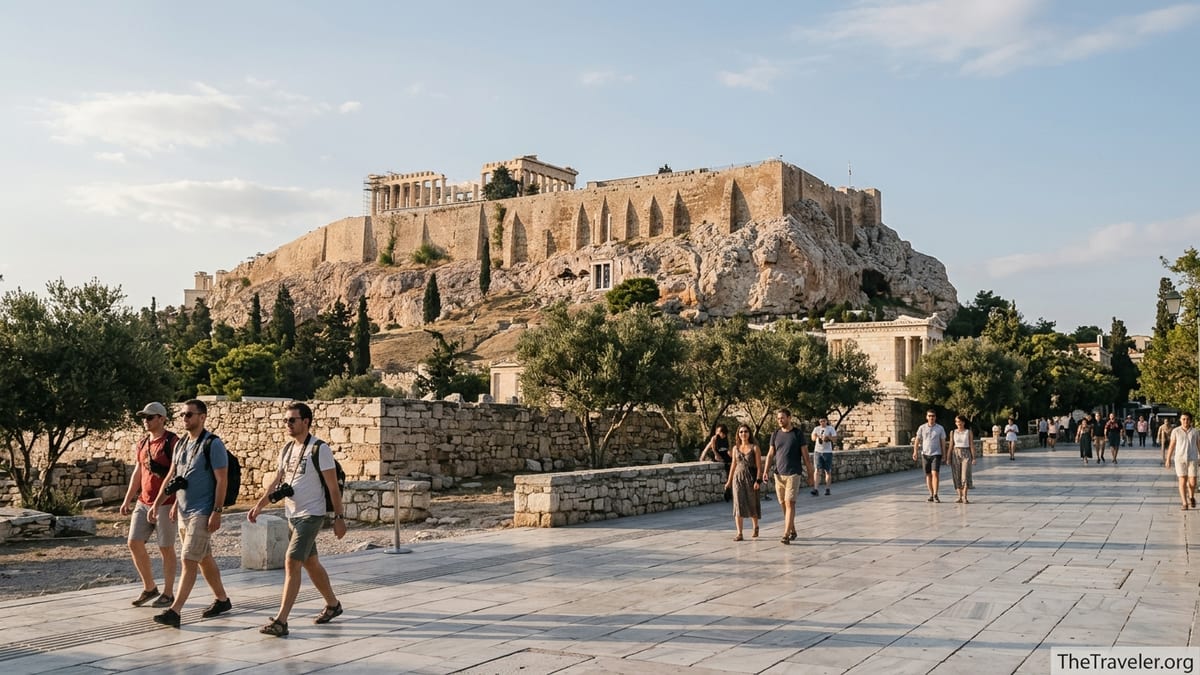
Understanding the Acropolis and Its Setting
The Acropolis is an ancient citadel that rises above the historic center of Athens, roughly 150 meters above sea level. From its summit you look out over the dense modern city, with Mount Lycabettus to one side and the Saronic Gulf glimmering in the distance on clear days. The site is compact enough to walk around in a couple of hours, yet dense with monuments from the 5th century BC and later periods.
This hilltop complex is recognized as a UNESCO World Heritage Site and is often treated as the symbolic heart of classical Greece. The best-known structure is the Parthenon, dedicated to the goddess Athena, but the Acropolis is more than a single temple. It is a cluster of religious and civic buildings accessed by a monumental gateway, with theaters, sanctuaries and stoas on the slopes below.
The Acropolis stands directly above well-known districts such as Plaka, Makrygianni, Koukaki, Thissio and Monastiraki. In practice, that means you will probably combine your visit with a wander through at least one of these neighborhoods. Many visitors stay in hotels or guesthouses in Makrygianni or Plaka specifically so they can walk to the Acropolis in about 10 minutes in the morning.
Because the site is on exposed rock, your experience is shaped by weather and light. In summer, the pale marble reflects intense sun and heat, while in winter the atmosphere can be clearer and cooler, with fewer crowds. Timing your visit can make the difference between shuffling in a line of tour groups and having quiet moments along the perimeter walls with panoramic views of Athens.
Where the Acropolis Is and How to Get There
The Acropolis sits in central Athens above the south side of the city’s historic core. On a map, it is just south of Monastiraki Square and northwest of the Temple of Olympian Zeus. It is easy to reach from most central accommodations either on foot or by public transport. Many visitors find they rarely need a taxi, especially if they are staying near Syntagma, Plaka, Makrygianni or Koukaki.
The most convenient public transport hub for the main entrance is Acropolis metro station on Line 2 (the red line). From the station exit near the Acropolis Museum, you walk along the pedestrianized Dionysiou Areopagitou street for a few minutes to reach the south slope entrance and, a bit further, the main western entrance. Another useful station is Monastiraki on Lines 1 and 3, which lies beneath the historic center; from there, it is roughly a 10 to 15 minute uphill walk through Plaka or via the pedestrian path toward Thissio.
Several bus lines stop within walking distance of the hill, including routes that pass along Amalias Avenue at the edge of the National Garden or along Syngrou Avenue and Makrygianni. However, for most short-term visitors, the metro is simpler and more predictable. If you are staying in Syntagma, for example, it is a single metro stop to Acropolis, or about a 15 to 20 minute walk past the Temple of Olympian Zeus and along the pedestrian promenade.
Walking is often the most memorable way to approach the Acropolis. Many travelers start in Plaka, following narrow lanes that gradually slope upward until the monuments come into view above the rooftops. Others stroll along the cobbled Dionysiou Areopagitou and Apostolou Pavlou promenade that curves around the southern and western slopes. This traffic-free route is lined with street musicians, casual cafes and viewpoints, and connects easily with both the Acropolis entrances and nearby sites such as the Ancient Agora and the Theatre of Dionysus.
Main Monuments Inside the Acropolis Site
The first major structure you encounter at the summit is the Propylaea, the monumental gateway to the Acropolis. This impressive marble entrance, with its broad steps and columned halls, sets the tone for the rest of the site. Just to the side stands the small Temple of Athena Nike, perched on a bastion that overlooks the approach road and offers early views over the city.
Once through the Propylaea, the Parthenon dominates the plateau. Even in its ruined state, the proportions of this Doric temple are striking. You cannot go inside, but you can circle around set pathways and see details of the columns, friezes and ongoing restoration work. Scaffolding and cranes are frequently present, as Greek conservation teams carry out long-term structural repairs, so expect some sections to be partially covered while others are more open for photography.
On the north side of the plateau is the Erechtheion, instantly recognizable for its Porch of the Caryatids, where sculpted female figures support the roof. The figures you see on the site are high-quality replicas; most of the originals are preserved in the Acropolis Museum nearby. Around the plateau there are other remains, including foundations of earlier temples, shrines and altars that an informed guide or audio tour can help you interpret.
On the slopes of the Acropolis hill, still within the broader archaeological zone, you will find key monuments such as the Theatre of Dionysus and the Odeon of Herodes Atticus. The Theatre of Dionysus is often described as the birthplace of classical drama and has stone seating that once held thousands of spectators. The Odeon of Herodes Atticus, a Roman-era stone theater on the southwest slope, is still used for performances during the Athens Epidaurus Festival; if you attend a concert here on a summer evening, you sit beneath the illuminated Acropolis walls.
Tickets, Opening Hours and Practical Details
Ticketing for the Acropolis has moved increasingly toward timed entry, with a preference for online purchase before you arrive in Athens. In high season, especially from late spring through early autumn, same-day time slots early in the morning can sell out. Many travelers now buy tickets a few days or weeks ahead to secure an 8:00 or 9:00 entry, then plan the rest of their day around that time.
There are different ticket options, typically including a single-site Acropolis ticket and a combined ticket that covers several major archaeological sites in Athens within a set number of days. The combined ticket can be good value if you plan to visit the Ancient Agora, Roman Agora, Hadrian’s Library and other nearby sites during a 3 to 5 day stay. Prices can change, so it is wise to check current rates just before your trip and allow for modest increases season by season.
Opening hours vary by season. In the long days of late spring and summer, the site usually opens in the early morning and closes in the evening, with extended daylight allowing for early or late visits to avoid the midday heat. In winter, hours are shorter and the Acropolis may close earlier in the afternoon. There are also occasional days with free entry nationwide for museums and archaeological sites; these are popular with locals and can be particularly busy, so if you are in Athens on one of those dates, be prepared for heavier crowds.
At the entrance, expect airport-style security with bag checks. Large luggage is not allowed on site, and surfaces can be uneven and slippery, especially polished marble pathways. Wear closed shoes with good grip and bring water, sunscreen and a hat in warmer months, as shade is limited on the plateau. There are restrooms and basic facilities near the entrances, but there are no cafes inside the monument area itself, so most visitors plan a coffee or lunch break in nearby streets before or after their visit.
Best Time of Day and Crowd Strategies
Crowds at the Acropolis tend to peak between late morning and early afternoon, when large tour groups and cruise ship excursions arrive. Visitor numbers are typically highest from around 10:00 to 14:00, particularly in the hot summer months. If you enter during this window you may find the approach to the Propylaea slow-moving and popular viewpoints crowded with people taking photos.
For a more relaxed experience, many travelers aim for the first entry of the day or a late afternoon arrival. Early morning, shortly after opening, usually offers cooler temperatures, softer light on the marble and smaller groups. Locals often recommend this time especially in July and August, when midday heat on the exposed rock can be intense. On the other hand, a visit starting a couple of hours before closing can reward you with golden light and views of the city as it begins to light up, provided you are comfortable timing your walk so you are not rushed at the end.
Consider pairing your Acropolis visit with the nearby Acropolis Museum in a way that fits the climate. Many people tour the hill in the early morning, have a late breakfast or early lunch in Makrygianni or Plaka, then spend the hottest part of the day exploring the museum’s climate-controlled galleries. Others reverse the order, visiting the museum first to understand the sculptures and friezes, then climbing the hill later in the day when the temperature drops.
Shoulder seasons such as April, May, late September and October often provide a good balance of manageable crowds and bearable temperatures. In winter, the site can be much quieter, though you should be prepared for occasional rain and cooler wind at the top. Whenever you go, allowing two to three hours for the hill itself, plus additional time for the museum and surrounding neighborhoods, will help you avoid feeling rushed.
Nearby Neighborhoods: Plaka, Makrygianni, Thissio and Monastiraki
The Acropolis is surrounded by some of Athens’ most atmospheric neighborhoods, each with its own character. Immediately to the south and east lies Makrygianni, a pleasant area with tree-lined streets, small hotels, apartments and the modern Acropolis Museum building. Many visitors choose accommodation here so they can step out of their door and walk to the museum or follow the pedestrian street to the site entrance in just a few minutes.
To the northeast is Plaka, often described as the “village” beneath the Acropolis. Its narrow lanes are lined with neoclassical houses, souvenir shops, family-run tavernas and small churches. While some parts of Plaka can feel touristy, it remains a convenient place to find traditional meals, rooftop terraces with Acropolis views and budget to midrange guesthouses. Walking from a Plaka hotel to the Acropolis typically takes 10 to 20 minutes, depending on your starting point and the slope.
On the northwest side of the hill is Thissio, which blends residential streets with cafes and bars along the pedestrian promenade. This area is popular in the evening, when locals and visitors stroll with ice cream, sit at outdoor tables and watch the Acropolis lights. A short walk away is Monastiraki, centered on a lively square and flea market. Monastiraki offers easy metro connections, plus a dense mix of budget hotels, hostels, rooftop cocktail bars and souvlaki stands, making it a convenient base if you enjoy an urban atmosphere.
All of these neighborhoods are within walking distance of one another, making it realistic to spend a day circling the Acropolis hill. A common route is to start at Acropolis metro, visit the hill and museum, then wander downhill into Plaka for a meal, continue through the lanes to Monastiraki for coffee and people-watching, and finish with sunset along the Thissio promenade. Along the way you pass small archaeological sites, street art, buskers and viewpoints that give you a fuller sense of contemporary Athens around its ancient core.
Planning Your Visit: Routes, Accessibility and Safety
When planning your route, you will likely choose between the main western entrance near the Propylaea and the south slope entrance near the Theatre of Dionysus. The main entrance via the western approach is the classic route, involving a steady uphill walk with some steps and ramps leading directly toward the gateway. The south slope entrance allows you to explore the theaters and sanctuaries on the hillside before ascending to the plateau, and can sometimes feel slightly less congested when large groups are queuing at the main gate.
Accessibility has improved in recent years, but the Acropolis remains a challenging site for some visitors. There is a lift for people with mobility difficulties on the northwest side, but it operates under specific conditions and may be affected by weather. Even with assistance, parts of the plateau have uneven surfaces, and the ascent can involve steep sections. If you or someone in your group has limited mobility, check the latest details for accessible routes and consider allowing extra time and rest stops.
From a safety perspective, the main risks are slips on smooth marble and heat exposure in warmer months. Wearing shoes with good traction is more important here than at many other city sites. Carrying water and a hat, taking breaks in whatever shade you find and pacing your climb can help avoid heat exhaustion. Petty crime at the site itself is relatively limited, but in surrounding crowded streets, particularly around Monastiraki and busy metro stations, it is sensible to keep valuables secure and avoid leaving bags unattended.
Many visitors choose to join a guided tour, either group or private, meeting near the Acropolis Museum or metro station. A typical tour lasts around two to three hours and combines the south slope and hilltop monuments, often with skip-the-line ticket arrangements. For independent travelers, official audio guides or reputable app-based tours can provide context without the structure of a group. Whichever you choose, starting with at least a basic understanding of what you are looking at will make the marble ruins feel less abstract and more like the remains of a working city of temples and theaters.
The Takeaway
Visiting the Acropolis of Athens is less about ticking off a single monument and more about understanding how this rocky hill shaped the city around it. From the Propylaea and Parthenon on the summit to the theatres and sanctuaries on the slopes, each structure reveals a different aspect of ancient religious, political and cultural life. At the same time, the hill is closely woven into the modern city, overlooking neighborhoods where Athenians live, work and spend their evenings.
With a bit of planning, you can experience the site in a way that feels both manageable and memorable. Choosing an early morning or late afternoon time slot, wearing practical shoes, and pairing the hilltop with the Acropolis Museum and nearby districts like Plaka, Makrygianni, Thissio and Monastiraki will give you a fuller picture of Athens. Whether you are in the city for a single day or several, the Acropolis is the reference point you will keep returning to on the skyline.
For many travelers, the most lasting memories are simple: the first glimpse of the Parthenon columns against the sky, the sound of the city drifting up from below, or a quiet corner along the walls with a view across Athens’ sea of white buildings. Plan your visit carefully, but also leave space to pause, look out over the city and appreciate why this hill has held such meaning for so many centuries.
FAQ
Q1. How long should I plan for a visit to the Acropolis?
Most visitors spend about two hours on the hill itself, walking through the Propylaea, around the Parthenon and Erechtheion, and visiting the theaters on the slopes. If you add the Acropolis Museum and some time in nearby neighborhoods, plan on at least half a day in total.
Q2. What is the easiest way to reach the Acropolis from central Athens?
The simplest route for most travelers is to take the metro to Acropolis station on Line 2 and walk along the pedestrian street to the entrance. If you are staying near Syntagma, Plaka or Makrygianni, you can usually walk in about 10 to 20 minutes without needing public transport.
Q3. Do I need to buy Acropolis tickets in advance?
In the busier months from spring to early autumn, it is strongly recommended to buy timed-entry tickets in advance, especially if you want early morning slots. Same-day tickets are sometimes available, but popular time windows can sell out and queues at on-site ticket offices can be long.
Q4. When is the best time of day to visit the Acropolis?
Early morning shortly after opening and late afternoon a couple of hours before closing are usually the most pleasant, with fewer crowds and less intense heat. Midday visits, particularly in summer, often mean higher temperatures and heavier tour-group traffic.
Q5. Is the Acropolis suitable for visitors with limited mobility?
There is a lift and some improvements to access routes, but the Acropolis still has steep approaches, steps and uneven, sometimes slippery surfaces. Visitors with limited mobility should check the latest accessibility details, allow extra time and consider whether a guided or assisted visit would be helpful.
Q6. Can I visit the Acropolis and the Acropolis Museum on the same day?
Yes, many travelers do both in one day, often visiting the hill in the cooler morning and the museum during the hotter midday hours. Together they provide a more complete understanding of the monuments and the original sculptures now housed indoors.
Q7. Which neighborhoods are best to stay in for visiting the Acropolis?
Makrygianni, Plaka, Koukaki, Thissio and Monastiraki are all within walking distance of the site and offer a range of hotels, apartments and guesthouses. Your choice depends on whether you prefer a quieter residential feel or a livelier area with bars and nightlife.
Q8. Are there food and drink options inside the Acropolis site?
There are no cafes or restaurants inside the monument area, only basic facilities near the entrances. Most visitors eat before or after their visit in nearby streets, where you will find everything from simple bakeries and coffee bars to sit-down tavernas and rooftop restaurants.
Q9. What should I wear for a visit to the Acropolis?
Comfortable, closed footwear with good grip is important due to slippery marble and uneven paths. In warmer months, light clothing, a hat, sunscreen and sunglasses are recommended, while in cooler seasons you may want a jacket for wind at the top.
Q10. Can I attend a performance at the Odeon of Herodes Atticus?
Yes, during certain festivals and events, especially in summer, the Odeon hosts concerts and performances. Tickets are sold separately from Acropolis entry, and it is worth checking local event listings if you hope to experience a show in this historic open-air theater.