


More news on this day
Spain’s rail infrastructure manager ADIF is preparing a new contract to maintain and renew GSM-R mobile communications equipment on its high speed lines, underscoring a broader shift toward long-term lifecycle management of critical signalling and telecoms assets.
Get the latest news straight to your inbox!
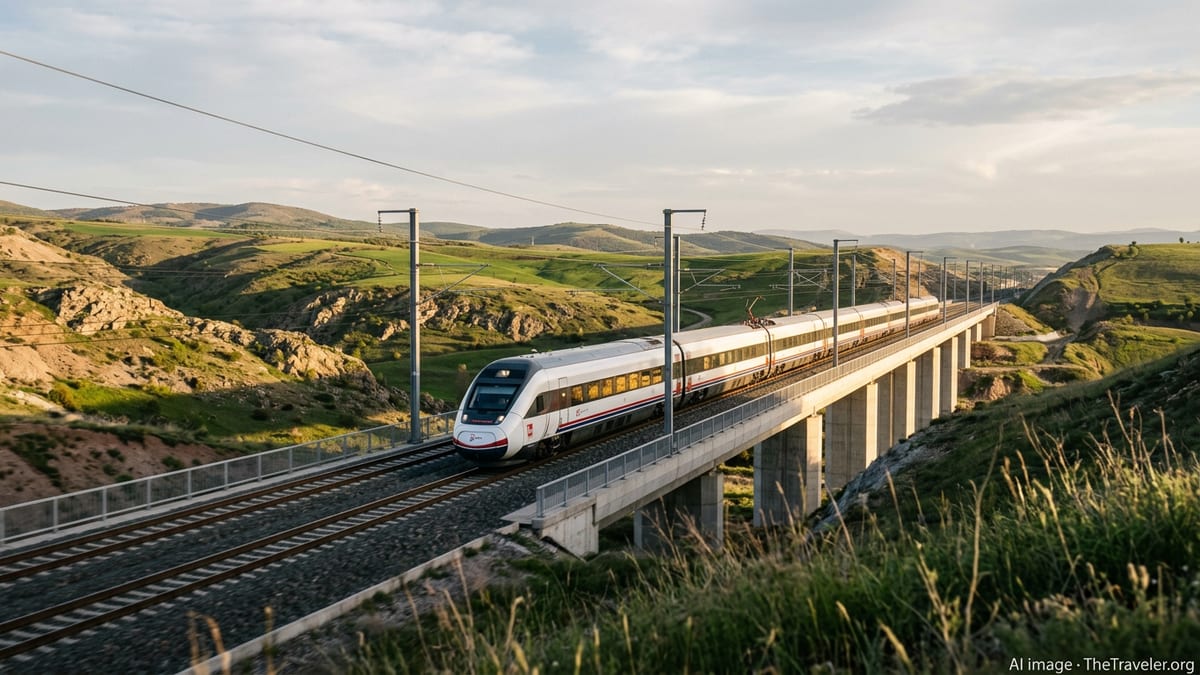
Strategic focus on GSM-R across the Spanish high speed network
Publicly available information on ADIF’s 2026 network planning documents indicates that GSM-R is already deployed on Spain’s core high speed corridors, where it underpins the European Rail Traffic Management System used for train control. The new tender is framed as a continuation of this strategy, seeking a specialist contractor to secure ongoing availability of radio access, core network elements and associated wayside equipment.
Reports on recent maintenance and upgrade programmes show that ADIF has been consolidating smaller contracts into larger, corridor-wide frameworks covering both upkeep and renewal of existing GSM-R assets. This mirrors earlier moves described in competition and sector analyses, where previous high speed maintenance agreements were progressively grouped to achieve economies of scale and more consistent performance standards across routes.
The forthcoming contract is expected to align with this model, bringing high speed GSM-R maintenance, renewal and technical support under a single long-term agreement. Market observers suggest that bidders with experience in multi-year telecoms asset management and integration with signalling systems are likely to be well placed.
Building on recent GSM-R investments and tenders
In parallel with the high speed programme, ADIF has in the last two years advanced multiple GSM-R projects on conventional and commuter lines, including new installations, support services and combined works-and-maintenance contracts. Public procurement notices in Spain’s official state gazette describe tenders for installation and upkeep of GSM-R on lines such as Xàtiva–Alcoi and Cercedilla–Cotos, as well as framework contracts to support telecommunications maintenance more broadly across the rail network.
Separate announcements from ADIF and ADIF Alta Velocidad detail investments in GSM-R and associated telecoms infrastructure as part of wider renewal plans, including fibre optic upgrades on high speed routes and the roll-out of new maintenance equipment and inspection trains. These programmes collectively point to a strategy that treats GSM-R as a core operational system rather than an isolated technology layer.
The new high speed-focused maintenance and renewal tender would therefore sit within an already active pipeline of GSM-R-related contracts. Industry coverage suggests that ADIF’s goal is to ensure continuity between initial deployment works, follow-on maintenance, and eventual migration to future radio standards such as FRMCS, which European rail policy documents identify as the long-term successor to GSM-R.
Safety, reliability and service quality in a period of intense scrutiny
The decision to seek a dedicated contractor for GSM-R maintenance and renewal on high speed lines comes at a time of heightened attention to infrastructure reliability in Spain. Recent reporting on incidents and operational restrictions has highlighted the extent to which signalling, telecommunications and condition monitoring systems contribute to both safety and punctuality on busy corridors.
On routes such as Madrid–Barcelona and Madrid–Seville, traffic levels have increased significantly with the entry of new high speed operators and growing demand. According to sector commentary, this has placed additional pressure on ADIF’s maintenance regimes, with observers calling for more predictable, long-horizon investment in the assets that support safe high-speed operations, including radio communications used for train control and driver–signaller interaction.
By explicitly combining maintenance and renewal responsibilities in a single contract for high speed GSM-R systems, ADIF appears to be responding to these concerns. The structure of recent telecoms tenders suggests an emphasis on preventive maintenance, rapid fault resolution and the progressive replacement of equipment approaching obsolescence, all framed within performance-based service levels.
Implications for contractors and future FRMCS migration
For potential contractors, the high speed GSM-R tender signals an opportunity to secure a multi-year role at the heart of Spain’s rail telecoms landscape. Experience with complex, safety-related radio systems, interoperability with ERTMS and integration with existing control centres are likely to feature prominently in the technical requirements.
Sector analyses of European rail communications note that GSM-R is nearing the end of its technological lifecycle, with migration planning to the 5G-based FRMCS standard already under way in several countries. In this context, ADIF’s focus on maintenance and renewal is widely interpreted as a bridge strategy, aimed at keeping current systems robust and compliant while creating a pathway for future upgrades.
Observers point out that maintenance contracts of this type increasingly include obligations related to technology evolution, such as compatibility with future equipment, support for mixed-technology environments and data interfaces that can be reused in FRMCS deployments. The high speed GSM-R tender in Spain is expected to follow this pattern, even if detailed migration timelines have yet to be finalised.
What it means for passengers and operators
Although GSM-R is largely invisible to passengers, its performance directly affects train operations on the country’s flagship high speed routes. Consistent radio coverage and reliable integration with signalling allow operators to run dense timetables at high speeds, support real-time traffic management and respond more effectively to disruptions.
Industry commentary on previous ADIF contracts has linked targeted telecoms maintenance and renewals to improvements in punctuality and fewer service-affecting incidents caused by signalling or communications failures. By seeking a dedicated contractor to look after GSM-R on high speed lines, ADIF appears to be pursuing similar outcomes on corridors that carry a large share of Spain’s long-distance rail traffic.
For high speed operators, a stable and well-maintained GSM-R environment can also reduce operational risk and support future enhancements such as higher maximum speeds or more frequent services. As Spain continues to expand and upgrade its high speed network, the new maintenance and renewal contract for GSM-R is positioned as one more component in a broader programme aimed at sustaining performance on some of Europe’s busiest high speed rail lines.