


More news on this day
China’s first domestically built large cruise ship, Adora Magic City, has begun a new phase of international sailings from Shenzhen, signaling both the city’s rising cruise ambitions and a broader push to connect southern China with Vietnam and other Asian destinations.
Get the latest news straight to your inbox!
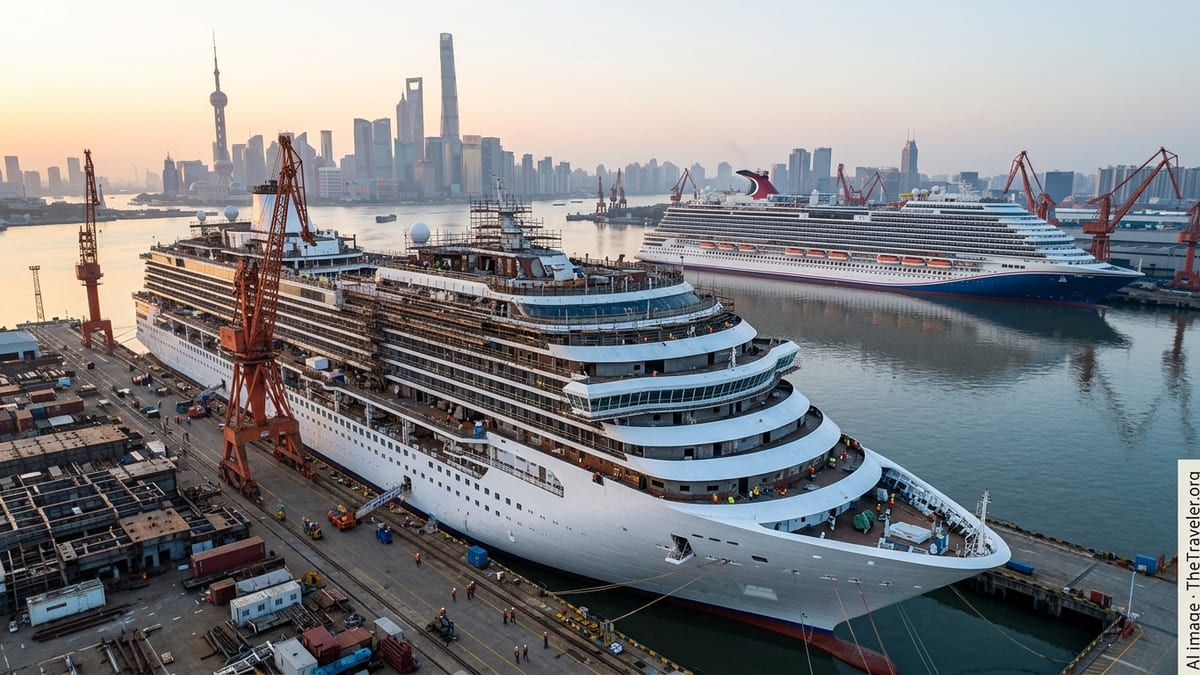
Shenzhen Emerges as a New Homeport for China’s Flagship Cruise
Publicly available information shows that Adora Magic City, operated by Adora Cruises, made its Shenzhen debut at Shekou Cruise Homeport in mid-August 2026, carrying around 4,600 passengers for a Vietnam-bound voyage. The sailing marked the start of a dedicated summer homeport season in Shenzhen, extending through mid-September and positioning the southern metropolis as a key base alongside Shanghai.
Reports from Shenzhen’s municipal platforms indicate that the vessel is scheduled to operate a series of five-day, four-night and six-day, five-night international itineraries from Shekou. The programs primarily focus on ports in central and northern Vietnam, including Hue, Ha Long Bay, and Nha Trang, while some sailings extend to Jeju in South Korea. The pattern underscores Shenzhen’s strategy to leverage its location at the heart of the Guangdong–Hong Kong–Macao Greater Bay Area to build a regional cruise hub.
The decision to base Adora Magic City in Shenzhen for a run of international cruises comes after the ship’s initial deployment out of Shanghai from January 2024. In that earlier phase, Adora Magic City operated Japan and South Korea routes from Wusongkou International Cruise Terminal, establishing its credentials on Northeast Asia corridors before expanding to the South China Sea and Southeast Asian markets.
Industry data compiled by international classification and port authorities describe Adora Magic City as a milestone project for China’s shipbuilding and cruise sectors. Built in Shanghai and classed to international standards, the 135,000-plus gross ton vessel represents a domestic answer to established global cruise brands, and its arrival in Shenzhen is being framed as a concrete step in bringing that capability to South China’s outbound tourism market.
Vietnam Routes Anchor New South China Sea Focus
The first wave of Shenzhen departures is centered on Vietnam, highlighting the country’s growing role in regional cruise development. According to itinerary information released through government and travel-industry platforms, Adora Magic City is offering roundtrip sailings that combine cultural and coastal calls such as Hue, the gateway to the imperial city of Huế, the UNESCO-listed landscapes of Ha Long Bay, and the beach resort area around Nha Trang.
Travel product descriptions circulated by major tour operators show that longer regional voyages are also planned that link Shenzhen with multiple Southeast Asian destinations. One example itinerary outlines a nine-day, eight-night cruise from Shenzhen visiting Kota Kinabalu in Malaysia, Muara in Brunei, and Nha Trang in Vietnam, before ending in Hong Kong. Such sailings indicate a strategic effort to connect the Pearl River Delta with a chain of emerging cruise ports around the South China Sea.
These routes reflect a broader shift in China’s outbound tourism patterns, as cruise lines diversify beyond traditional Northeast Asia itineraries. Vietnam, in particular, has been strengthening its port infrastructure and shore excursion offerings to cater to large cruise ships, with Adora Magic City’s calls expected to add passenger volume and raise the country’s profile on Chinese-language cruise markets.
The Shenzhen–Vietnam focus also gives Adora Magic City an opportunity to test a mix of short-break and longer regional voyages that appeal to families and first-time cruisers in southern China. Schedules highlighted by local media emphasize convenient five-day or six-day options timed for holiday periods, suggesting a push to integrate cruising into the Greater Bay Area’s established pattern of short-haul leisure travel.
From Shanghai Pioneer to National Cruise Symbol
Adora Magic City’s deployment to Shenzhen follows more than a year of commercial operations based in Shanghai. According to official statistical releases, the ship began its maiden commercial voyage on January 1, 2024, from Shanghai’s Wusongkou terminal, carrying over 3,000 passengers on a seven-day itinerary to Jeju in South Korea and the Japanese ports of Fukuoka and Nagasaki.
Subsequent updates from national information platforms report that by mid-2024 the vessel had completed dozens of voyages and welcomed well over 150,000 tourists. The ship has also operated cruise-to-nowhere itineraries from Shanghai, signaling an effort to diversify its product range and maximize deployment in China’s largest cruise market before expanding southward.
Technical and industry analyses describe Adora Magic City as China’s first large cruise ship built domestically to international standards and based on a Vista-class platform. With capacity for more than 5,000 passengers at full occupancy, multiple dining venues, entertainment spaces, and retail areas, the vessel is positioned as a flagship for a new Chinese cruise brand aiming to compete regionally in Asia.
The move to add Shenzhen as a seasonal homeport therefore carries symbolic weight beyond a simple itinerary adjustment. It suggests that China’s homegrown cruise hardware, once proven in Shanghai, is now being deployed across multiple coastal regions to stimulate port development, tourism spending, and supporting services along the country’s long maritime frontier.
Greater Bay Area Bets on Cruise Growth
Shenzhen’s efforts to attract Adora Magic City fit within a wider strategy to elevate the Greater Bay Area as a major international tourism and transport cluster. Policy briefings released by the city’s development research agencies describe the Adora deployment as the vessel’s first stop in South China during a “China Coast Tour,” and highlight plans to expand both cruise supply and supporting infrastructure.
Shekou Cruise Homeport, located on the western side of Shenzhen Bay, has been steadily upgrading facilities to handle larger volumes of international passengers. Its role as a departure point for Adora Magic City positions it alongside Guangzhou’s Nansha and Hong Kong’s Kai Tak terminals in serving the regional market. The addition of a domestically built flagship vessel is expected to increase competition and encourage more diversified cruise offerings.
For local tourism and retail sectors, the new cruise era offers opportunities to capture pre- and post-cruise spending from passengers traveling from across the Chinese mainland and overseas. Hotel, transport, and shore excursion providers are adapting packages to include both urban experiences in Shenzhen and access to neighboring cities such as Guangzhou, Zhuhai, and Hong Kong, leveraging the area’s dense high-speed rail and ferry networks.
Observers in the cruise and shipbuilding industries view the Adora Magic City deployment as a test case for how China’s domestically built large cruise ships can support regional development objectives. If the Shenzhen homeport season succeeds in filling berths and generating strong passenger satisfaction, similar models may be rolled out to other coastal cities, further broadening the geographic spread of China’s nascent cruise ecosystem.
Implications for Asia’s Competitive Cruise Landscape
The start of Adora Magic City’s international program from Shenzhen comes as Asian cruise markets continue to rebuild and reposition. Regional competition is intensifying among ports in Japan, South Korea, Vietnam, Singapore, and Hong Kong to attract large vessels and secure repeat deployments. China’s decision to field its own domestically built ship on high-profile international routes adds a new dimension to this landscape.
Port records and deployment trackers show that Adora Magic City is joining a growing fleet of ships serving Asia-only itineraries rather than round-the-world schedules. This regional focus allows for more tailored onboard products, including Chinese-language services, local cuisine, and entertainment designed specifically for passengers from mainland China and neighboring markets.
The emphasis on Vietnam and nearby Asian destinations from Shenzhen also illustrates how cruise lines are recalibrating sailing distances and port pairs for efficiency and guest appeal. Shorter overnight legs between ports such as Shenzhen, Ha Long Bay, and Nha Trang support dense scheduling while still delivering varied cultural and coastal experiences. This approach is particularly suited to travelers seeking a first cruise experience without long-haul flights.
As Adora Magic City continues its China Coast Tour and expands its network of ports of call, industry watchers are likely to track passenger numbers, itinerary adjustments, and any expansion of homeport operations. The Shenzhen deployment, with Vietnam at its core and wider Asia in view, offers an early indication of how China’s homegrown cruise sector may reshape regional tourism flows in the years ahead.
Shenzhen Government Online: Adora Magic City makes Shenzhen debut
Policy Research Office of Shenzhen Municipal Government coverage
State Council information on Adora Magic City passenger volume
Shanghai Pudong report on Adora Magic City’s maiden commercial voyage