


More news on this day
A sudden flash flood in Nepal’s Rasuwa district near the Tibet border has left at least 384 travellers missing, including 105 Indian nationals, after a surge of water tore through a busy tourism and pilgrimage corridor on Wednesday, damaging roads, bridges and hydropower projects and severing communications across the mountain region.
Get the latest news straight to your inbox!
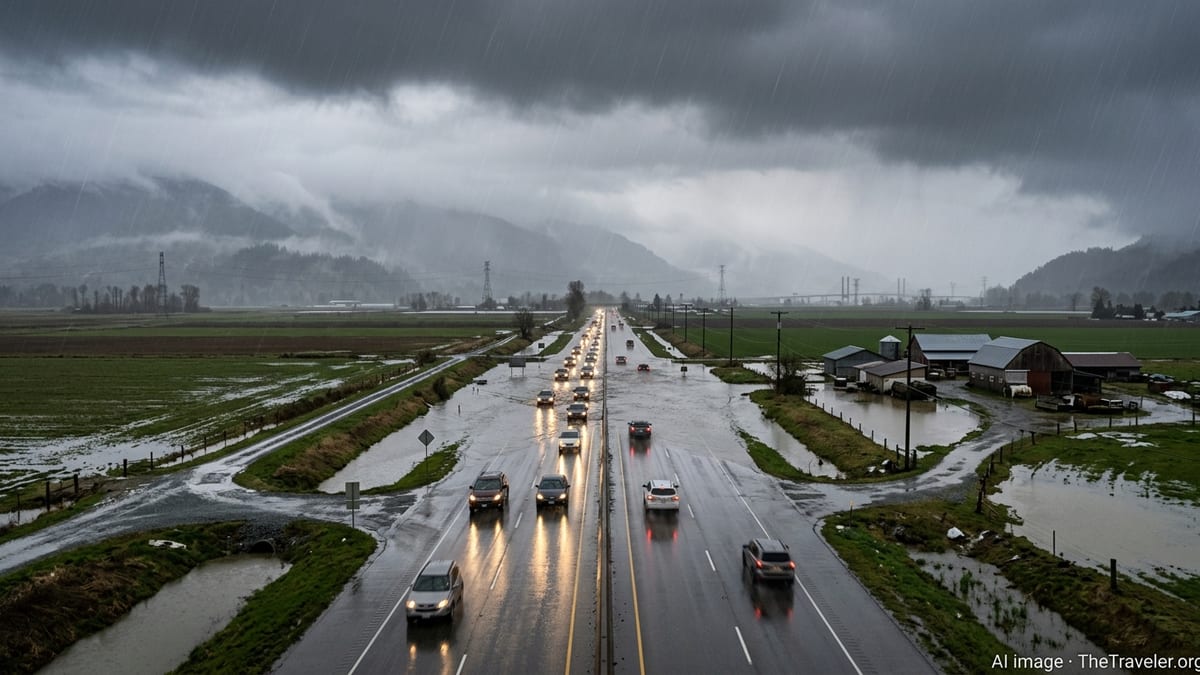
Flood tears through Rasuwa’s tourism corridor
Published coverage indicates that the disaster began on the morning of August 26, when a sudden surge in the Bhote Koshi (Bhotekoshi) River swept into Nepal’s Rasuwa district from the Tibet side, inundating riverside settlements around Rasuwagadhi and Timure. The corridor is a vital gateway between Nepal and Tibet and a popular route for travellers heading towards the Langtang region as well as those transiting to China.
Preliminary figures compiled by the Nepal Tourism Board and reported by regional media put the number of missing travellers at 384, including 291 foreign nationals and 93 Nepali citizens. Of the foreign travellers, 105 are Indian nationals, while others reportedly include visitors from the United States, Malaysia, the United Kingdom, South Africa, Australia and the Netherlands.
Video and photographic evidence reviewed by multiple outlets shows muddy water filled with debris crashing through the narrow valley, swamping buildings, trucks and parked vehicles along the riverbank. Sections of the road network appear to have been ripped away, complicating access to several affected towns and checkpoints along the border route.
Local reporting notes that multiple hydropower facilities along the Bhote Koshi and its tributaries have suffered significant damage, with powerhouses, tunnels and access roads affected. The impact on electricity generation and regional commerce is still being assessed, but early accounts point to a substantial setback for infrastructure that serves both residents and the tourism sector.
Hundreds of travellers and pilgrims unaccounted for
According to lists shared by tourism authorities and cited in Indian and Nepali media, those missing include package tourists, trekkers and a large number of religious pilgrims. Several reports highlight that many of the Indians and non-resident Indians unaccounted for were travelling on the Kailash Mansarovar route, which uses the Nepal–Tibet road corridor as a staging point for journeys into the Tibetan plateau.
Figures carried by national outlets in India describe at least 105 Indian nationals and 37 non-resident Indians among the nearly 400 missing. The wider group of untraced travellers spans multiple countries, underscoring how international the flow of visitors through Rasuwa had become during the late monsoon travel window.
The Nepal Tourism Board has stated in public information that it is working with tourist police and local stakeholders to verify the whereabouts and safety status of people known to have been in or passing through the affected zones at the time of the flood. Verification has been hampered by washed-out bridges, disrupted mobile networks and the destruction of lodges, teahouses and checkpoints along the river.
Families and tour operators in India, Nepal and further afield are reported to be struggling to reach guides and ground staff. Social media channels and community groups linked to pilgrimage and trekking operators have become informal noticeboards for appeals, partial passenger lists and updates on those who have managed to reach safer ground.
Cross-border disaster with complex rescue challenges
Initial assessments described the event as a flash flood associated with a sudden surge from the Tibetan side of the border, with some scientific institutions in the region pointing to the possibility of an avalanche or glacial-related release high upstream. The steep topography of the Bhote Koshi valley, coupled with recent monsoon rainfall, created conditions in which water and debris could accelerate rapidly, leaving riverside settlements with little warning.
Published coverage from Nepal and international outlets highlights that the destruction spans both sides of the border, affecting communities and infrastructure in Rasuwa as well as across the frontier in Tibet. The transboundary character of the disaster adds layers of complexity to search, rescue and information-sharing efforts.
Reports indicate that Nepalese security forces, local responders and helicopter teams have been attempting to reach cut-off pockets of population along the river, but high water levels, unstable slopes and cloud cover have limited aerial operations. Road access into the worst-hit stretches is constrained by collapsed sections and damaged bridges, slowing the movement of rescue personnel and relief supplies.
On the Chinese side, official media reports referenced in international coverage describe a significant mudslide and flood impacts near the Gyirong crossing, with casualties and missing people of their own. While fuller details remain scarce, the picture that emerges is of a fast-moving event that ravaged a long stretch of the cross-border transport and trade corridor.
Regional and international response gathers pace
The scale of the tragedy and the high number of foreign nationals missing have prompted a widening regional response. Public statements covered by Indian and Nepali media indicate that India has offered humanitarian assistance to Nepal, with leaders in New Delhi expressing readiness to provide relief supplies and technical support.
Reports further note that the Embassy of India in Kathmandu has issued emergency contact numbers for Indian nationals and families seeking information. Helpline details have been circulated widely by Indian news outlets and on official social media channels, alongside advisories urging travellers to follow instructions from local authorities and stay away from riverside areas downstream of the flood zone.
Within Nepal, government agencies, the tourism board and local administrations have been working to consolidate data on the missing, coordinate evacuation points and establish temporary shelters in safer locations. Hotels and guesthouses in less affected nearby towns have been repurposed to host those who managed to move out of the immediate danger zone, according to travel-industry reporting.
International tour operators with groups in Nepal are also assessing itineraries and safety protocols, with some already suspending trips that use the Rasuwa corridor. Insurance and consular teams are monitoring developments closely, as questions grow about the fate of those who remain out of contact days after the flood.
Travel impact and safety outlook for Nepal’s mountains
The Rasuwa disaster has renewed attention on the vulnerability of Himalayan tourism routes to extreme weather and high-altitude hazards. In recent years, Nepal has experienced a series of floods and landslides that have affected trekking regions and road corridors, with experts repeatedly pointing to the influence of climate change on glacial melt and the intensity of monsoon systems.
Travel analysts note that late August and early September are typically a transition period between the monsoon and the main autumn trekking season, when operators begin ramping up departures for popular regions such as Langtang, Manaslu and Annapurna. The sudden loss of infrastructure in Rasuwa is expected to disrupt itineraries that rely on overland entry via the Tibet border and may prompt a re-evaluation of contingency planning across the industry.
For travellers currently in Nepal but outside the affected districts, domestic flights and road access to many other tourism hubs, including Kathmandu, Pokhara and parts of the central and eastern Himalaya, were continuing at the time of latest reports. However, authorities and tourism bodies have been advising visitors to monitor updates closely, register with their embassies where appropriate and avoid non-essential travel through high-risk river valleys during periods of heavy rain.
Longer term, commentators argue that the tragedy in Rasuwa is likely to reinforce calls for stronger early-warning systems, stricter zoning of riverside construction, and better coordination on disaster information across the Nepal–Tibet frontier. For a country where mountain tourism is central to the economy, the challenge will be to restore traveller confidence while acknowledging the rising risks in an era of more volatile mountain climates.
Condé Nast Traveller India coverage of the Rasuwa floods
Indian Express report on missing Indian travellers