


More news on this day
STARLUX Airlines is expanding its regional network with a new nonstop route between Nagoya and Taichung, creating a fresh air link between central Japan and central Taiwan and widening travel options beyond the traditional Taipei gateways.
Get the latest news straight to your inbox!
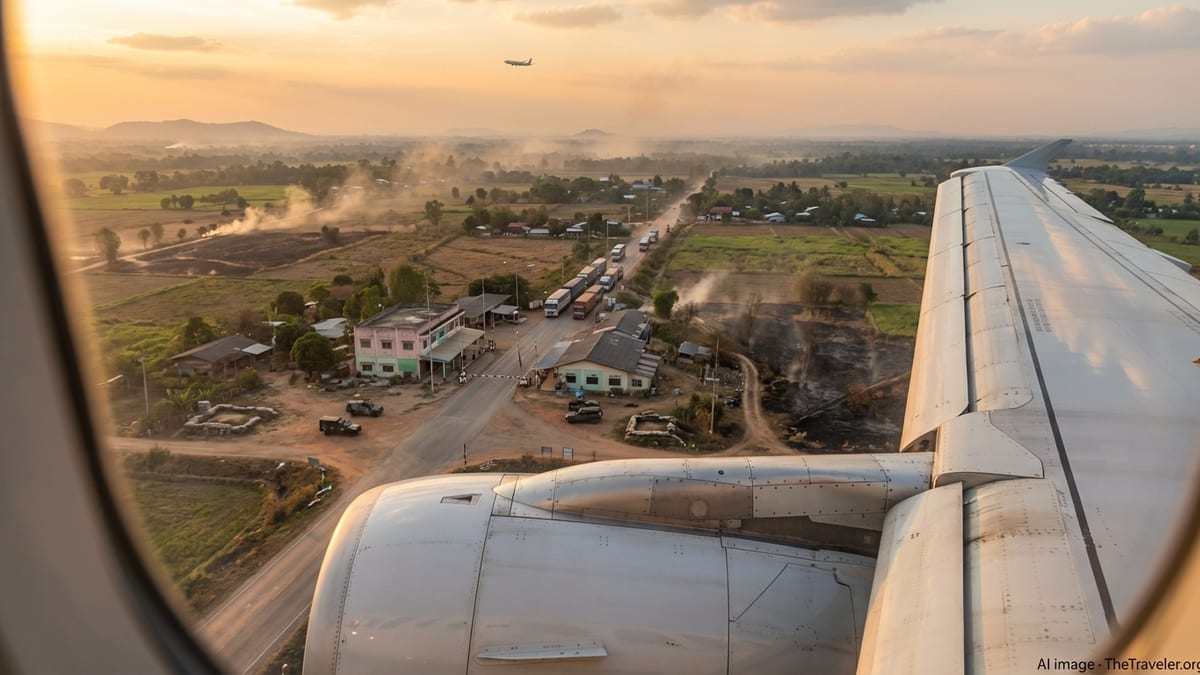
A new city pair in a growing Japan–Taiwan network
The planned Nagoya–Taichung route continues STARLUX Airlines’ steady buildout of services between Japan and Taiwan. Publicly available company information shows that Nagoya is already part of the carrier’s Japan portfolio from Taipei, and Taichung has been developed as a second base with international links to destinations including Macau, Da Nang and multiple Japanese cities.
Industry schedules and airport disclosures for recent seasons indicate that STARLUX has been using narrowbody Airbus aircraft such as the A321neo and A320 family on many of its short haul routes from Taichung. The new Nagoya pairing is expected to follow a similar model, connecting the two mid sized cities with a full service product that includes cabin classes, inflight dining and connectivity in line with the airline’s existing regional standards.
The addition of direct services between Chubu Centrair International Airport and Taichung International Airport reflects a broader uptick in Japan–Taiwan capacity as tourism flows recover. Airlines on both sides have been restoring pre pandemic schedules and adding new routes, targeting both leisure demand and a growing segment of independent travelers looking for alternative gateways.
Strengthening Taichung as STARLUX’s second hub
Official company reports describe Taichung as STARLUX’s second home base, after Taipei Taoyuan. Over the past two years, the airline has layered in routes from Taichung to Macau, Da Nang, Phu Quoc, Takamatsu and Okinawa, positioning the central Taiwan city as a regional connecting point as well as an origin and destination market in its own right.
Airport statistics for Taichung show that it has become one of Taiwan’s busier airports in terms of passenger volume, with scheduled services to multiple cities in Japan, Greater China and Southeast Asia. The arrival of direct Nagoya flights is expected to support that role by attracting travelers from Japan who may want to avoid the larger and more congested Taipei Taoyuan International Airport.
For STARLUX, developing Taichung further also spreads operational risk and offers more scheduling flexibility. A stronger Taichung network provides additional options when adjusting capacity, rotating aircraft and offering connections between regional routes without routing all traffic through Taipei.
Nagoya’s appeal for Taiwanese and Japanese travelers
Nagoya’s Chubu Centrair International Airport has been actively rebuilding its route map, with carriers adding or restoring services to major Asian cities. Publicly available flight information shows solid demand from Taiwan to central Japan, where Nagoya serves as a gateway to destinations such as Takayama, Shirakawa go, the Kiso Valley and the Ise Shima region.
For travelers from Taiwan, a nonstop link from Taichung shortens the journey to central Japan and removes the need for a domestic connection through Taipei or a transfer via other Japanese hubs. This can be particularly attractive for families and group tours based in central and southern Taiwan, for whom Taichung is often a more convenient departure point.
On the Japan outbound side, the new flights offer residents of the Nagoya region a direct route into central Taiwan, which is home to cultural attractions, national parks and popular culinary destinations. Travel industry observers note that Japanese visitors have shown increasing interest in exploring Taiwanese cities beyond Taipei, and Taichung’s night markets, museums and nearby mountain scenery are frequently highlighted in promotional material.
Tourism and economic implications for central Taiwan
Regional tourism bodies in Taiwan have been encouraging airlines to diversify entry points into the island, highlighting Taichung and other cities as alternatives to Taipei. The Nagoya–Taichung connection supports that strategy by funneling Japanese visitors directly into central Taiwan’s tourism economy, including hotels, restaurants and transport providers concentrated around Taichung.
Analysts also point to potential benefits for business travel and trade. Central Taiwan hosts clusters of technology and manufacturing firms, and more direct air links can simplify travel for engineers, sales teams and executives moving between Japan and Taiwan. While the bulk of corporate traffic still flows through Taipei, incremental routes like Nagoya–Taichung can help relieve pressure on main hubs and create more tailored options for regional industries.
Travel agencies in both markets are expected to incorporate the new route into package tours and dynamic itineraries, combining Nagoya with stays in Taichung and excursions to surrounding areas such as Sun Moon Lake and the central mountain range. As schedules are finalized and seats go on sale, fare competition and introductory promotions are likely to shape early demand on the route.
Competitive landscape in the Japan–Taiwan corridor
The Japan–Taiwan corridor is one of the most contested short haul markets in Northeast Asia, with full service airlines and low cost carriers operating dense schedules between multiple city pairs. Established players provide numerous daily flights between Tokyo, Osaka, Fukuoka and Taipei, as well as seasonal service to other regional airports.
STARLUX’s strategy has focused on differentiating through product quality while gradually adding destinations and frequencies. The move into routes such as Nagoya–Taichung continues that pattern, targeting city pairs that can sustain premium oriented services alongside high volume leisure demand. Industry observers note that secondary links like this can help an airline stand out, especially when paired with consistent onboard standards and modern aircraft.
As the new Nagoya–Taichung service comes online, schedule data will clarify how it fits alongside existing Taipei–Nagoya operations and other Taichung–Japan routes. The development underscores how mid sized airports in both Japan and Taiwan are playing a larger role in regional connectivity, giving travelers more options on where to start and end their journeys.