


More news on this day
Air Arabia Dammam has launched its first international route, inaugurating non-stop flights between Dammam’s King Fahd International Airport and Amman’s Queen Alia International Airport, giving travelers in Saudi Arabia’s Eastern Province a new low-cost link to Jordan’s capital.
Get the latest news straight to your inbox!
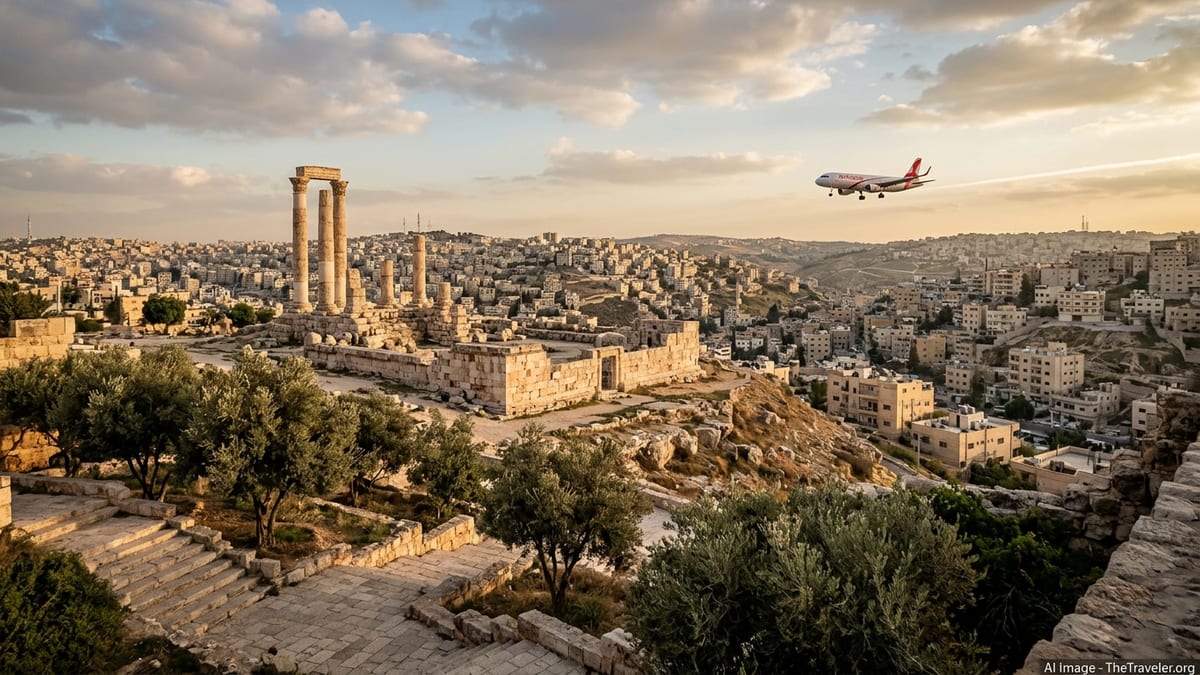
First international step for Saudi Arabia’s newest budget carrier
The new Dammam–Amman service marks the first international operation for Air Arabia Dammam, a Saudi national low-cost carrier established as a Dammam-based joint venture led by Air Arabia. The airline only commenced flying in September 2026 after securing its air operator certificate from Saudi Arabia’s General Authority of Civil Aviation, initially focusing on domestic routes from King Fahd International Airport.
According to an 11 November 2026 announcement from the airline, the Amman route was scheduled to start on 19 November, with five weekly non-stop flights planned between Dammam (DMM) and Amman (AMM). Air Arabia’s 20 November press communication confirms that the inaugural Dammam–Amman flight operated on 19 November, formally opening the carrier’s first international city pair.
Industry schedule data indicates the service is operated by Airbus A320 aircraft in a single-class configuration of around 174 seats, consistent with Air Arabia’s standard narrowbody fleet. The A320 attribution comes from schedule and database providers rather than from the airline’s own press notice, so it should be treated as current but subject to change if the carrier adjusts equipment.
Timings, frequency and ramp-up considerations
Air Arabia’s launch schedule shows flight 4P 301 departing Dammam at 15:00 and arriving in Amman at 17:50 local time, with the return flight 4P 302 leaving Amman at 18:40 and landing back in Dammam at 20:55. The airline’s 11 November release lists operations on Tuesday, Wednesday, Friday, Saturday and Sunday, giving a five-times-weekly pattern once the route is fully implemented.
Some independent schedule sources, including industry databases monitoring filed timetables, show the route beginning with three weekly frequencies from 19 November and then increasing to five weekly services from early December 2026. At the time of writing, external tools such as Google Flights and specialist schedule trackers still reflect a limited number of operating days in the first weeks, so readers should be aware that the full five-weekly pattern may follow a short ramp-up phase.
Because flight numbers, timings and operating days can change at short notice in response to demand or airspace considerations, travelers are advised to check live schedules via Air Arabia’s website, mobile app or global distribution systems when planning a trip. This is particularly important in the first weeks of operation, when new international services are most likely to see minor timetable adjustments.
What the new link means for travelers between Dammam and Amman
The Dammam–Amman route gives residents and businesses in Saudi Arabia’s Eastern Province a new non-stop option to reach Jordan’s capital, supplementing existing flights on other carriers. For many passengers who previously routed via Riyadh, Jeddah or Gulf hubs, the direct flight can shorten overall journey times and reduce the need for domestic or regional connections.
Demand on this corridor is expected to come from a mix of business travelers, families visiting friends and relatives, and passengers combining Jordan with religious trips or leisure stays in Saudi Arabia. With Air Arabia Dammam operating on a low-cost model, the service is also positioned to compete on price against full-service alternatives, though specific fare levels vary by date and booking conditions and need to be checked in real time on the airline’s booking channels.
The carrier sells the route directly to the public through its website, app, call center and travel agencies, with no special membership required. Bookings are offered on a point-to-point basis typical of low-cost operators, and travelers can add optional services such as checked baggage, seat selection and onboard meals according to their needs.
Onboard product and the wider Dammam network
Onboard, Air Arabia Dammam follows the wider Air Arabia group’s low-cost offering, pairing a single-class A320 cabin with ancillary services. The airline highlights complimentary SkyTime in-flight streaming, which allows passengers to access entertainment on their own devices, alongside a buy-on-board menu branded as SkyCafe. Members of the Air Rewards loyalty program can also earn and redeem points on eligible flights, integrating the new Saudi carrier into Air Arabia’s existing customer ecosystem.
The Amman launch comes after an initial domestic ramp-up from Dammam that has included routes such as Riyadh, Jeddah and Madinah, according to industry analyses citing Saudi schedule data. These domestic links are designed to feed traffic into King Fahd International Airport and support the airport’s growth under Saudi Arabia’s aviation strategy.
In parallel with Amman, a route from Dammam to Damascus has been filed in industry schedules as another early international destination for Air Arabia Dammam. However, given the potential for operational changes related to regional security and airspace constraints, travelers should verify the status of the Damascus service and any other new routes at the time of booking rather than assuming they are operating as initially filed.
What travelers should confirm before booking
With the Dammam–Amman flights now underway, prospective passengers should first confirm that their intended travel dates fall on operating days for flight 4P 301/302 and whether the route has reached its planned five-weekly frequency. Live timetables on Air Arabia’s digital channels and in travel agency systems will provide the most reliable view of current operations.
Given that Air Arabia Dammam follows a low-cost model, travelers should also review what is included in the base fare. Hand baggage allowances, checked baggage fees, change conditions and refund rules can differ from those of full-service competitors on the same route, and launch promotions, if any, may apply only to specific fare types or travel periods.
Finally, as with any new international service, schedules and frequencies can evolve in the months after launch. Anyone planning complex itineraries that connect beyond Dammam or Amman should monitor their booking for updates and consider allowing additional connection time, particularly while the new route settles into its long-term operating pattern.