


More news on this day
Rail passengers in southern England are still dealing with cancellations, altered routes and revised ticket rules after a rare “do not travel” warning was issued for services around Didcot in Oxfordshire, following a major gas leak close to the railway that forced the closure of key Great Western Railway corridors between Reading, Didcot and Swindon.
Get the latest news straight to your inbox!
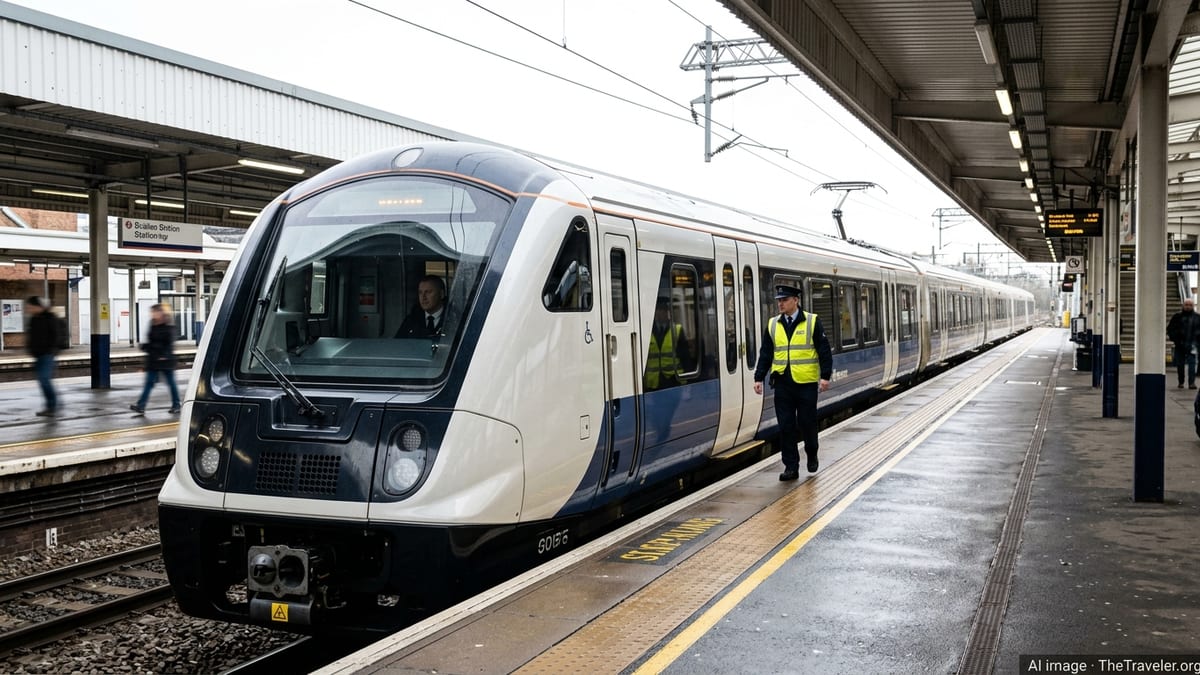
Gas leak near Didcot triggers severe disruption
Publicly available information from Network Rail and Great Western Railway indicates that the disruption began on the evening of 22 September 2026, when a significant gas leak was detected close to railway land near Didcot Parkway. As a safety exclusion zone was established around the site, all lines through the affected area were closed, cutting a vital link on one of Britain’s busiest intercity and commuter corridors.
By the morning of 23 September, operators had moved from warning of delays to urging passengers not to travel on certain routes. Network Rail’s service updates for the Reading to Swindon corridor outlined that normal services could not run while engineers and the gas company worked on what has been described in published material as safety critical repairs. In practice, this meant long-distance intercity trains and local stopping services alike were either cancelled outright or heavily diverted.
Local and regional media reports show that the impact extended well beyond Oxfordshire. Services linking London Paddington with South Wales, the Cotswolds and the West Country were forced to run via alternative routes or operate with reduced frequency, while some early morning commuter trains into Reading and London were removed from the timetable.Passengers were advised that journey times could be significantly extended and that real-time information boards might not fully reflect short-notice alterations.
According to the latest updates issued on 24 September, work on the gas infrastructure is continuing, with restrictions on train movements remaining in place around Didcot. While some lines have reopened on a limited basis, operators are still warning that residual disruption, short-notice cancellations and crowding on alternative services are likely through at least the remainder of the day.
How the ‘do not travel’ message changed passenger plans
The “do not travel” message issued for parts of the Great Western network represents one of the strongest pieces of advice that UK rail operators use during major incidents. Recent staff briefings published by industry bodies describe these alerts as reserved for situations where no reliable alternative routes are available and where there is a significant risk that passengers starting a journey will be unable to complete it.
In this case, the warning focused in particular on journeys that required travel between Reading, Didcot and Swindon on 23 September. National passenger information channels made clear that anyone who could postpone or reroute their trip should do so, especially for non-essential journeys such as leisure travel or discretionary work meetings. The aim, according to industry guidance, is to reduce pressure on already stretched replacement services and allow space for those who have no choice but to travel.
Social media posts and passenger reports collected by travel monitoring sites suggest that many commuters opted to work from home, while others switched to long-distance coach services or drove to alternative stations outside the affected zone. At the same time, rail operators sought to balance the strong wording of the alert with the reality that some passengers, including those with onward flights or time-sensitive appointments, still needed to travel and would require clear information about what limited options remained.
The situation around Didcot follows other high-profile “do not travel” periods on the UK network this year, including warnings linked to overhead wire failures on the East Coast Main Line and extreme heat events that forced speed restrictions. Together, these incidents have raised questions among passenger groups about when such messages are deployed and how consistently they are applied across different operators.
Ticket flexibility, refunds and passenger rights
Alongside the service disruption, one of the most immediate concerns for affected travellers has been what to do about pre-booked tickets. Publicly available information from Great Western Railway indicates that advance and off-peak tickets dated for travel on 23 September on routes passing through Didcot can be used on 24 September instead, giving passengers an opportunity to delay their trip until services are more stable.
Industry guidance referenced by ticket retailers states that when a “do not travel” message is in place, operators are expected to offer flexibility beyond normal rules, including the option to travel on earlier or later services, or to reroute via different lines where capacity allows. Some digital ticketing platforms also highlight that full refunds may be available if a passenger chooses not to travel at all and their booked train is cancelled, even for tickets described as non-refundable, provided the request is made through the original point of sale.
However, consumer advice forums continue to feature cases where passengers have encountered difficulty obtaining refunds or rebooking during major disruption, especially when tickets were bought through third-party apps or split-ticketing services. The Rail Ombudsman’s past annual reports have noted that disputes frequently arise when passengers believe the level of disruption went beyond what was reasonably foreseeable at the time of booking.
For travellers affected by the current Didcot incident, published guidance suggests keeping clear records of any unused tickets, screenshots of journey planners showing cancellations, and receipts for additional costs such as taxis or overnight accommodation. These documents can be important if a claim needs to be escalated through a train company’s customer relations team or, in more complex cases, to the Rail Ombudsman.
Impact on wider UK rail reliability
The latest “do not travel” alert has added to a perception among many passengers that severe disruption on key UK rail corridors is becoming more frequent. Technical analyses of recent incidents point to a mix of factors, including aging infrastructure, extreme weather conditions and the complexity of operating a dense timetable on routes that carry long-distance, regional and freight traffic simultaneously.
In a written response published earlier this year, the UK government outlined that Network Rail is investing billions of pounds between 2024 and 2029 in renewals and resilience projects intended to reduce the likelihood of catastrophic failures. These initiatives include upgrades to overhead lines, improved monitoring of embankments and cuttings, and new systems designed to spot problems such as ground movement or asset overheating before they lead to line closures.
Despite this, passenger-facing data collected by watchdog organisations suggests that headline punctuality and cancellation statistics remain volatile, with major incidents like the Didcot gas leak, overhead wire failures and storm-related damage often overshadowing incremental improvements elsewhere on the network. Travel commentators note that when lines are severed on trunk routes that have limited diversionary options, the practical effect for passengers can be similar regardless of the underlying cause.
The experience of the past year has also prompted renewed debate over how rail disruption is communicated. Some passenger advocates argue that early “do not travel” warnings allow people to change plans in good time and avoid being stranded at intermediate stations, while others contend that such messages can appear suddenly and leave little opportunity to make alternative arrangements, particularly for those already en route.
What rail users should do in the coming days
For anyone planning to travel on Great Western Railway services through Reading, Didcot, Swindon or Oxford in the next few days, the most consistent advice across operator and government channels is to check journey planners on the day of travel and immediately before setting out. Timetables may be updated at short notice as more information emerges about repair progress on the gas infrastructure and the capacity of reopened lines.
Passengers with flexible tickets are being encouraged through published guidance to consider travelling outside peak hours where possible, to help ease crowding on the busiest replacement and diversionary services. Those with fixed advance tickets are advised to review the latest conditions on their operator’s website or app, as additional easements may be introduced if disruption continues longer than initially expected.
Travel planning services also recommend allowing extra time for connections, particularly for journeys involving onward flights or international trains. Where an itinerary absolutely depends on passing through the affected corridor on a specific day, travellers may wish to explore alternative modes such as long-distance coach services, or to travel earlier than planned while capacity is available.
While the current “do not travel” alert is limited to a specific area and period, national preparedness guidance updated this year emphasises that similar messages are likely to remain part of the UK rail landscape in the face of infrastructure constraints and changing weather patterns. For regular rail users, building in more flexibility, monitoring live information closely and understanding refund and rerouting rights are becoming essential parts of managing longer journeys.