


More news on this day
Rail users on one of Britain’s busiest intercity corridors continue to face significant disruption after a rare “do not travel” warning, issued in response to a gas leak near Didcot in Oxfordshire, forced widespread cancellations, diversions and capacity cuts on services between London, the West Country and South Wales.
Get the latest news straight to your inbox!
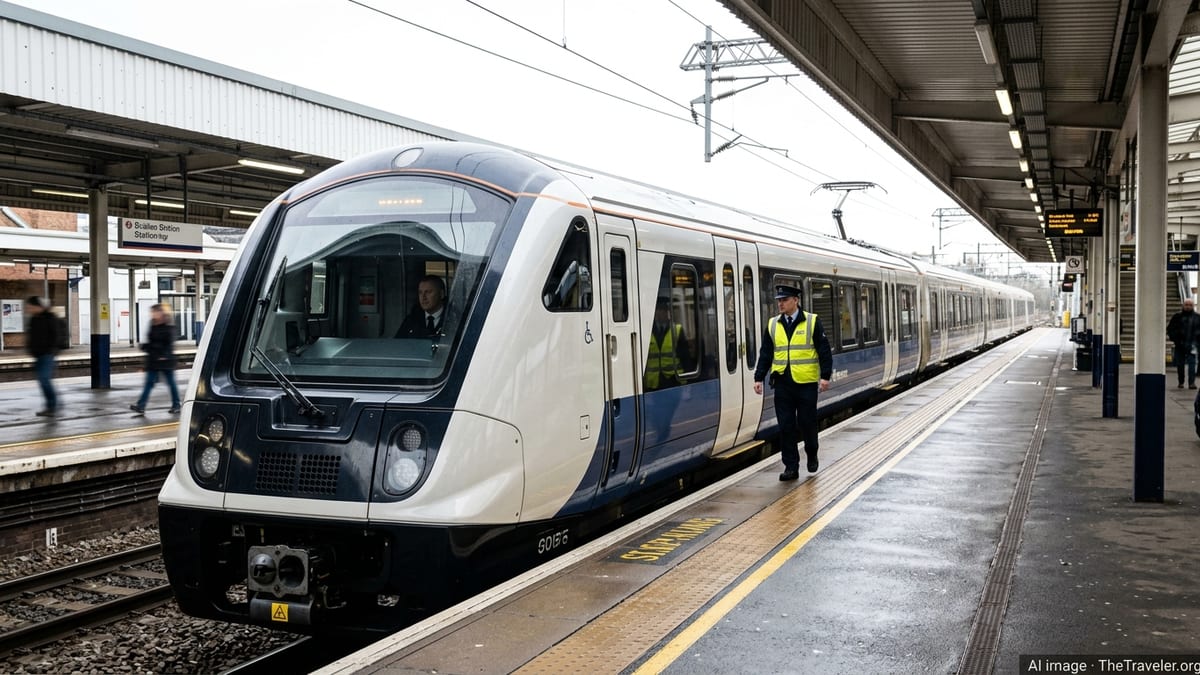
Gas leak near Didcot triggers severe disruption on key corridor
According to publicly available information from Network Rail, the disruption began on Wednesday 23 September 2026 after a gas leak was identified close to railway land in the Didcot area, within the safety exclusion zone set up by gas engineers. The main lines between Reading and Swindon, used by Great Western Railway intercity and regional trains, were heavily affected as a result of the emergency response.
Network Rail’s latest published update indicates that engineers from gas distributor SGN are working on site to repair the leak, but that normal services cannot operate through the affected section until it is fully resolved and the safety cordon is lifted. Until that point, a combination of cancellations, reduced frequencies and diversions on alternative routes is expected to continue to limit capacity.
Great Western Railway’s public travel information pages show that trains which would normally run through Didcot are being turned short, rerouted where possible, or withdrawn from the timetable. Long-distance services linking London Paddington with Bristol, South Wales, the Cotswolds and the South West are among those impacted, alongside local stopping services in Oxfordshire and Berkshire.
National journey planners for Wednesday 23 September and the following days highlight extended journey times and limited options, particularly during the morning and evening peaks. Passengers whose journeys are still operating are being advised in published guidance to expect very busy trains on the remaining routes either side of the disruption.
What a ‘do not travel’ warning means for passengers
The wording of a “do not travel” message is reserved in the UK rail industry for the most serious instances of unplanned disruption. Best practice documentation from the Rail Delivery Group and National Rail indicates that the alert is used when the network cannot safely or reliably move passengers and when viable rail replacement or diversionary options are either unavailable or severely constrained.
Passenger charters published by operators such as Avanti West Coast specify that when a formal “do not travel” warning is issued, customers with advance or otherwise restrictive tickets are normally entitled to a full refund without the usual administration fee if they choose not to travel. Industry briefing notes also make clear that in such circumstances, exchange and rebooking options are expected to be offered with relaxed conditions.
Recent staff guidance documents circulated across the network state that when a “do not travel” notice is in force, operators are expected to place clear messaging on journey planners, station departure boards and social media, and to coordinate with National Rail Enquiries so that real-time disruption feeds accurately reflect the limited service. This is intended to reduce the number of passengers reaching stations only to find their trains cancelled with no alternatives.
Consumer cases reported to the Rail Ombudsman from previous severe weather and infrastructure failures show that the presence or absence of a formal “do not travel” alert can influence complaint outcomes. Where such messaging was not used despite extensive disruption, passengers have, in some instances, argued that they received insufficient warning before setting out, highlighting how significant the designation has become in the industry’s handling of major incidents.
Impact on key routes and knock-on effects across the network
The gas leak near Didcot has affected a strategic section of the Great Western Main Line that carries intercity, commuter and freight trains between London, the Thames Valley, the South West and South Wales. According to journey information published by Great Western Railway and Network Rail, the line closure and speed restrictions in the surrounding area have caused a cascade of delays and alterations well beyond the immediate site of the incident.
Passengers travelling between London and Bristol Temple Meads, Cardiff Central, Swansea and Plymouth are among those facing the greatest disruption, with many services starting or terminating short of their advertised destinations or operating via less direct diversionary routes. Trains that remain in service are reported as busy, as passengers from cancelled services attempt to crowd onto the limited alternatives.
The disruption also appears to be affecting connecting regional networks. Local timetables in Oxfordshire, Wiltshire and Berkshire show altered stopping patterns and reduced frequencies, as rolling stock and train paths are reallocated to keep a core intercity service moving. Other operators that share infrastructure in the affected corridor are having to adjust their schedules to accommodate revised Great Western Railway workings and engineering access.
Published industry commentary notes that the Didcot incident follows a series of recent severe weather events and asset failures, including overhead line issues on the East Coast Main Line in August 2026 that led to repeated “do not travel” advisories between London King’s Cross and northern England. Those earlier disruptions had already raised concerns about network resilience and the cumulative impact on passenger confidence.
Refunds, rebooking rights and practical steps for travellers
Official passenger charters and National Rail Conditions of Travel state that when a train is cancelled, delayed or rescheduled, passengers are generally entitled to a refund or to travel on a later service, depending on their ticket type. In the specific context of a “do not travel” warning, several operators’ published policies confirm that full refunds should be available even on tickets that are usually non-refundable, provided the journey is abandoned because of the disruption.
For those who still need to travel, publicly available guidance from train companies recommends checking journey planners immediately before departure, as timetables can change at short notice while the gas leak is being addressed. Passengers are also being advised to allow additional time for connections, to be prepared for crowding, and to consider alternative routes where they exist, such as travelling via Birmingham or via the south coast on services that are not routed through the Didcot corridor.
Travel advice issued around previous “do not travel” events, including during the June 2026 extreme heat period and the 2025 to 2026 winter storms, stresses the importance of having flexible accommodation or meeting plans at either end of a journey. When the network is under severe strain, operators may not be able to guarantee onward travel late in the evening, even where tickets would ordinarily require them to complete the trip.
Consumer groups and independent travel information services encourage rail users affected by the Didcot disruption to retain their tickets, booking confirmations and any receipts for additional costs such as taxis or hotels. While reimbursement policies vary, published case studies from previous incidents show that passengers who can demonstrate that they followed official travel advice and were still unable to complete their journeys have, in some cases, successfully claimed back reasonable out-of-pocket expenses.
How this warning fits into a pattern of extreme-disruption alerts
The current “do not travel” message linked to the Didcot gas leak is the latest in a series of high-impact alerts issued across the UK rail network in recent years. Previous examples have followed major infrastructure failures, red-alert weather events and widespread industrial action, all of which significantly reduced the railway’s ability to run trains safely and to time.
During the record-breaking heat in June 2026, for instance, Network Rail published advice urging passengers in red weather warning zones to travel only if essential, as high track and overhead wire temperatures led to speed restrictions and fears of rail buckling. In the winter of 2025 to 2026, powerful Atlantic storms and flooding prompted multiple operators in Scotland, Wales and northern England to advise passengers not to travel on certain routes due to blocked lines and the absence of meaningful rail replacement options.
Industry material submitted to the UK Covid-19 public inquiry also notes that the railway has sought to refine its use of blanket “do not travel” messaging since the pandemic, when nationwide requests to avoid non-essential journeys had far-reaching financial and operational consequences. The current approach is more targeted, focusing on clearly defined corridors and time periods where the network cannot safely handle normal passenger volumes.
For rail users, the Didcot incident underlines the importance of monitoring live information channels and understanding the practical implications of different levels of travel advice. While “check before you travel” has become a routine disclaimer, a formal “do not travel” warning signals a far more serious level of disruption, with significant consequences for timetables, capacity and passenger rights across some of the busiest routes in the country.