


More news on this day
Rail users across parts of England continue to face altered timetables and short-notice disruption after a rare “do not travel” warning, issued following a gas leak near Didcot, triggered widespread changes to Great Western Railway services and renewed scrutiny of how such alerts affect passenger rights.
Get the latest news straight to your inbox!
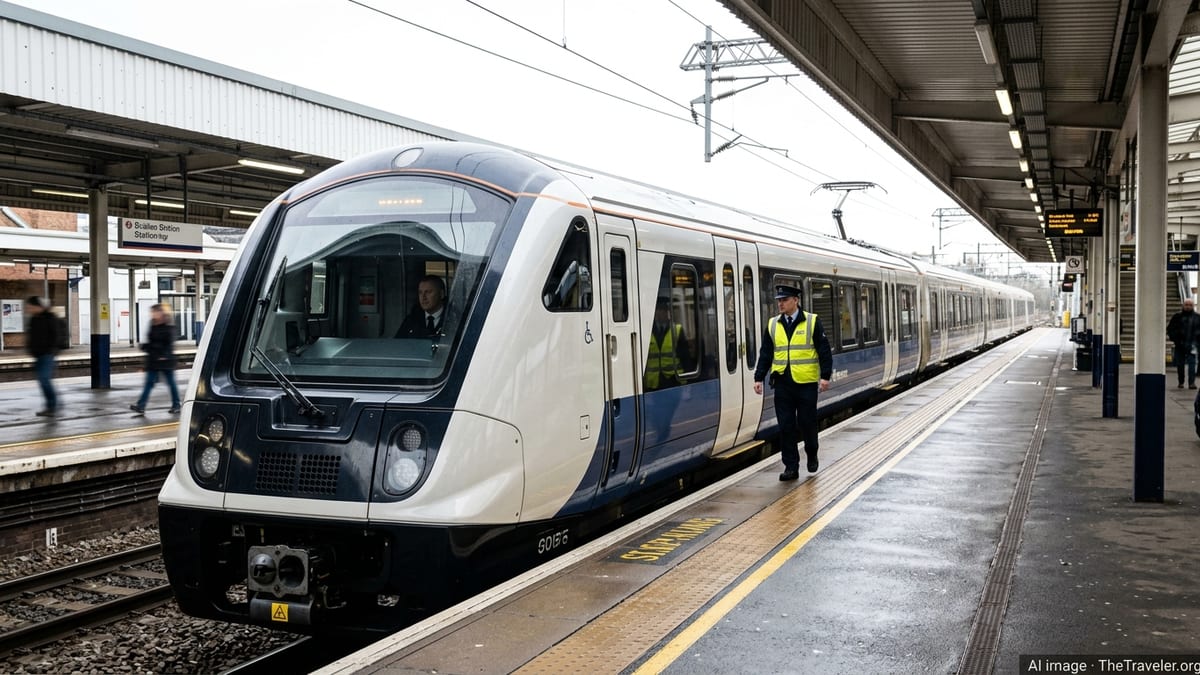
How the ‘do not travel’ alert unfolded
According to publicly available information from Network Rail and Great Western Railway, the latest disruption began after a gas leak was reported close to the railway near Didcot in Oxfordshire on Wednesday 23 September 2026. Train movements through the area were restricted while safety checks and mitigation work took place, sharply reducing capacity on one of the main routes linking London, the Thames Valley, the Cotswolds, South Wales and the South West.
Reports indicate that, as the scale of the incident became clear, a “do not travel” message was issued for some long-distance and commuter services that normally pass through the Didcot corridor. Journey planners showed widespread cancellations and diversions on Great Western Railway routes serving destinations such as Bristol, Cardiff, Swansea, Cheltenham Spa and Plymouth, alongside knock-on changes for Transport for Wales services that share parts of the route.
By Thursday 24 September 2026, updated statements from Network Rail described the situation as ongoing but more stable, with engineers continuing to monitor the affected area and trains running on a reduced basis. While the explicit “do not travel” wording was softened for most routes, warnings about severe disruption and the potential for short-notice alterations stayed in place for many journeys that would usually rely on the Didcot section.
Current service pattern and affected routes
Journey-planning information and operator updates show that Great Western Railway is still operating a reduced timetable on key intercity and regional routes that ordinarily use the main line through Didcot. Some services between London Paddington and South Wales are being rerouted or terminated short of their usual destinations, while selected trains to the West of England are either diverted or cancelled to ease pressure on constrained sections of track.
Regional stopping services in the Thames Valley have also been adjusted, with fewer trains per hour than normal on some commuter flows into London and Oxford. Publicly available timetables indicate that services between Reading, Didcot Parkway, Oxford and intermediate stations remain subject to alteration at short notice, and passengers are being advised to check live departure boards before setting out.
The disruption has had a secondary impact on connections across the wider network. National Rail’s incident listings in recent days highlight how late-running services through the Didcot area can create delays for onward journeys as far afield as the West Midlands and the South Coast, particularly where units and train crews are diagrammed to work multiple routes in a single day.
What the ‘do not travel’ message means for passengers
Research published by Network Rail on the use of extreme disruption messaging shows that “do not travel” advisories are intended for situations where the rail network cannot reliably move the number of people who would normally use it, such as major infrastructure failures, severe weather or safety incidents. The guidance notes that the strength of the language is designed to deter non-essential journeys, while ensuring that trains still operate for those who have no alternative.
Recent case material released by the independent Rail Ombudsman and consumer organisations illustrates how such alerts can affect individual journeys. In several documented examples, passengers who began trips after a “do not travel” notice had been issued later encountered terminated services and limited onward transport, leading to disputes over entitlement to replacement taxis, hotels or further compensation.
Industry policy documents also highlight that “do not travel” messaging can change the way train companies handle so-called stranded passengers. In extreme cases, if a traveller chooses to start a journey once the warning is in place, the usual obligation to provide onward transport all the way to the final destination may be reduced, although operators are still expected to offer ticket refunds and statutory delay compensation where qualifying thresholds are met.
Ticket flexibility, refunds and new cross-operator rules
The current disruption around Didcot is unfolding just as new national rules on ticket acceptance take effect. Government announcements published this month confirm that from Sunday 20 September 2026, passengers whose trains are cancelled have an automatic right to board another operator’s service on the same route, without paying again, in most of Great Britain.
Publicly available guidance from the Department for Transport explains that the change is intended to remove confusion that previously surrounded Advance and restricted tickets, which in many cases were not valid on different brands of train even when disruption was widespread. The reform means that, during incidents like the Didcot gas leak, affected passengers should find it easier to complete essential journeys using alternative operators where a broadly comparable route exists.
At the same time, internal staff briefs circulated across the network this year outline tighter rules on refunds for unused tickets purchased from April 2026 onwards, emphasising that fee-free refunds for “change of mind” are no longer routinely available on the day of travel. However, those documents make clear that where a journey is cancelled or severely disrupted, passengers retain the right to a full refund from the original retailer if they decide not to travel at all.
Separately, delay compensation arrangements such as Delay Repay continue to apply. Technical reports on rail delays and compensation for 2025 show that most franchised and contract operators now offer at least 50 percent reimbursement for delays of 30 minutes or more, rising to 100 percent for longer disruptions, regardless of whether the cause is related to infrastructure, rolling stock faults or external incidents like the one near Didcot.
Advice for rail users in the coming days
As engineers work to complete safety checks and restore normal running through the Didcot area, journey planners from National Rail and individual operators continue to flag a higher-than-usual risk of disruption on routes across the Great Western network. Passengers planning to travel over the next several days are being urged in published updates to verify their specific train shortly before departure and to allow extra time for connections.
Consumer guidance produced by passenger watchdogs and rail user groups in recent years suggests that those who can be flexible may benefit from travelling outside the busiest peak periods while the network is operating with reduced capacity. Travellers who must make time-critical connections to flights, events or cross-country services are being advised to build in additional contingency or consider alternative modes where practical.
For those holding tickets bought before the “do not travel” message was issued, publicly available information from operators indicates that fee-free refunds remain available if they choose not to travel, and that many advance tickets can be used on different trains on the same route when specific services are cancelled. Passengers affected by missed connections or extended delays are encouraged in official guidance to retain receipts for any reasonable extra expenses so they can pursue claims through the relevant train company or independent resolution schemes.