


More news on this day
Air China is working to move stranded passengers off fuel-stricken Cuba after a wave of schedule changes and cancellations on its Beijing–Madrid–Havana service collided with a deepening jet fuel crisis on the island, leaving travelers scrambling for information and alternative routes home.
Get the latest news straight to your inbox!
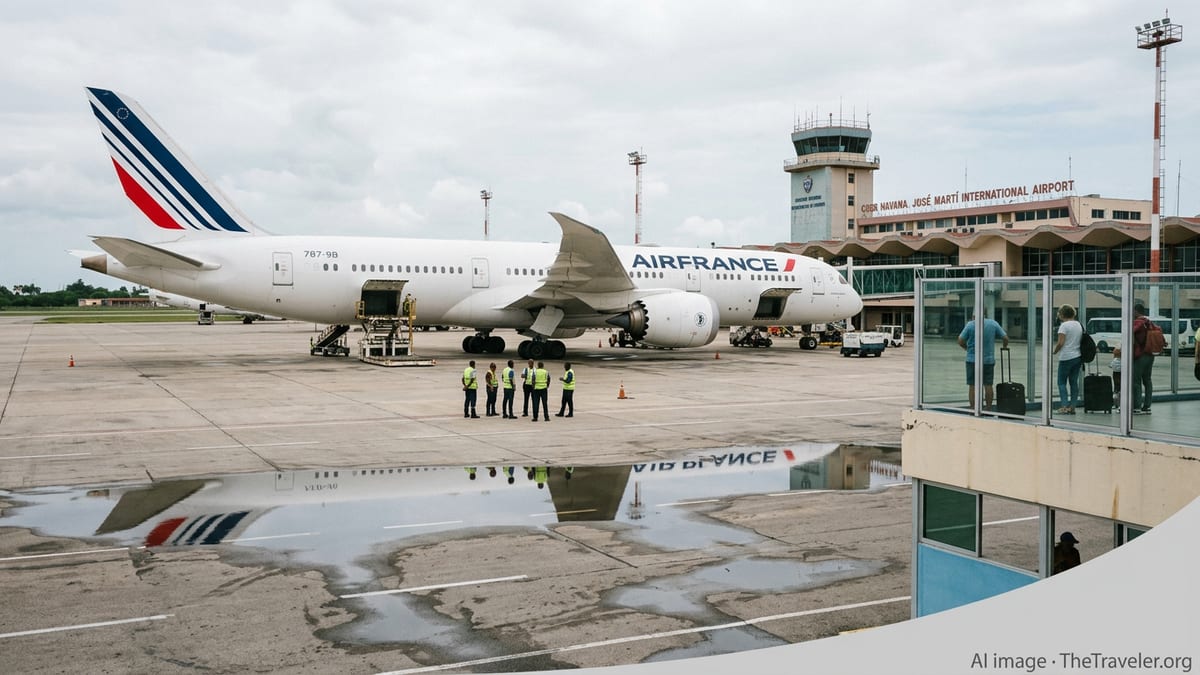
Fuel shortages push Cuba’s aviation network to the brink
Publicly available aviation and energy reports show that Cuba has been grappling with an acute shortage of jet fuel throughout 2025 and 2026, part of a wider energy crunch tied to reduced fuel shipments and chronic power outages. Notices cited by international media and travel advisories indicate that airports across the country have, at various points, been unable to offer Jet A-1 fuel to foreign carriers, forcing airlines either to tanker fuel from abroad or add technical stops outside Cuba.
International coverage of the crisis describes long-haul airlines trimming or suspending Cuba services in recent months as the cost and complexity of refueling workarounds mounted. Carriers from Canada and Europe have either paused operations, reduced frequencies, or added refueling stops in third countries, cutting back the number of direct long-haul links into Havana and other Cuban gateways just as the winter travel season approaches.
This has created a fragile operating environment for the remaining long-haul services that still connect Cuba with major intercontinental hubs. For travelers on those routes, even relatively minor disruptions, such as temporary runway work at alternative refueling airports, can have knock-on effects that leave passengers stranded for hours or days while airlines reorganize equipment and crews.
Against this backdrop, Air China’s Beijing–Madrid–Havana route has become a lifeline not only for Chinese visitors and business travelers, but also for Cuban and European passengers using Madrid as a bridge between the Caribbean and Europe or Asia. With the pool of alternative long-haul options shrinking, any disruption to this service can leave large numbers of passengers with limited alternatives.
From celebrated relaunch to operational headaches
Air China formally relaunched its Beijing–Madrid–Havana service in May 2024, restoring a link that had been suspended during the pandemic. Aviation industry publications at the time highlighted the route as the only direct air connection between China and Cuba, operated by Boeing 787-9 aircraft and routed via Madrid to connect Asian, European and Caribbean markets.
In the months following the relaunch, the route settled into a twice-weekly pattern, with publicly accessible booking systems showing two round trips per week between Beijing and Havana via Madrid. For Cuba’s tourism planners, the return of Chinese visitors was presented as a strategic boost, given pre-pandemic estimates that tens of thousands of Chinese tourists were arriving annually.
By early 2026, however, the deteriorating fuel situation in Cuba was beginning to affect long-haul operations more severely. Specialist aviation outlets and translated Cuban press reports note that from around March 2026, Air China began adding a technical stop in Nassau, in the Bahamas, on the westbound leg from Havana to Madrid in order to refuel outside Cuba. This adjustment allowed the airline to maintain the route despite official notices indicating that Havana and other Cuban airports could not guarantee jet fuel supplies for foreign carriers.
The Nassau refueling plan kept the Beijing–Madrid–Havana link open, but it also made the operation more vulnerable to any disruption along the chain, including capacity restrictions or runway works at the Bahamian airport. When such issues emerged in October 2026, they collided with Cuba’s own energy emergency, amplifying the impact on passengers.
Stranded travelers and scrambled contingency plans
Reports in Cuban and exile media describe how, in mid-October 2026, a run of last-minute Air China cancellations and significant schedule changes on the Madrid–Havana sector left dozens of passengers stuck at Madrid-Barajas Airport. Travelers recounted spending more than 15 hours in the terminal while seeking updated information about their flights, hotel accommodation and compensation.
According to these published accounts, Air China attributed the disruptions to technical reasons, while passengers said they were informed at the airport that runway rehabilitation work at Nassau had temporarily closed off the refueling option used on the return leg from Havana. At the same time, official bulletins from Havana’s José Martí International Airport indicated overnight closures on specific October dates and reiterated that Jet A-1 fuel was not available for refueling at Cuban terminals until at least early November.
With fuel unavailable in Cuba and the Nassau stop constrained by runway works, Air China began consolidating services and rebooking travelers in an effort to clear the backlog. Industry-focused reports and passenger testimonies indicate that the airline has been organizing rescue flights, rerouting some passengers over alternative hubs where possible, and adjusting departure days from Madrid and Havana to match aircraft and refueling availability.
Publicly available information also points to compensation offers of up to 600 euros for some delayed passengers, in line with European passenger rights regulations on long delays and cancellations originating in the European Union. However, travelers quoted in local coverage describe difficulties in securing hotel rooms near Madrid-Barajas at short notice and challenges in obtaining clear written confirmation of new travel dates while the situation remained fluid.
Limited alternatives for long-haul links to Havana
The disruption to Air China’s schedule has been particularly acute for passengers because the range of long-haul options into and out of Cuba has already been reduced by the fuel crisis and a broader economic downturn. Aviation industry analyses published in 2025 and 2026 document how several European leisure carriers cut Cuba capacity, shifted to seasonal operations or withdrew entirely, often citing the combination of refueling complications and weaker demand.
On the busy Havana–Madrid corridor, reports indicate that Air Europa is currently the primary European operator maintaining multiple weekly frequencies, with other Spanish and European airlines either suspending their services or planning long-term absences from the market. For travelers who might once have rebooked quickly onto another transatlantic airline, the options are now more constrained and often significantly more expensive.
For Air China passengers, this means that contingency plans often involve complex rerouting via other Caribbean or Latin American hubs, or extended waits in Havana or Madrid while the carrier organizes aircraft positioning flights and secures reliable refueling options. In some cases, travelers holding separate tickets beyond Madrid, whether to other European cities or onward to Asia, face additional costs if missed connections fall outside the protective scope of a single booking.
Travel advisories that reference Cuba’s energy situation encourage visitors to build additional flexibility into their itineraries, including extra time between long-haul connections and sufficient funds and documentation to cover unexpected overnight stays. Those planning to use Air China’s Beijing–Madrid–Havana link are being urged, in publicly shared guidance, to monitor their reservations closely and check flight status repeatedly in the days leading up to departure, given the rapid pace of schedule adjustments.
What travelers should know before booking Cuba on Air China
While Air China is working to maintain at least a skeleton schedule on the Beijing–Madrid–Havana route, the combination of Cuba’s jet fuel shortage and infrastructure work at alternative refueling airports means that flight times, routings and operating days can change at short notice. Prospective travelers reviewing recent booking data and news coverage will find that, although the route remains available in global distribution systems, specific flights have been subject to last-minute retiming or consolidation.
Travel industry commentators advise that passengers consider purchasing tickets on a single itinerary from origin to final destination when using this route, rather than combining separate tickets, to maximize protection in case of disruption. Flexible or changeable fares may offer additional security for those who must travel to or from Cuba while the energy crisis continues to affect aviation operations.
For travelers already on the island, publicly accessible airport notices and airline updates suggest preparing for the possibility of extended stays if a planned departure is postponed. Having confirmed accommodation, sufficient local currency or widely accepted cash, and printed copies of travel documents can help smooth rebooking or overnight arrangements if flight schedules shift suddenly.
Despite the challenges, Air China’s continued operation of the Beijing–Madrid–Havana link underlines the strategic importance of the route for both Cuba and China. As long as fuel constraints persist and alternative carriers keep their distance from the Cuban market, the airline’s efforts to ferry stranded passengers out of the country are likely to remain a critical, if fragile, bridge between Havana and the wider world.