


More news on this day
Riyadh’s King Khalid International Airport is preparing to reopen after a series of deadly missile and drone strikes, raising urgent questions for travelers with imminent plans to visit or transit Saudi Arabia.
Get the latest news straight to your inbox!
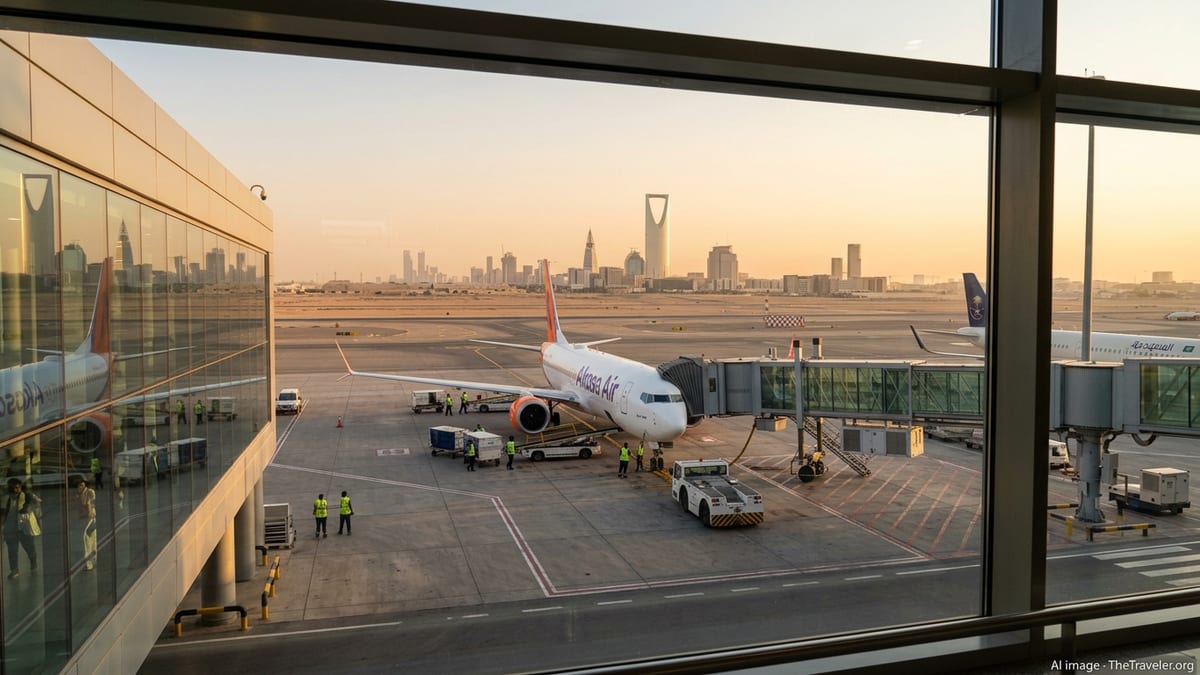
What Has Been Happening At Riyadh’s Main Airport?
King Khalid International Airport, around 35 kilometers north of central Riyadh, has been at the center of a concentrated wave of October 2026 attacks linked to Yemen’s Houthi movement. Publicly available reporting describes multiple missile and drone strikes on the airport complex between 6 and 12 October, including blasts that hit domestic terminals and passenger areas, killing at least a dozen people and injuring hundreds more.
According to Saudi civil aviation statements carried by local and international media, projectiles struck areas used for domestic flights at terminals 3 and 4, with some injuries described as critical. Separate coverage notes that a barrage of drones and missiles breached Saudi air defenses, prompting an internal review of how protective systems failed to prevent the most serious strikes.
In response, the General Authority of Civil Aviation extended a suspension of commercial operations at King Khalid International Airport from 10 October, citing the need for ongoing safety inspections and damage assessments. Flight-tracking data and airline statements showed hundreds of arrivals and departures canceled or diverted as carriers including Lufthansa and Indian airlines paused Riyadh services.
Officials are now moving to reopen the airport in stages, with priority given to clearing damaged infrastructure, restoring screening and boarding systems, and validating runway safety. Early indications suggest limited domestic services may resume first, followed by a gradual return of regional and long haul flights if further attacks do not materialize.
How Have Governments Updated Their Travel Advice?
Government advisories for Saudi Arabia have hardened noticeably in October 2026 in light of the airport strikes and the broader regional security picture. The latest U.S. State Department advisory, updated on 12 October, lists Saudi Arabia at Level 3, meaning “reconsider travel,” due to the risk of drone and missile targeting of American interests, armed conflict, terrorism, exit bans and local laws. It also singles out the Yemen border region as an area where travel is not advised at all.
Public travel-advice pages for the United Kingdom similarly flag rising risks. Foreign travel guidance highlights a “serious incident” at Riyadh’s King Khalid International Airport around 10 October and advises British nationals to avoid the airport until it is confirmed secure. The same guidance notes that the situation can change quickly, urging travelers to monitor updates closely and be prepared to adjust their plans at short notice.
Other Western countries generally align their messaging with these assessments, warning of the possibility of further aerial attacks on aviation and energy infrastructure and reminding travelers that security conditions may deteriorate with limited warning. For business travelers in particular, some employers are now reassessing non-essential trips to Riyadh and other major Saudi cities, citing duty-of-care obligations and the need to follow their own governments’ advisories.
Although Saudi Arabia is not universally categorized as a no-go destination, the combination of recent mass-casualty incidents at a major international airport and explicit references to drone and missile threats in official advisories has elevated the perceived risk profile of trips to the kingdom in the near term.
Is It Safe To Fly Through Riyadh Right Now?
The reopening of King Khalid International Airport does not, by itself, mean that risk has returned to previous levels. The October attacks specifically targeted aviation facilities, and Houthi statements reported in international media have warned that Saudi airports, with the exception of those in Mecca and Medina, could be considered potential targets.
Before deciding to fly through Riyadh, travelers need to weigh several practical considerations. First, the security picture remains fluid. Even as inspections conclude and the airport resumes operations, further attacks cannot be ruled out. Second, some airlines have suspended or reduced Riyadh services following the strikes, which means schedules may remain unstable, and re-routing through Jeddah, Dammam, or other regional hubs such as Doha or Dubai may be more reliable in the short term.
Third, governments continue to treat the risk level as elevated. The U.S. advisory notes that government employees require special authorization to use any Saudi airport, underscoring how seriously aviation threats are being taken. Other nations encourage travelers to avoid non-essential time spent landside at Saudi airports and to remain in secure airside areas if transiting.
For passengers who do choose to transit via Riyadh, travel risk specialists recommend booking flexible tickets, confirming that travel insurance explicitly covers disruptions linked to conflict and terrorism, registering itineraries with consular services where available, and allowing for potential last-minute cancellations or diversions. Those with the option may find it more straightforward to route journeys through alternative hubs until there is a longer track record of stable operations at King Khalid International.
What About Visiting Saudi Arabia As A Tourist Or On Business?
Beyond the immediate situation in Riyadh, Saudi Arabia continues to position itself as a major tourism and business destination. The Ministry of Tourism operates an official e-visa platform that offers one-year, multiple-entry tourist visas for nationals of dozens of countries, including the United States and many European states. These visas generally allow stays of up to 90 days per year for leisure travel, visiting family, or performing Umrah outside the core Hajj season.
Complementing the tourist e-visa, Saudi authorities have rolled out digital transit visas via national platforms and airline booking systems. These permit short stays of 48 or 96 hours linked to international flight itineraries, allowing passengers to leave the airport and spend limited time in cities like Riyadh and Jeddah if security conditions permit.
At the same time, the current travel-advice climate means visitors should approach trips with greater caution. Travelers are advised to avoid areas near the Yemen border, oil installations, and sensitive government or military facilities, and to comply with local regulations on photography, public gatherings and online activity. Publicly available guidance also reminds foreign nationals that criticism of the government or social media posts that are legal elsewhere can have serious consequences under Saudi law.
In practice, much of the country, including key business districts and new tourism projects, has not seen direct attacks, and domestic life in cities such as Riyadh, Jeddah and Dammam continues. However, the October 2026 airport strikes demonstrate that high-profile civilian infrastructure can be targeted, and visitors must be prepared for sudden disruptions to air travel, tightened security checks and potential curfews or movement restrictions if tensions spike.
Key Steps For Travelers Weighing Trips To Saudi Arabia
With King Khalid International Airport moving toward reopening, travelers now face a more complex risk calculation rather than a simple question of whether flights exist. The first step for anyone considering travel in the coming weeks is to consult the latest advisory from their own government, paying close attention to any distinction between “reconsider travel” and “do not travel” for specific regions.
The second is to speak with airlines and, where relevant, employers or trip organizers about contingency plans. Some carriers may continue to route traffic away from Riyadh or limit overnight connections. Travelers should ask about rebooking policies if further attacks occur or if the airport experiences another temporary shutdown for security reasons.
Third, visitors should scrutinize their insurance coverage and visa conditions. Official tourism and government portals outline eligibility criteria and limits for tourist, business and transit visas, including requirements to depart by specific dates and penalties for overstays. In recent months, Saudi authorities have implemented temporary measures to help those stranded by regional instability, but these arrangements are time bound and subject to change, so relying on them as a fallback carries its own risk.
Ultimately, whether it is safe to travel to Saudi Arabia right now depends on individual risk tolerance, the purpose of the trip and flexibility to change plans. The reopening of Riyadh’s main airport signals an attempt to restore normality, but current advisories and the recent history of attacks mean that many travelers will view near-term journeys as higher risk than they might have only a few months ago.