


More news on this day
United Airlines is facing fresh criticism over passenger treatment after a Seattle doctor said the carrier reassigned his confirmed seat to a standby traveler, stranded him overnight in Los Angeles and later contested his version of events with federal regulators.
Get the latest news straight to your inbox!
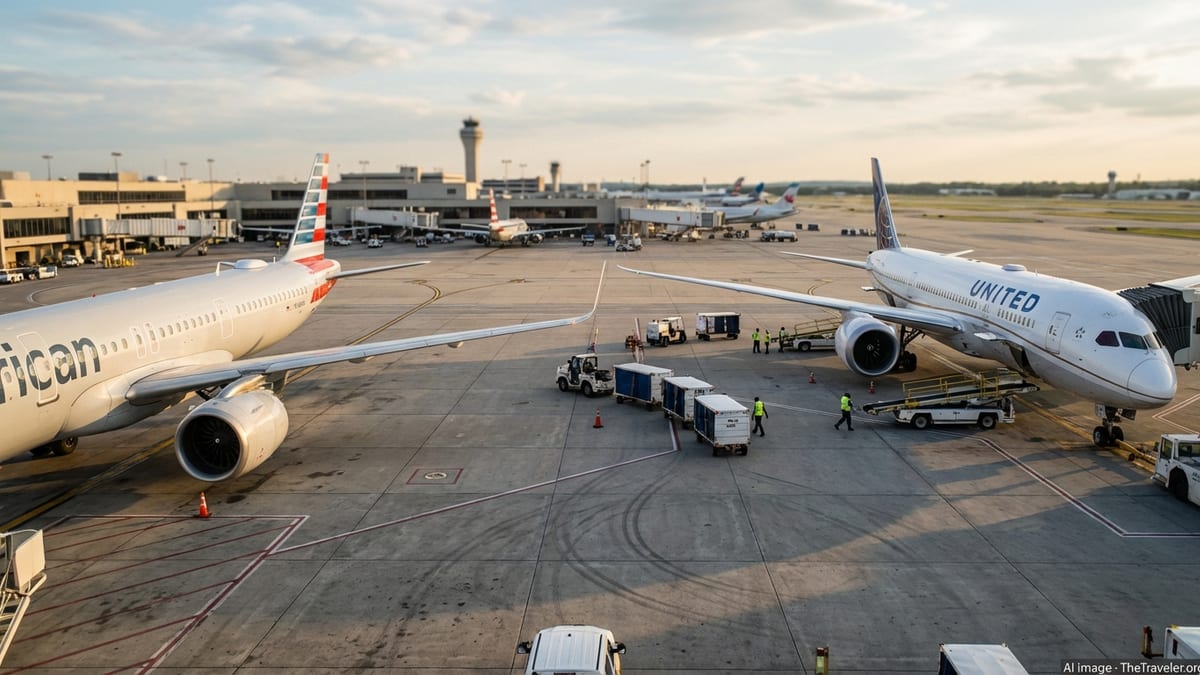
Doctor Says Confirmed Seat Was Reassigned at LAX
According to detailed accounts described by travel site View from the Wing and summarized by passenger-rights outlet Row30, the incident involved a Seattle-based physician traveling on United Airlines from Los Angeles International Airport to Seattle-Tacoma International Airport on an evening flight in October 2026. The traveler reportedly held a confirmed reservation, checked in, and proceeded through security to the departure gate at Los Angeles.
Public reporting indicates that the doctor reached the gate area before the boarding cutoff but discovered that his seat had been given to a standby passenger. Coverage of the case states that boarding was still in progress when he arrived and that the final passenger was allowed to board several minutes after he presented himself at the counter. The flight then departed for Seattle without him.
The passenger subsequently filed a complaint with the United States Department of Transportation, arguing that he had not missed the flight but had instead been subjected to an unlawful involuntary denied boarding while holding a valid ticket and arriving in time to travel. The dispute centers on whether United handled the situation within the bounds of its own contract of carriage and federal consumer-protection rules.
Overnight Stranding and a $1,083.80 Payout
Reports indicate that, after the doctor was refused boarding, United did not rebook him on another same-night flight to Seattle. Instead, he was left overnight in Los Angeles and traveled the following day. The disruption extended his trip by roughly 12 hours, requiring an unscheduled hotel stay and forcing him to cancel or reschedule clinical responsibilities in Seattle.
Coverage of the incident notes that United later issued the traveler a payment of 1,083 dollars and 80 cents, identified as compensation for involuntary denied boarding. That figure broadly aligns with Department of Transportation compensation formulas that scale based on ticket price and length of delay when an airline bumps a passenger against their will on an oversold or otherwise constrained flight.
The payment suggests that United ultimately categorized the case as an involuntary denied boarding for regulatory and reimbursement purposes, even as its written responses described a different narrative. For the traveler, the money addressed some of the direct costs of being stranded but did not resolve his concerns about how and why his seat was reassigned in the first place.
Disputed Timeline and United’s Response
At the heart of the controversy is a disagreement over timing and responsibility. In written correspondence described in publicly available coverage, United reportedly told the passenger and federal regulators that he arrived at the gate after boarding had closed, characterizing the situation as a missed flight rather than denied boarding. That description, if correct, would typically limit what the airline owes under federal rules.
The doctor, however, provided time-stamped evidence and screenshots indicating that he checked in, proceeded through security, and reached the gate prior to the official cutoff. Reporting on the complaint notes that flight records show another passenger boarding several minutes after the doctor appeared at the counter, suggesting that the boarding process had not yet been fully completed.
Consumer advocates following the case have highlighted this discrepancy as an example of the information imbalance travelers face when disputing airline decisions. The carrier controls operational logs, boarding records, and internal notes, while passengers often rely on mobile screenshots, email timestamps, and recollections to reconstruct what happened once a seat goes to another traveler.
Denied Boarding Rules and Passenger Rights
The episode has drawn attention because it touches on long-standing concerns about oversales and denied boarding in the United States. Federal rules allow airlines to oversell flights but require carriers to seek volunteers before bumping passengers against their will, and to provide escalating cash compensation when a traveler is involuntarily denied boarding and arrives late to their destination.
United, like other major U.S. carriers, publishes these policies in its contract of carriage and internal customer-service guidelines. When a traveler with a confirmed reservation checks in on time and appears at the gate before closure but fails to board because a seat has been reassigned, the situation generally falls under denied boarding rather than a simple no-show. How airlines document that distinction has significant financial and legal implications.
This latest case surfaces less than a decade after widely publicized controversies involving United and other carriers over bumping practices, including incidents where passengers with tickets were removed from flights or forced to change travel plans. While carriers have adjusted some of their procedures in response to public scrutiny and regulatory pressure, travelers and advocates continue to report cases in which seat assignments are changed or given away in ways that leave customers with limited recourse.
Why the Case Resonates With Frequent Flyers
The doctor’s account has circulated quickly among frequent flyers and aviation observers, in part because it combines several flash-point issues in modern air travel: tight schedules, gate-cutoff times, overbooked flights and the treatment of higher-fare or professional travelers whose work depends on reliable itineraries. For many readers, the detail that the passenger is a practicing physician underscores the real-world consequences when an overnight delay interrupts clinical duties and patient appointments.
Travel-industry commentary has also noted the apparent contradiction between United’s explanation to the passenger and regulators and the compensation it ultimately provided. The case is being cited in discussions about how airlines classify incidents internally and whether written responses accurately reflect what passengers experience at the gate.
For consumers, the story serves as a reminder to document check-in times, gate arrival, boarding calls and any discussions with airline staff when a problem arises. Advocates suggest saving screenshots of boarding passes, flight-status pages and text alerts, as well as requesting written confirmation of the reason for any denied boarding or rebooking. Such records can prove critical when filing a complaint with the Department of Transportation or seeking reimbursement from the airline after a trip goes unexpectedly off course.