


More news on this day
Recent riots across several French cities, including parts of the Paris region, have led a number of governments to update security advice for travelers, urging visitors to exercise increased caution while authorities in France expand visible security measures in tourist areas.
Get the latest news straight to your inbox!
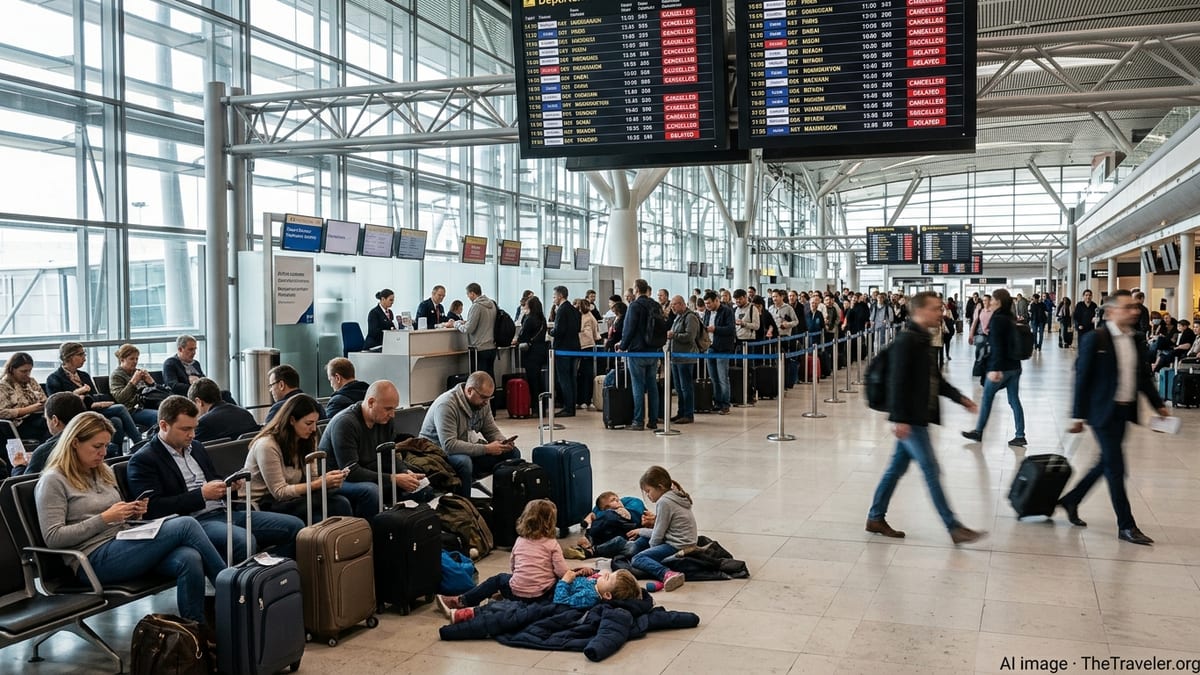
Foreign Travel Advisories Cite Unrest and Security Risks
Publicly available travel advisories show that several governments now highlight civil unrest as a key risk factor for trips to France following the latest wave of rioting and looting. The United States maintains a Level 2 advisory for France, calling on travelers to exercise increased caution due to risks linked to terrorism and unrest, with an update recorded in May 2025 that explicitly references episodes of violent demonstrations and damage to property. Civil unrest is listed among the core reasons for the advisory level, alongside terrorism concerns.
The United Kingdom’s foreign travel advice for France similarly draws attention to periodic unrest, referring to recent years in which demonstrations and isolated attacks have affected central Paris and other major cities. Guidance notes that protests can turn violent, disrupt transport and lead to a heavier police presence around train stations, airports and key landmarks. Travelers are encouraged to monitor local media and to stay away from areas where crowds are gathering.
Australia’s Smartraveller service continues to recommend a high degree of caution for trips to France, an advisory level that was reaffirmed in an update on 7 October 2026. The Australian guidance points to the continuing threat of terrorism, but also highlights the potential for demonstrations or disorder to flare in urban centers and affect roads, public transport and large public spaces visited by tourists.
These advisories do not urge travelers to avoid France altogether, but they frame the recent unrest as a factor that requires more attentive planning. In practice, this means that visitors are being urged to pay closer attention to official announcements, adapt itineraries quickly if disturbances erupt and allow more time for airport and station procedures when security levels are heightened.
French Security Response: Curfews, Vigipirate and Tourist Patrols
Coverage from international and French media indicates that the French government has responded to the latest riots with localized curfews in some affected municipalities and reinforced security deployments around public buildings and commercial districts. The French prime minister has publicly advocated narrowly targeted night-time restrictions rather than nationwide measures, in an effort to contain violence where it has occurred while allowing daily life and travel to continue in most neighborhoods.
In parallel, France’s long-standing Vigipirate security framework against terrorism has been updated in 2026 to reflect the current threat environment. Official information on the plan describes a system that concentrates resources around transport hubs, schools, places of worship, major events and tourist attractions, with specific emphasis on busy holiday periods such as the end-of-year festive season. For travelers, the most visible manifestations are uniformed patrols with soldiers and police in and around railway stations, airports and major monuments.
Guidance published by the French Interior Ministry and its public information portals for visitors underline that welcoming tourists remains a priority, especially in Paris and other heavily visited cities. Practical security advice focuses on avoiding involvement in demonstrations, steering clear of vandalized areas after dark and taking standard big-city precautions against theft. Messaging stresses that most visits to France remain trouble-free, even as authorities acknowledge that disruptive events can occur with little advance warning.
Local authorities have also expanded multilingual communication efforts in some tourist zones, including signage and digital alerts, to explain temporary closures, curfews or transport diversions when they are imposed. For travelers, these changes mean a greater likelihood of encountering bag checks at the entrances to shopping centers, museums and major attractions, as well as occasional spontaneous closures if security incidents take place nearby.
Impact on Travel Plans, Transport and Key Tourist Areas
Published advisories and media reports point out that unrest in France tends to be concentrated in specific districts rather than spread evenly across the country. However, short-lived disturbances can spill into areas that are important for visitors, particularly transport corridors, city-center shopping streets and public squares. In recent incidents, some city halls, police buildings and commercial premises have been targeted, creating short-term disruption in surrounding streets even where tourist sites themselves remained open.
Transport networks are especially sensitive to both demonstrations and security responses. In large cities such as Paris, Lyon and Marseille, public information stresses that metro and tram lines may be closed at short notice, either because of nearby unrest or as a preventative measure. Travelers arriving by train or long-distance coach may find that stations implement one-way pedestrian flows, additional screening or temporary exits-only policies to control crowds and facilitate the movement of security forces.
For air travelers, there has been no broad suspension of flights reported in connection with the latest riots, but airport access roads and public transport links can be affected when protests take place near key junctions. Foreign ministries advise allowing extra time to reach airports and to navigate check-in and security in case of roadblocks, traffic diversions or intensified screening. Car-hire users are encouraged to verify that chosen driving routes do not pass through districts experiencing unrest on the day of travel.
Across major tourist areas, authorities have so far sought to keep flagship attractions and cultural sites open, relying on stepped-up patrols, stricter bag checks and temporary perimeter closures at peak moments. However, travelers can encounter a more heavily policed atmosphere in certain neighborhoods during evenings following unrest, and some bars, restaurants and smaller venues may close earlier than usual on nights when tensions are elevated.
Practical Safety Guidance for Visitors Considering France
In light of the updated advisories, governments are placing renewed emphasis on pre-trip research and situational awareness once on the ground. Official travel pages encourage visitors to sign up for alert services where available, review the detailed safety and security sections for each region they plan to visit, and keep copies of identity documents separate from originals in case of theft or loss during crowded events or protests.
Travelers are also urged to stay informed by checking local news and municipal social media channels, particularly in the days immediately before arrival and while moving between cities. When demonstrations or police operations are visible in the streets, the general guidance is to leave the area promptly, avoid taking photographs at close range and not to attempt shortcuts through crowds or cordoned-off zones, as routes can quickly be sealed off if tensions escalate.
Accommodation choices can also play a role in managing risk. Advice from foreign ministries and national tourist information stresses the advantages of staying in districts with strong public transport links and a regular police presence, and of confirming that hotels or rental hosts have clear instructions for guests if disturbances occur nearby. Some guidance suggests asking properties in advance how they communicate with guests during transport strikes, curfews or localized unrest.
Travel insurers, for their part, typically classify riots and civil commotion as specific risk events, and policy wording can determine whether costs associated with cancellations or delays are covered. Public information from consumer and travel bodies recommends that visitors review policy terms on civil unrest carefully before departure, especially if they are planning travel to cities that have seen disturbances in recent months.
Balancing Heightened Caution With Ongoing Tourism Demand
Despite the security concerns that have prompted updated travel advisories, France remains one of the world’s most visited destinations, and there are no blanket calls from major governments to avoid travel altogether. Tourism boards and official visitor portals continue to promote cultural festivals, regional gastronomy and seasonal events for the remainder of 2026, while acknowledging in public messaging that travelers may have questions about safety.
Industry observers note that after previous episodes of unrest or terrorism-related alerts, visitor numbers to France have tended to dip temporarily before recovering, particularly in Paris and the major coastal regions. Current guidance suggests that a similar pattern may emerge following the latest riots, with some travelers deferring trips or choosing quieter regions, while others proceed with plans but pay closer attention to security information.
For travel providers, the evolving security context has reinforced the importance of flexible booking conditions and transparent communication about potential disruptions. Airlines, rail operators and tour companies increasingly use direct messaging channels and mobile apps to warn customers about protests, strikes or localized violence that could affect departure times or sightseeing programs.
For prospective visitors weighing whether to travel to France over the coming months, the combined picture presented by foreign travel advisories and French domestic security measures is one of heightened vigilance rather than widespread shutdown. Governments are advising that travelers remain alert to the possibility of unrest, particularly in large urban centers, while recognizing that for most visitors, trips continue without incident when basic safety guidance is followed.