


More news on this day
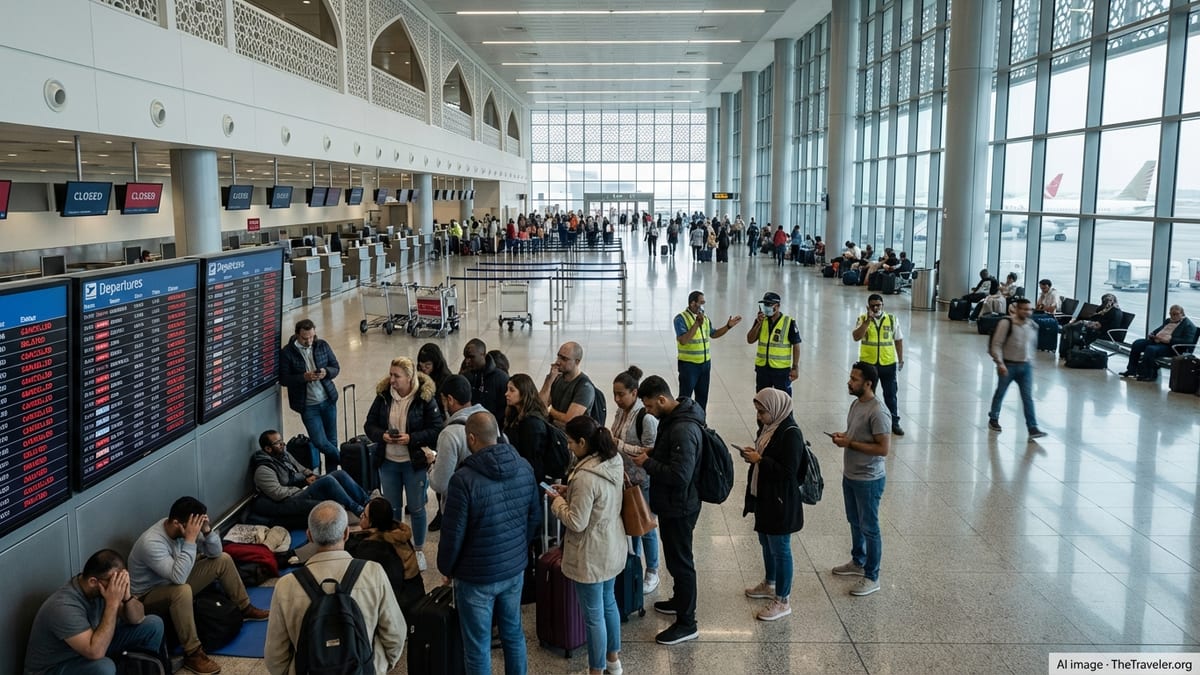
Travelers across the Middle East are facing another wave of disruption as carriers including FlyDubai, Air Arabia, EgyptAir and Kuwait Airways limit or suspend services on key routes, following weeks of airspace restrictions and operational constraints linked to the Iran conflict.
Get the latest news straight to your inbox!
Regional Carriers Scale Back Amid Volatile Airspace
Publicly available information shows that FlyDubai, Air Arabia, EgyptAir and Kuwait Airways are among the Middle Eastern airlines adjusting or suspending services on select routes as regional airspace remains volatile. The latest disruptions layer on top of earlier cancellations and reduced schedules triggered after strikes involving Iran and its adversaries prompted temporary shutdowns of key hubs such as Dubai, Doha and Abu Dhabi.
FlyDubai, which normally operates an extensive short and medium haul network from Dubai International Airport, has been running a truncated schedule since late February as airport capacity and routing options through the Gulf have remained constrained. Travel forums and schedule data reviewed by TheTraveler.org indicate that several point to point services, including links into Kuwait and certain secondary cities, have been repeatedly pulled from the timetable or consolidated into fewer frequencies.
Low cost carrier Air Arabia has also been operating a reduced programme. Recent published coverage from regional outlets describes the airline running a limited number of flights from Sharjah, Abu Dhabi and Ras Al Khaimah, with some destinations returning in phases while others remain suspended. Travelers report last minute timetable changes and extended journey times as flights detour around restricted airspace.
EgyptAir, a critical connector between North Africa, the Gulf and Europe, has likewise trimmed or rerouted services to avoid high risk corridors. While Cairo remains open, a combination of longer routings and slot constraints at Gulf airports has resulted in delays, missed connections and, in some cases, outright cancellations on routes serving the United Arab Emirates and Kuwait.
Kuwait Airport Closures Compound Passenger Disruption
The most acute impact for many travelers stems from Kuwait’s prolonged airspace issues. Following a series of drone strikes and security concerns earlier this year, commercial aviation in Kuwaiti skies was largely suspended for weeks, forcing airlines to divert operations to airports in neighboring Saudi Arabia and to rely on overland links for the final leg of journeys.
According to publicly accessible airport and aviation safety summaries, partial reopening for select destinations did not occur until late April, and even then only for limited services. Kuwait Airways and other carriers have announced what they describe as “exceptional” or “limited” operations out of dedicated terminals, with curtailed schedules and strict routing requirements. Many flights that had previously connected smoothly via Kuwait International Airport are now subject to lengthy layovers, ground transfers or outright suspensions.
Passengers booked on multi segment itineraries involving Kuwait continue to report uncertainty around their travel plans. Social media and discussion boards include accounts of travelers receiving confirmation that flights up to a certain date have been cancelled, while later departures remain on sale despite ongoing airspace notices. The pattern has led to a gap between official timetables and the reality at the airport, creating further confusion for those trying to transit through the country.
The knock on effects extend beyond Kuwait’s borders. Carriers that traditionally used Kuwait as a bridge between South Asia, the Gulf and Europe have reduced capacity or shifted traffic to alternate hubs, tightening seat availability across the region and contributing to higher fares on remaining services.
Major Hubs in the UAE Strain Under Reduced Capacity
Dubai International Airport, typically the world’s busiest international hub, has been operating under constrained conditions since late February, after Iranian strikes and a drone incident near the main terminal prompted temporary airspace closures and ground stops. Aviation reference data and news reports indicate that while the airport has gradually reopened, it continues to function with a reduced number of daily movements and carefully controlled corridors in neighbouring airspace.
For airlines such as FlyDubai and Air Arabia, which rely heavily on Gulf hubs to feed connecting traffic, these limitations have translated into a complex juggling act. Some services into Dubai and Sharjah have been temporarily halted so that priority can be given to long haul operations and repatriation flights. Others have had departure times shifted into off peak windows or combined into single daily rotations, squeezing connection options for onward journeys.
Travel advisories note that passengers flying via the UAE should prepare for potential delays and last minute gate or schedule changes, even when flights appear to be operating as planned. Extended flight times caused by detours around restricted airspace can push aircraft and crews up against duty time limits, leading to rolling delays that ripple through the network.
Abu Dhabi and other regional hubs have faced similar pressures. Although some airlines have begun to announce phased resumptions of suspended routes, operations remain fragile. Any renewed spike in tensions or additional airspace notices could quickly force carriers to trim schedules again, particularly on thinner regional sectors that are already under review.
International Airlines Cut or Reroute Middle East Services
The turbulence is not confined to Middle Eastern carriers. Major international airlines from Europe, North America and Asia have also suspended or severely curtailed flights to Dubai, Abu Dhabi, Doha and other Gulf gateways since March, citing security assessments and operational limitations. Recent factbox style summaries from global news agencies list dozens of cancelled or suspended routes, including services from cities such as London, Frankfurt, Toronto and New Delhi.
Several European groups have extended suspensions on flights to Dubai and Abu Dhabi into May and beyond, while maintaining only skeleton operations to a handful of destinations such as Tel Aviv and Beirut. Low cost European brands with leisure focused networks have, in many cases, pulled Middle East destinations from their schedules through the summer season, shifting aircraft to alternative routes where airspace is unconstrained.
North American and Asian carriers have taken a similarly cautious approach. Some have suspended Dubai services entirely through late April or early May, while others are operating reduced frequencies, often using longer routings that bypass Iranian and Iraqi airspace. These diversions increase fuel consumption and reduce the number of rotations aircraft can complete in a day, prompting airlines to prioritise high demand long haul routes at the expense of regional connections.
Industry analysts point out that the cumulative effect of these decisions is a sharp reduction in overall capacity into and through the Gulf, even as demand for travel rebounds on many corridors. Passengers who might previously have relied on one stop connections via the UAE or Kuwait are now finding that itineraries require two or more stops, involve overnight layovers or are simply unavailable on their preferred dates.
What Stranded Travelers Are Experiencing on the Ground
For travelers caught in the middle of these disruptions, the practical consequences can be severe. Reports across social media, consumer forums and regional news coverage describe passengers stranded at airports in the UAE, Kuwait, Jordan and elsewhere after sudden flight cancellations or missed connections caused by rolling delays.
Common themes in these accounts include long queues at airline service desks, difficulties securing timely rebookings due to limited remaining capacity and uncertainty about eligibility for hotel accommodation or compensation. In many cases, travelers have had to arrange their own alternative transport, including overland journeys between Saudi Arabia and Kuwait or between smaller Gulf airports and major hubs where flights are still operating.
Some passengers report that policy changes around vouchers, refunds and date changes have added another layer of complexity. Low cost carriers in particular have been criticised in online posts for inconsistent application of rebooking rules following cancellations, with travelers unsure whether they will receive cash refunds, credit notes or only the option to travel at a much later date.
Travel advisors recommend that anyone planning to transit through the Middle East in the coming weeks check their flight status frequently, monitor airline announcements and allow additional time between connections. With airspace restrictions subject to change at short notice, even itineraries not directly touching conflict zones may still be affected by knock on delays and equipment swaps elsewhere in the network.