


More news on this day
Air France, United Airlines and Qatar Airways are grappling with large-scale flight cancellations in early 2026, as severe weather, regional conflict and operational limits converge to create one of the most turbulent periods for global air travel since the pandemic. Travelers are facing last-minute schedule changes, crowded rebooking lines and uncertainty, turning real-time flight tracking apps into essential tools rather than nice-to-have add-ons.
Get the latest news straight to your inbox!
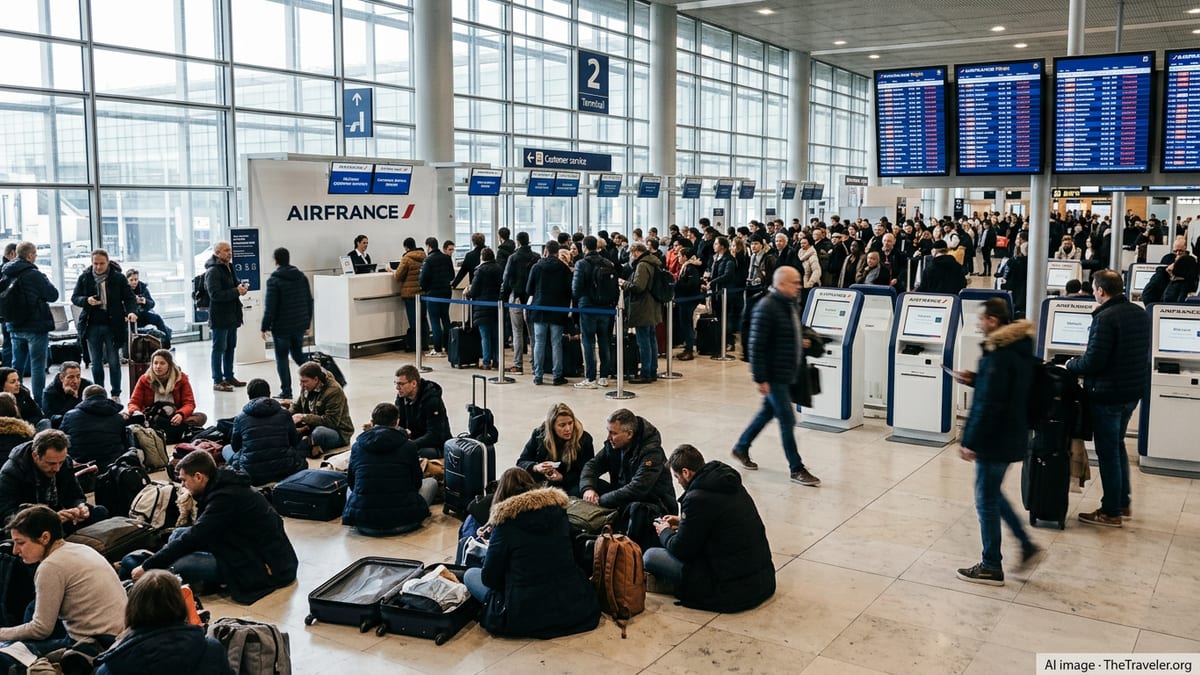
Weather, War and Operational Limits Collide
Multiple strands of disruption have converged on the three major carriers, exposing how vulnerable global networks remain to external shocks. In North America, United Airlines has been heavily affected by a string of powerful winter systems and severe thunderstorms, with industry trackers reporting tens of thousands of flights canceled or delayed across the United States during March 2026, particularly at key hubs such as Chicago O’Hare, Denver and New York area airports. United, with its dense domestic and transatlantic schedules, has been among the hardest hit when storms trigger nationwide ripple effects.
In Europe and the Middle East, Air France and Qatar Airways are contending with a different set of pressures. Air France has extended the suspension of services to several key destinations including Dubai, Riyadh, Tel Aviv and Beirut into early May 2026, reflecting ongoing security and airspace concerns across parts of the Middle East. Publicly available network data also shows a temporary halt to some long haul routes such as Paris to Manila during the summer season, as the carrier consolidates capacity to more stable markets.
Qatar Airways is operating under the most severe constraint. The temporary closure and subsequent partial reopening of Qatari airspace following regional missile strikes in late February and early March 2026 led to an unprecedented wave of cancellations and schedule reshaping. The Doha based airline has been running a sharply reduced program, with passengers on routes from Europe, South Asia and the Gulf reporting repeated cancellations and reissues as the carrier adapts to limited corridors and evolving security assessments.
Aviation analysts note that while the causes differ weather, conflict-related airspace restrictions and network retrenchment the impact on travelers is similar. Flights vanish from departure boards with little warning, replacement options are scarce, and traditional customer service channels struggle to keep pace with demand.
Passengers Turn to Flight Tracking Apps for Early Warning
As disruption has escalated, travelers have increasingly turned to independent flight tracking apps to gain an information edge. Platforms such as FlightAware, Flightradar24 and Flighty aggregate data from radar, airline feeds and airport schedules to provide live status updates, historical punctuality records and predictive delay forecasts.
During the March 2026 storm systems that clogged United Airlines hubs and other major U.S. gateways, flight tracking dashboards frequently showed ground stops, diversion patterns and cancellation waves hours before airlines pushed out formal notifications to all ticket holders. Passengers who were monitoring their flights in these apps were often able to spot trouble early and seek rebooking options while seats were still available.
Similar patterns have emerged on routes operated by Air France and Qatar Airways. When Air France quietly extended its suspension of services to multiple Middle Eastern destinations, savvy passengers following route-level data and timetable changes in tracking tools saw flights disappear from forward schedules even before email advisories arrived. For Qatar Airways customers, third-party apps have sometimes been the first indication that an already rebooked itinerary had been altered again or removed entirely from the operating schedule.
Travel technology specialists say this growing reliance on independent trackers reflects a broader shift in traveler behavior. Rather than waiting passively for airline updates, passengers are using multiple data sources to verify whether a flight is truly operating, how likely it is to depart on time, and which alternative routings remain viable.
From Static Timetables to Predictive Disruption Tools
What distinguishes today’s flight tracking apps from earlier generations of timetable tools is the use of predictive analytics layered over real-time data. Some platforms analyze factors such as inbound aircraft positioning, historical on-time performance, airport congestion and weather forecasts to flag a higher risk of delay or cancellation hours before an official decision is published.
For travelers booked on heavily affected airlines such as United during U.S. storm events, this can be critical. If an app shows that the inbound aircraft for an evening departure has not left its previous city on time, or that a hub is experiencing widespread ground delays, a traveler can infer that their own flight is at elevated risk. That insight allows them to contact the airline or adjust plans earlier than passengers who are solely relying on boarding gate screens.
On long haul networks like those of Air France and Qatar Airways, predictive tools can also help passengers understand complex knock on effects. When a long haul aircraft is out of position because of an earlier cancellation, the impact can cascade across multiple routes and days. By watching aircraft tail numbers, rotation patterns and route loads in tracking apps, frequent travelers can judge whether an advertised replacement flight is likely to be robust or vulnerable to further changes.
Industry observers caution that these predictive signals are not guarantees, and airline operations teams may still restore or retime flights at short notice. Nevertheless, the apps offer a probabilistic picture that is often more detailed than the generic “check back later” status messages many passengers still encounter on official channels during major disruptions.
Emerging Best Practices for Disrupted Travelers
The latest round of cancellations affecting Air France, United Airlines and Qatar Airways is also reshaping what are seen as best practices for managing disrupted trips. Travel advisors increasingly recommend that passengers choose one primary tracking app, set up push notifications for all flight segments, and cross-check information against the airline’s own status tools before leaving for the airport.
When severe weather or airspace disruptions loom, proactive monitoring can make a significant difference. If a tracking app shows that a connection is becoming untenable or a hub is experiencing mounting cancellations, travelers may be able to request voluntary re-routing before a bottleneck forms. This has been especially important during the reduced operations of Qatar Airways, where limited alternative flights through Doha have filled quickly once formal cancellation notices were issued.
For Air France and United customers, watching network level disruption maps has helped some passengers avoid itineraries that rely on the most heavily impacted hubs on the most vulnerable days. Real-time data has also enabled travelers to document the timing and nature of disruptions more precisely when later seeking refunds, vouchers or compensation under applicable regulations.
While no app can eliminate the frustration of a canceled flight, the recent turmoil at three of the world’s most prominent carriers has underscored that timely, independent information can help travelers regain a measure of control. In an era when severe weather, geopolitical risk and tight airline schedules show little sign of easing, flight tracking tools are moving from niche accessory to standard part of the modern traveler’s toolkit.