


More news on this day
Qatar has halted visa-on-arrival facilities for Lebanese citizens from early April 2026, a shift that aligns Doha with tighter Gulf entry rules and is already reshaping travel plans across the wider Middle East, Africa and Asia.
Get the latest news straight to your inbox!
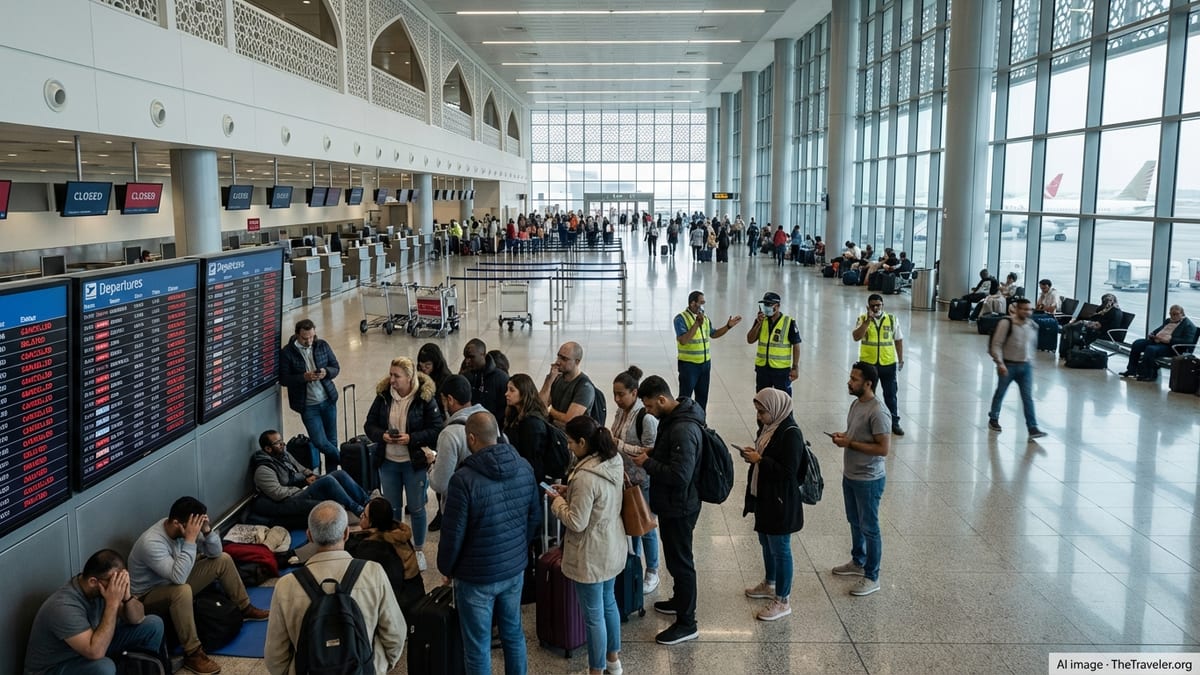
What Has Changed in Qatar’s Entry Policy for Lebanese Travelers
Publicly available advisories indicate that from 2 April 2026, Lebanese nationals are no longer eligible for visa-on-arrival when entering Qatar and must instead secure a pre-approved visa before boarding their flight. The policy update follows an official notice circulated by the Lebanese embassy in Doha and reflected in recent travel-industry briefings, which describe the measure as a suspension of the previous on-arrival facility rather than a complete bar on entry.
Before this change, Lebanese passport holders could typically obtain a visa on arrival for short stays in Qatar, positioning Doha as both a destination and a convenient connection point between the Levant and major hubs in Asia and Africa. With the new rules, airlines and travel agents report a swift shift toward stricter document checks at departure airports, particularly for passengers intending to transit through Hamad International Airport.
The suspension coincides with a broader recalibration of Qatar’s visa framework, where a large number of nationalities still enjoy visa-free or visa-on-arrival access, while others are redirected to pre-travel digital processing systems. Analysts describe this move as a targeted adjustment within a generally open policy, rather than a wholesale retreat from Qatar’s recent efforts to market itself as one of the Gulf’s most accessible entry points.
Part of a Wider Gulf Pattern on Lebanese Entry Rules
Qatar’s decision comes against the backdrop of a more complex visa landscape for Lebanese nationals across the Gulf Cooperation Council, including Saudi Arabia, the United Arab Emirates, Bahrain, Kuwait and Oman. Recent years have seen periodic tightening of work and visit visa issuance in several of these states, with Lebanese travelers encountering longer processing times, additional documentation requirements and, in some cases, informal pauses on certain visa categories.
In the UAE, for example, regional immigration commentary has tracked what is described as a pattern of higher refusal rates and slower processing for applicants from a small group of countries that includes Lebanon, even in the absence of formal public announcements. Similar caution is reported in parts of Saudi Arabia and Bahrain, where risk assessments linked to regional security and political tensions increasingly shape entry decisions for visitors and prospective residents from Lebanon.
Kuwait and Oman have simultaneously updated their own visa structures, in some cases making it easier for foreign residents of GCC states to obtain tourist visas, while relying more heavily on pre-travel screening for other nationalities. For Lebanese citizens, this has translated into a less predictable experience than in the past, with each trip requiring close attention to shifting rules, cut-off dates and airport check-in requirements.
Knock-on Effects on Transit Routes via Pakistan, Iran, Kenya, Thailand and Beyond
The suspension of visa-on-arrival in Qatar is also reverberating far beyond the Gulf, because Doha functions as a global transfer hub for Lebanese travelers heading to South and Central Asia, East Africa and Southeast Asia. Itineraries connecting Beirut with cities in Pakistan, Iran, Kenya and Thailand frequently rely on short connections through Gulf airports, where entry rules can still matter in cases of schedule disruption or missed onward flights.
While many transit passengers do not formally enter Qatar, travel agents note that visa flexibility at the hub is a significant safety net if irregular operations or emergency layovers force passengers to clear immigration. With Lebanese nationals now required to hold a pre-approved Qatari visa, those contingencies become harder to manage. Travelers connecting through Doha to destinations such as Karachi, Lahore, Tehran, Nairobi, Mombasa, Bangkok and Phuket are being advised to confirm both their transit eligibility and any potential airport hotel or stopover arrangements well in advance.
Complicating matters further, ongoing regional tensions and intermittent flight disruptions have already pushed some carriers to adjust schedules on routes linking Lebanon with hubs in Turkey and the Gulf. In that environment, the loss of on-arrival flexibility in Qatar can translate into higher rebooking costs, longer detours through alternate hubs and, in some cases, the need to reschedule entire trips when documentation does not match revised routing.
Impact on Lebanese Travelers and the Value of the Passport
The latest change in Qatar lands at a time when Lebanese passport holders are navigating a mixed global picture. According to recent rankings, Lebanon’s travel document provides visa-free or visa-on-arrival access to just over forty destinations worldwide, placing it in the lower tier of global mobility indexes. Any reduction in on-arrival options in high-traffic hubs like Doha therefore carries disproportionate weight for ordinary travelers, students and expatriate workers.
Many Lebanese nationals have traditionally relied on the Gulf as a bridge to third countries, particularly where direct connections from Beirut are limited or prohibitively expensive. Losing spontaneous access to one of the region’s busiest hubs means that planning has to become more deliberate, with longer lead times to obtain entry permits and a higher risk of last-minute trip cancellations if approvals are delayed.
Travel consultants monitoring the situation indicate that some Lebanese travelers are already pivoting toward alternative routes through airports in Europe, Turkey and other Asian hubs that maintain stable transit policies, even if those routes involve longer flight times or higher fares. Others are reconsidering destination choices altogether, favoring countries in the Caucasus, the Balkans and parts of Africa and Latin America where entry remains comparatively straightforward.
What Travelers Should Watch for Next
The evolving entry framework in Qatar and neighboring Gulf states points to a period of heightened volatility for Lebanese travelers, in which rules can shift with little advance notice. Publicly available travel advisories stress the importance of checking the most recent visa and transit requirements directly with official portals and airline guidance before purchasing tickets or beginning a journey.
Observers also note that regional initiatives, such as the proposed GCC-wide visitor visa and emerging one-stop border control pilots, could eventually streamline travel for many foreign nationals, though the timeline and exact participation criteria remain uncertain. For now, individual Gulf states retain wide discretion to adjust their own nationality-specific policies, and Lebanese travelers are likely to continue facing differentiated treatment from one country to the next.
For passengers connecting between Lebanon and destinations in Pakistan, Iran, Kenya, Thailand and other popular points along the Gulf’s air corridors, the practical takeaway is that reliance on visa-on-arrival in Qatar is no longer viable. Instead, travelers are being urged to build in extra time for pre-travel visa applications, maintain flexible booking conditions where possible and stay alert to updates from both origin and transit countries as the regional security and regulatory picture evolves.