


More news on this day
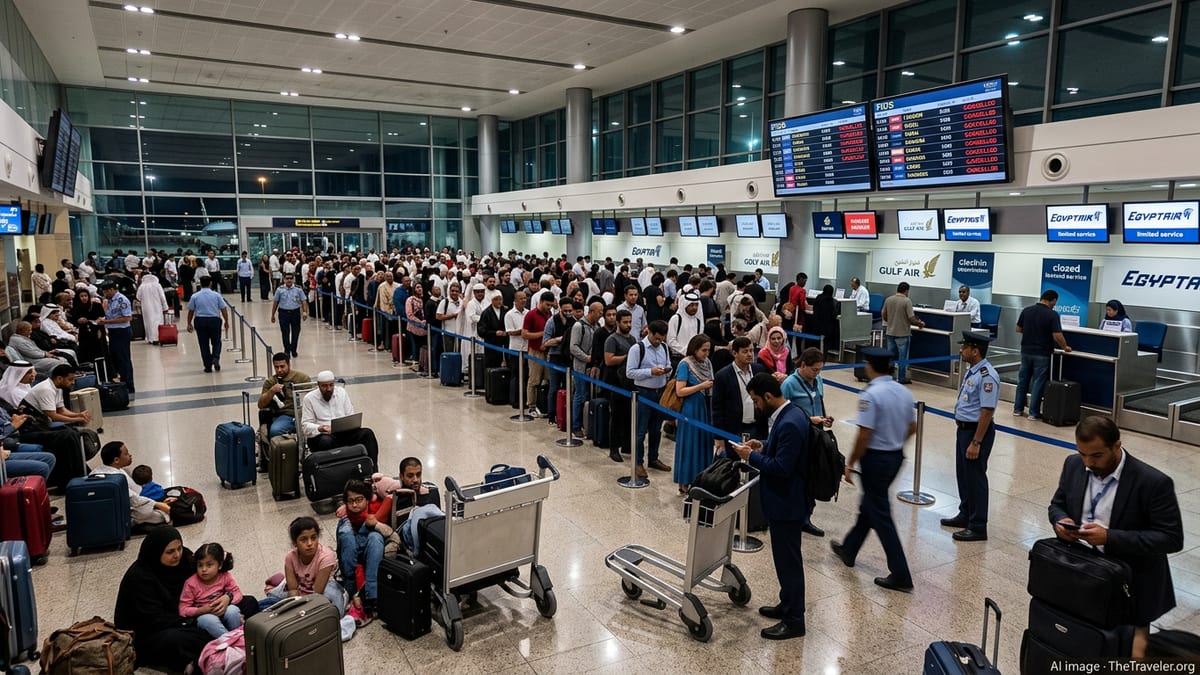
Dubai has moved to cap foreign airlines at one daily round trip to each of its two main airports until May 31, 2026, in a temporary policy that sharply reduces flight options for UK, US and Australian travelers connecting through one of the world’s busiest hubs.
Get the latest news straight to your inbox!
What the One-Flight-Per-Day Rule Actually Means
Publicly available information shows that from April 20 through at least May 31, 2026, foreign airlines are permitted to operate no more than one round-trip service per day to Dubai International Airport (DXB) and one to Al Maktoum International Airport (DWC). In practice, that means a maximum of one inbound and one outbound flight daily per carrier at each airport, regardless of how many frequencies were scheduled before the cap was introduced.
Coverage in aviation and travel outlets indicates that the instruction was circulated to airline scheduling teams in late March, formalizing capacity limits that had already been applied on an ad hoc basis following earlier regional disruptions. Local carriers based in the United Arab Emirates, including Emirates and flydubai, are not subject to the same cap, which allows them to maintain denser schedules while foreign rivals are forced to consolidate operations into a single daily rotation.
The rule is described in published reports as a temporary capacity management measure linked to the use of military-controlled airspace corridors and continuing regional security concerns. For passengers, however, the operational rationale matters less than the practical effect: fewer flights to choose from and fuller aircraft on those that remain.
Why Dubai Is Tightening Capacity for Foreign Carriers
According to widely shared reporting in international media, the current limits grew out of severe airspace constraints that followed missile and drone activity in the wider Gulf region in late 2025. Parts of the skies used by commercial aircraft remain restricted, compelling air traffic managers to funnel more flights through narrower corridors and to cut the number of hourly movements at key hubs such as Dubai.
Dubai International is one of the world’s busiest airports by international passenger volume, which means even a modest reduction in available airspace quickly translates into congestion on the ground and increased risk of delays. By imposing a uniform, transparent cap on foreign airlines, airport managers are attempting to spread the impact more evenly across carriers rather than canceling or rescheduling flights piecemeal as congestion builds.
Aviation analysts quoted across trade and consumer publications note that allowing UAE-based carriers to operate outside the one-flight limit helps protect vital regional and long-haul links used for repatriation, essential travel and cargo flows. Critics, however, argue that the asymmetry deepens competitive pressure on foreign airlines that rely on multiple daily flights to sustain business and premium traffic into Dubai.
Impact on UK, US and Australian Route Networks
For travelers from the United Kingdom, the United States and Australia, the cap is most visible in shrinking schedules on foreign flag carriers that once offered several daily departures into Dubai. Airlines that previously timed morning, afternoon and overnight services to appeal to both business and leisure passengers are now having to choose a single daily slot or temporarily suspend some city pairs altogether.
From the UK, published timetables show that non-UAE airlines serving Dubai have consolidated operations into one main daily flight from their primary hubs, often scheduled in the evening to maximize onward connection options. Passengers who relied on earlier departures for same-day meetings or tight onward links now face longer layovers or an overnight stay.
For US-based carriers, which typically operated limited but strategically timed flights to Dubai, the cap restricts any plans to add supplementary frequencies during the busy spring and early summer period. Connections from secondary US cities that depended on coordinated schedules with partner airlines in Dubai are particularly vulnerable, with some itineraries disappearing from booking systems or reappearing with extended total journey times.
Australian travelers are also feeling the effects, particularly those using non-UAE airlines that routed through Dubai as an intermediate stop en route to Europe, Africa or North America. With only one daily rotation permitted, some carriers have prioritized their strongest origin markets, leaving fewer options from smaller Australian cities and concentrating capacity in Sydney or Melbourne.
What Passengers Need to Know Before They Book
The most immediate consequence for UK, US and Australian travelers is reduced flexibility. With only one daily flight available on many foreign airlines, the ability to select preferred departure times, minimize layovers or rebook easily after a disruption is significantly curtailed. Popular days such as Fridays, Saturdays and school holiday periods are seeing the highest load factors, and some routes are selling out earlier than usual.
Travel industry coverage advises passengers to pay particular attention to minimum connection times when routing through Dubai over the affected period. With fewer alternative flights available, a missed connection caused by a delay on the first leg may be harder to resolve on the same day, potentially requiring overnight accommodation or rerouting through a different hub.
Ticket pricing is also shifting. While some airlines are using promotional fares to keep demand flowing on their single daily services, others are raising prices as seats become scarce. Travelers booking from the UK, US and Australia are being encouraged by agents and comparison platforms to lock in key dates early, especially if they are targeting peak-season travel to Europe, Africa or the Indian Ocean via Dubai.
Another emerging pattern is increased reliance on UAE-based carriers for complex itineraries. Because those airlines are not bound by the one-flight cap in the same way, they are often able to offer more departure time choices and shorter connections, even if that comes at a premium price.
How Long Will the Restrictions Last and What Happens Next
Official correspondence referenced in open reporting currently points to May 31, 2026 as the end date for the one-flight-per-day rule, covering a period of just over six weeks from its effective start on April 20. Industry observers caution, however, that the restriction has already been extended once in a similar form, and any deterioration in the regional security outlook or further airspace closures could prompt Dubai to prolong or adjust the cap.
Airlines serving Dubai from the UK, US and Australia are responding differently. Some have chosen to retain their single permitted daily rotation and wait for more clarity on the policy’s duration, while others have shifted capacity to alternative hubs in the Gulf and Europe where they can operate more freely. Codeshare and alliance partnerships are being reworked to preserve at least one-stop connectivity between major cities and Dubai, even if that involves an extra connection.
For passengers, the key practical advice from travel industry commentary is to monitor bookings closely and remain flexible where possible. Schedules for late May may still change as airlines adjust to demand patterns under the cap or as Dubai revises its capacity assumptions. Travelers with essential trips are being urged to register contact details with their carriers, consider travel insurance that covers schedule disruptions, and check flight status repeatedly in the days before departure.
While the one-flight-per-day rule is framed as a short-term operational response, it is also prompting a wider debate about how concentrated global air travel has become around a handful of mega-hubs. For now, though, its impact is most tangible at the individual level, as UK, US and Australian travelers weigh fewer flights, busier cabins and more complex connections when flying through Dubai in the coming weeks.