


More news on this day
Air India has introduced voluntary 100 percent psychoactive-substance testing for its pilots following a serious incident on a Phuket to Delhi flight and a preliminary investigation that highlighted a non-negative test result for the pilot-in-command.
Get the latest news straight to your inbox!
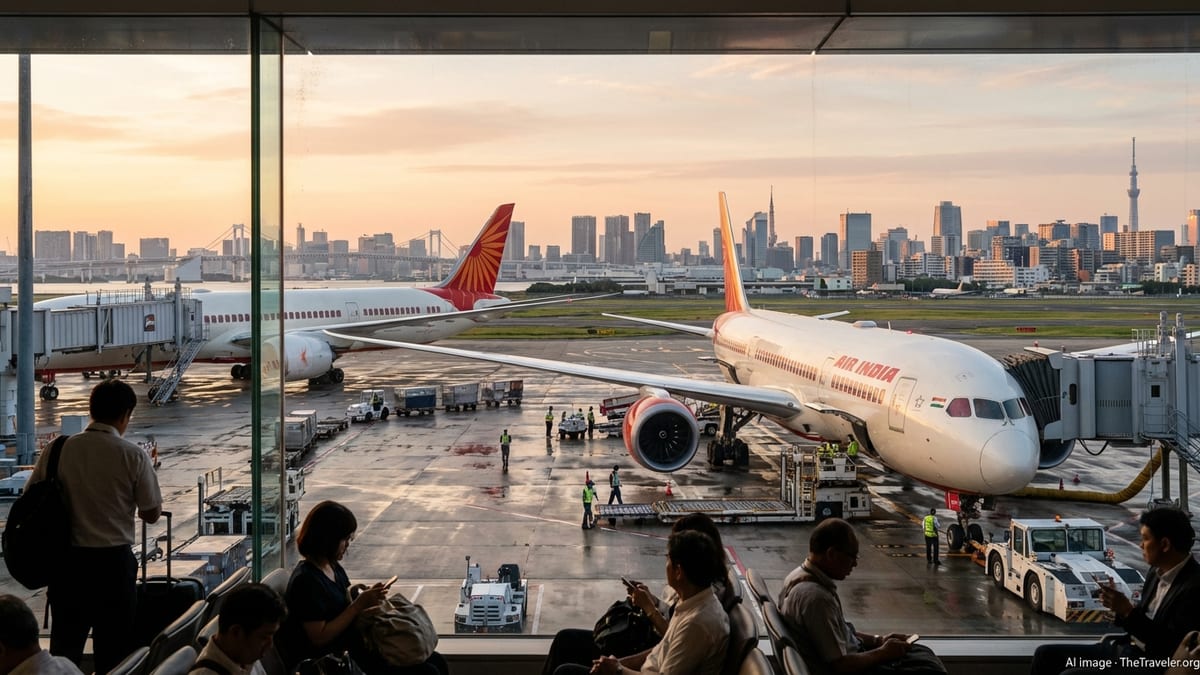
New Testing Regime Follows August 4 Phuket-Delhi Scare
The new testing initiative follows an incident on August 4 involving Air India flight AI-2379 from Phuket to Delhi, during which the Airbus A320 briefly lost altitude at cruise and caused injuries in the cabin. Preliminary findings from the Aircraft Accident Investigation Bureau (AAIB) describe a sequence that included hydraulic system problems, autopilot disconnection and a sudden altitude deviation that injured 20 passengers and four cabin crew members, with several requiring hospitalisation after landing in Delhi.
The AAIB’s initial report indicates that all three hydraulic systems experienced a temporary loss of pressure while the aircraft was flying at about 36,000 feet, triggering warnings in the cockpit and prompting manual recovery by the crew. The event has been classified as a serious incident, prompting detailed technical and medical scrutiny of both aircraft systems and flight crew fitness before, during and after the flight.
Publicly available information also notes structural and interior damage inside the cabin due to the abrupt vertical movement, including broken overhead panels and dislodged components. The severity of the in-flight upset and the number of people hurt have kept the episode in the spotlight and intensified attention on safety practices at the Tata Group owned carrier.
AAIB Report Links Incident to Pilot’s Non-Negative Test
The AAIB’s preliminary report into AI-2379 highlights that the pilot-in-command returned a non-negative result for psychoactive substances in confirmatory testing conducted after the flight. Coverage of the findings describes the result as a key concern for investigators, even as the primary technical cause of the event is tied to the hydraulic malfunction and resulting loss of stable flight conditions.
Reports indicate that both pilots underwent post-flight medical checks and toxicology screening after landing in Delhi, in line with current Indian aviation requirements for serious occurrences. The confirmatory test on the pilot-in-command was later reported as non-negative for a psychoactive substance, identified in several media accounts as marijuana. Regulators and investigators are now reviewing how such a finding intersects with wider safety culture, crew scheduling and medical oversight practices.
The AAIB has recommended that the Directorate General of Civil Aviation (DGCA) consider additional measures to prevent abuse of psychoactive substances among flight crew. Commentary around the report stresses that a non-negative laboratory result does not on its own establish impairment at the time of flight, because some substances can remain detectable for days or weeks. Nevertheless, the combination of a serious in-flight upset and a non-negative result has driven calls for tighter testing protocols.
Voluntary 100 Percent Testing Goes Beyond DGCA Baseline
Against this backdrop, Air India has stated through publicly available statements that it has begun voluntary testing of 100 percent of its pilots for psychoactive substances. Previous DGCA rules require airlines to test a minimum proportion of pilots annually on a random basis, rather than every pilot on a rolling schedule. The new policy positions the carrier above that baseline by committing to screen all pilots rather than rely only on sampling.
Coverage of the measure describes it as part of a “safety first” stance intended to reinforce public confidence at a time of expanding traffic and network growth. The airline has emphasised that it maintains zero tolerance for any breach of safety, medical fitness or regulatory norms, and that it will cooperate fully with ongoing technical and medical inquiries linked to the Phuket-Delhi incident.
Industry observers note that a move to test all pilots voluntarily represents a significant operational and logistical undertaking, from laboratory capacity and scheduling to data management and privacy safeguards. However, commentators also point out that high-profile incidents have, in other markets, often preceded more stringent testing regimes that later became standard practice across carriers and regulators.
Scrutiny of Air India’s Safety Culture and Regulatory Oversight
The Phuket-Delhi event comes at a time when Indian aviation is expanding quickly and regulators are under pressure to keep safety standards aligned with growth. Earlier public documents and enforcement actions have already placed Air India’s training, crew rostering and compliance systems under a microscope, with the DGCA issuing notices in other cases relating to rest rules and duty-time limits.
The non-negative psychoactive-substance result for a pilot at the controls of a serious incident flight has added a new layer of concern, focusing attention on how airlines monitor off-duty substance use and the robustness of existing random-testing regimes. Pilot associations in India have previously argued for higher levels of random drug testing across the sector, while also highlighting the need for confidential support and rehabilitation pathways so that crew members feel able to self-report issues without fear of automatic career-ending sanctions.
For passengers, the latest episode reinforces a broader debate about transparency when serious incidents occur. While technical investigation reports typically take months to reach final conclusions, the early release of preliminary findings and the airline’s decision to publicise its 100 percent testing initiative have ensured that the Phuket-Delhi flight remains a reference point in public discussions about safety and accountability.
Implications for Passengers and the Wider Aviation Sector
Travel industry analysts suggest that Air India’s move to test all pilots voluntarily could set a benchmark for other Indian carriers as they weigh how to respond to growing scrutiny of crew fitness. If the initiative is sustained and proven workable, it may nudge regulators and competitors toward more ambitious testing standards, particularly on high-density domestic and international routes.
At the same time, experts caution that testing alone cannot address all elements of safety culture. Training, fatigue management, open reporting of errors and near-misses, and a clear separation between investigation processes and disciplinary action are all cited as essential components of a modern safety system. The Phuket-Delhi incident has highlighted how technical failures, cabin procedures and human factors can intersect in complex ways during a short-lived in-flight upset.
For international travelers watching India’s fast-growing aviation market, the coming months will reveal whether Air India’s 100 percent testing commitment becomes a permanent part of its safety framework or evolves in response to regulatory guidance and operational experience. The final AAIB report on flight AI-2379 is expected to provide further detail on the hydraulic failure, crew response and the role, if any, that psychoactive-substance use played in the serious incident.
Financial Express coverage of Air India’s 100 percent pilot testing
Indian Express report on the AAIB preliminary findings
Economic Times analysis of the pilot’s psychoactive-substance test