


More news on this day
East Midlands Railway is extending its digital pay-as-you-go ticketless travel trial for another year after early take-up and journey figures indicated strong passenger interest in more flexible, app-based rail fares across the Midlands corridor.
Get the latest news straight to your inbox!
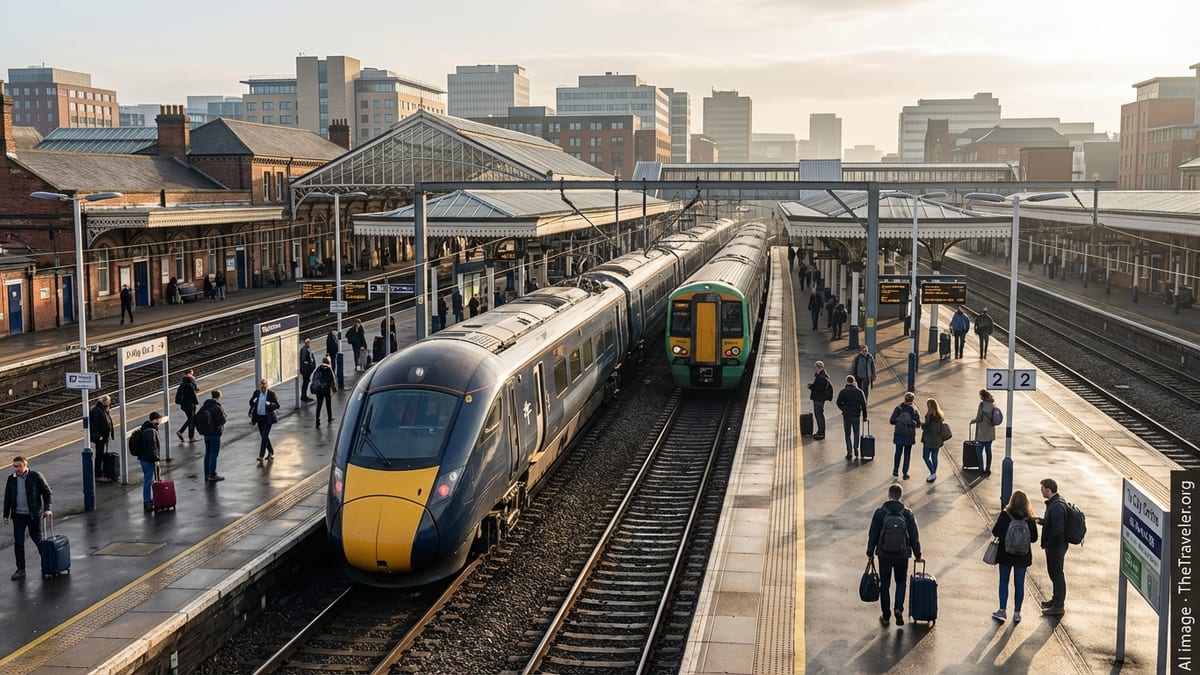
Trial Extension Marks Milestone for Digital Rail Fares
Publicly available information shows that East Midlands Railway is prolonging its Digital Pay As You Go trial by a further 12 months after the scheme recorded more than 27,000 journeys on its core routes between Leicester, Derby and Nottingham. The initiative allows registered users to check in and out of trips through the EMR app, with the system generating a barcode ticket in the background for inspections and gatelines.
According to published coverage of the trial, participating passengers do not need to select a ticket type or commit to a fare before boarding. Instead, the back-end system calculates the best available price after travel, applying daily and weekly capping so that frequent users do not pay more than the cost of comparable season tickets on the covered routes.
The decision to extend follows an initial phase in which EMR reported high satisfaction scores from users and increasing journey volumes, suggesting that customers are comfortable with the idea of “ticketless” travel where proof of payment is digital and largely automated. The extension keeps the pilot in place while wider national reforms to fares and ticketing continue to be developed.
While the current trial remains limited to selected services in the East Midlands, its continuation is being framed in industry material as a step towards a more unified, account-based ticketing model for UK rail, intended to reduce complexity for passengers and cut the use of traditional paper tickets.
How the Digital Pay-As-You-Go System Works
EMR’s Digital Pay As You Go scheme is built around the train operator’s mobile app, supplied in partnership with Trainline technology, according to the trial’s frequently asked questions. Once registered, customers start a journey by checking in on their smartphone and confirm their destination at the end of their trip, which closes the journey within the app.
The system then generates a barcode ticket that serves as the formal record of travel and can be inspected on board or scanned at ticket gates. Participants are advised that they no longer need to queue at ticket machines or visit station ticket offices on the trial route, since the fare calculation and payment are completed automatically once journeys are closed.
Information provided by EMR indicates that the app-based model is designed to mirror the convenience of urban contactless systems, while still accommodating railcard discounts and other concessions through an online account. Users can register eligible railcards to ensure that discounted fares are applied automatically, though they must still carry proof of the railcard in paper or digital form when travelling.
The technology behind the scheme uses location and journey data to determine when a customer boards and alights, within the constraints of the defined trial corridor. This approach is intended to make travel more intuitive for passengers who may not be familiar with detailed fare rules or specific ticket types on the Midland Main Line and connecting local services.
From Paper to Barcodes and Smartcards Across EMR
The extension of EMR’s ticketless trial aligns with a broader shift by the operator towards digital ticket formats. EMR’s own figures from earlier customer reports indicate that nearly four out of five tickets on its network are now issued in digital form, including e-tickets with barcodes, mobile tickets and smartcard products.
Alongside the app-based trial, EMR continues to promote e-tickets that can be stored on smartphones and scanned at gatelines, as well as reloadable ITSO smartcards that can hold multiple season or advance tickets. Station ticket machines are increasingly configured to print barcode tickets and support the collection of smartcard products purchased online, reflecting Department for Transport policy to classify barcoded tickets as a “smart” medium.
At the same time, EMR’s published guidance on travelling without a ticket underscores that penalty fare rules remain in force at many of its stations, including Leicester and other key hubs. Passengers are still required to hold a valid form of authority to travel, whether physical or digital, and can face financial penalties if they are unable to present a ticket or approved proof of purchase when requested.
This dual message highlights the transitional nature of the current period: while digital formats are rapidly becoming the default, traditional channels such as staffed ticket offices and paper tickets are still in use, particularly for passengers who prefer face-to-face assistance or do not have access to smartphones.
Part of a Wider National Move to Smart, Account-Based Travel
The EMR trial sits within a wider programme supported by the Department for Transport to introduce pay-as-you-go and account-based ticketing beyond London and the South East. Government announcements over the past year describe a series of pilots involving operators in the Midlands and the North of England, where GPS-enabled apps calculate the best fare for multiple journeys and apply automatic caps.
On the Leicester–Derby–Nottingham corridor, local and regional authorities have pointed to the EMR scheme as an example of how digital ticketing can make rail more attractive for commuters and occasional travellers, particularly when combined with infrastructure investment and timetable improvements. Public documents from regional transport bodies present the trial as one element in efforts to grow rail’s share of local journeys and support economic development.
Elsewhere, similar digital pay-as-you-go projects on Northern’s routes in Yorkshire have been extended into the late 2020s, indicating central government’s continued interest in testing different technological solutions and commercial models before any wider rollout across the national network. The relative success of EMR’s extended trial is likely to feed into that evidence base, particularly around passenger acceptance and revenue protection.
Taken together, these initiatives suggest that future UK rail travel could rely much more heavily on account-based systems that sit behind simple check-in and check-out actions, rather than on passengers choosing from a long list of paper ticket types. For now, however, the experience in the East Midlands remains a controlled pilot, watched closely by policymakers and other train operators considering similar schemes.
Balancing Innovation, Accessibility and Trust
While industry material emphasises the convenience of ticketless travel, the move towards a predominantly digital system raises questions about accessibility, data use and public trust. Published reports from local authorities in the region note that traditional ticketing channels remain in place alongside the EMR trial to support passengers who do not own smartphones or prefer to pay in person.
Advocacy groups and passenger forums have also highlighted the importance of clear communication around how journey data is collected, stored and used in account-based systems. With the EMR app drawing on location information to help determine journeys, transparency over privacy safeguards is likely to be an ongoing focus as trials evolve.
For rail operators, a major objective of digital pay-as-you-go models is to reduce unintentional ticketless travel by making payment more straightforward, while maintaining robust processes to manage deliberate fare evasion. EMR’s business plan commitments for the current financial year include specific requirements to survey ticketless travel and develop strategies to reduce it, indicating that revenue protection remains a central concern alongside customer experience.
How successfully the East Midlands trial balances these factors over its extended lifetime may influence whether similar schemes are introduced on other interurban corridors and, ultimately, whether a national digital fare platform emerges. The coming 12 months will therefore be significant in shaping the next phase of UK rail ticketing reform.
EMR: Digital Pay As You Go trial extended
EMR: Digital Pay As You Go trial FAQs
East Midlands Combined County Authority: digital ticketing trial