


Landing at Cairns Airport is the moment many Tropical North Queensland trips really begin. Whether you are heading straight to a Great Barrier Reef boat, a Cairns city hotel or onward to Port Douglas and the Daintree, understanding how the airport works will save you time, money and stress. This guide brings together current on-the-ground information to help first-time visitors move smoothly from the aircraft door to the rainforest and reef.
Get the latest updates straight to your inbox!
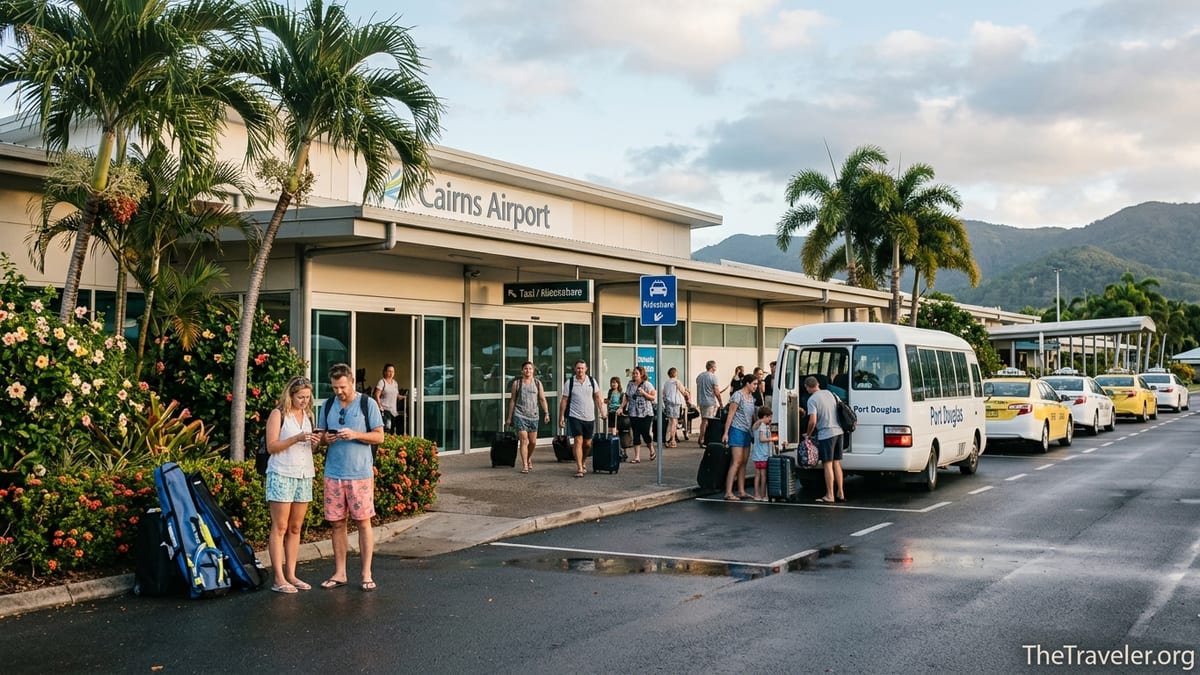
Understanding Cairns Airport and Its Two Terminals
Cairns Airport has two passenger terminals: T1, the international terminal, and T2, the domestic terminal. They sit side by side on Airport Avenue, a short drive from Cairns CBD. Many visitors arrive internationally into T1 on carriers such as Jetstar or Singapore Airlines, then connect onto a domestic flight in T2 to reach other Australian cities, or the other way around. Walking between the two terminals typically takes around 5 to 10 minutes along a clearly signed outdoor path.
T1 handles most international arrivals and departures, including seasonal services, while T2 serves domestic routes such as Brisbane, Sydney, Melbourne and regional Queensland, commonly with Qantas, Virgin Australia, Jetstar and Rex. If you are connecting between international and domestic flights on separate tickets, you usually need to collect your bags, clear customs and then walk your luggage across to the other terminal to check in again, so allow at least two to three hours between flights.
Facilities in both terminals are compact but practical rather than sprawling. You will find ATMs, currency exchange in the international terminal, cafes, bar-style venues and a mix of convenience-style shops. Wireless internet is generally available, and there are plenty of seats in arrivals for people waiting on transfers. Late at night and very early in the morning, food and retail options can be limited, so consider grabbing a snack or bottle of water on the plane if you expect to arrive outside typical daytime trading hours.
Cairns Airport is not a 24-hour sleeping hub. Security rules and cleaning schedules mean passengers cannot usually stay airside overnight, and landside seating is not set up like a transit lounge. If you have a very early reef tour or a late arrival, it is usually more comfortable to book a Cairns city hotel or motel rather than plan to sleep in the terminal.
Arriving at T1 and T2: What to Expect on Landing
On arrival into T1 international, you will follow the usual Australian Border Force procedures: passport control, baggage claim and biosecurity checks. Australia’s quarantine rules are strict, particularly around food, plant material and outdoor gear. If you have been hiking before flying into Cairns or are carrying camping equipment, there may be additional inspection. Declaring is always safer than risking an on-the-spot fine. Once through customs, you step directly into the arrivals hall, where transport desks, currency exchange and information points are located.
Domestic arrivals into T2 are generally straightforward. After leaving the aircraft, you walk to baggage claim, which is close to the exit doors and transport zones. Baggage trolleys are available in T2 for a small fee (usually a few Australian dollars), which can be helpful if you are balancing dive gear, camera equipment and a suitcase. Outside the terminal doors you will see clearly marked areas for taxis, shuttles, rideshare and hotel buses, so you do not need to cross major roads to find your transport.
Customs and immigration are only handled in the international terminal. If you are connecting from a domestic flight to an international departure, you will need to collect any checked luggage in T2, walk over to T1 and check in again. The path between terminals passes car parks and is open to the tropical air, so have a hat or light rain jacket handy if you are carrying bags during the middle of the day in the wet season.
Airport staff and volunteer ambassadors are used to helping first-time visitors bound for the reef or Daintree. If you are unsure where to go for your booked shuttle or dive operator pickup, it is worth asking one of the uniformed airport staff in the arrivals hall before you step outside. They can point you toward the right zone for shared buses, private transfers or car hire without you needing to navigate by yourself in the tropical heat.
Taxis, Uber and Rideshare: Choosing the Right Option
Cairns has an established taxi network, and taxis remain one of the most reliable ways to get from the airport to the city, Northern Beaches or the cruise terminal. The main taxi company operates a fleet of sedans, maxi taxis and wheelchair accessible vehicles. Taxi ranks are positioned directly outside both T1 and T2; you simply follow the “Taxi” signs from the arrivals doors. For a typical daytime trip from Cairns Airport to a city hotel near the Esplanade or Cairns Central, visitors commonly report fares in the range of around AUD 25 to 40 depending on traffic, waiting time and the exact address. A ride to the Northern Beaches such as Palm Cove will generally cost more and take longer, often 25 to 40 minutes in normal conditions.
Ride-booking services like Uber operate at Cairns Airport and use designated rideshare pickup zones. These are separate from the public taxi ranks and are normally located a short walk from the terminal doors, at one end of each terminal building. When you order a ride in the app, it will direct you to the correct “Ride-booking” or “Rideshare” area. Travellers often find that rideshare prices into town can be a little cheaper than taxis at quiet times but may surge during busy periods, evening arrivals or bad weather. Some locals note that late at night, particularly after 11 pm, rideshare availability can be patchy and taxis may actually be easier to secure.
As with many airports, ride-booking pickups attract an access fee which is added to your fare in the app. This means ultra-short trips, for example from the airport to nearby Cairns North guesthouses, can feel disproportionately expensive in an Uber compared with a taxi or a prearranged hotel shuttle. A practical approach for first-time visitors is to check both a taxi and a rideshare quote on arrival, then choose the quicker or cheaper option depending on what matters more to you at that moment.
If you are arriving as a family or small group with lots of luggage, consider ordering a maxi taxi from the rank or in advance via the local taxi app. For example, a family of four with two large suitcases and snorkelling gear heading to a Cairns Esplanade apartment might find a single maxi taxi more comfortable and only slightly more expensive than two smaller rideshare cars. Conversely, solo backpackers with just a carry-on may find it cost effective to wait a few extra minutes for an UberX and split the fare if they meet fellow travellers heading to the same hostel.
Shuttles, Hotel Transfers and Port Douglas Connections
Shuttle buses are a popular option for first-time visitors, especially those heading beyond Cairns city to the Northern Beaches, Palm Cove or Port Douglas. Multiple companies run shared shuttles that meet scheduled flights and transfer passengers directly to hotels. These services typically operate with minivans or small coaches, and you will often see drivers in branded shirts holding clipboards or signs in the arrivals area. Many operators require advance booking with your flight number so they can group travellers by arrival time.
For Port Douglas in particular, shared airport shuttles are one of the most cost-effective choices if you are not renting a car. In 2026, one-way shared shuttle fares between Cairns Airport and Port Douglas commonly fall in the approximate range of AUD 35 to 55 per adult, depending on the operator, timetable flexibility and whether you are travelling at peak times. Some services offer discounted return fares or family rates; a couple might pay around AUD 150 to 190 total for return transfers if booked ahead. Travel time from the airport to Port Douglas is usually about 60 to 75 minutes, following the scenic Captain Cook Highway along the Coral Sea.
Hotel and resort transfers are another straightforward option, particularly for higher-end properties. Several Port Douglas resorts, Palm Cove hotels and liveaboard dive operators run their own minibuses that meet flights by arrangement. For example, a reef liveaboard departing early the next morning may offer a bundled “fly in and transfer” package that includes pickup from Cairns Airport, a night at a partner hotel, and transfer to the marina the next day. While these private transfers are generally more expensive than shared shuttles, they can be convenient if you are arriving late or carrying specialist diving or photography equipment.
If you have not pre-booked a shuttle, there are often desks or representatives in the arrivals hall who can sell you a seat on the next available service to popular destinations like Cairns CBD or Palm Cove. However, availability can be limited during Australian school holidays or around major events such as the Cairns Ironman. First-time visitors travelling in peak season should secure their shuttle online before flying to avoid long waits in the heat with luggage.
Car Rental, Driving and Getting To Your Reef Trip
Renting a car at Cairns Airport is a practical way to explore Tropical North Queensland at your own pace, particularly if you plan to visit the Atherton Tablelands, Mossman Gorge or the Daintree in addition to the reef. Major international brands and local companies have desks at both T1 and T2, with vehicles parked in nearby lots that you can reach on foot. It is worth comparing rates across several companies in advance, as prices can vary considerably between the dry season (roughly May to October) and the wetter summer months.
For a typical compact rental car picked up at Cairns Airport, daily rates can range anywhere from around AUD 60 in low season to well over AUD 120 during busy winter months, plus insurance and any one-way fees. Australian rental firms usually require a credit card and will place a security hold. If you are arriving from overseas, remember that Australians drive on the left and that many rural roads in the region are single-lane or can flood in heavy rain. Check whether your rental agreement allows you to drive north of the Daintree River or onto unsealed roads if you are planning more adventurous side trips.
Many reef trips depart from the Cairns Marlin Marina or Reef Fleet Terminal, less than 15 minutes’ drive from the airport in normal traffic. If you are arriving in the morning and planning to go straight to a day boat, build in extra time for potential flight delays and baggage waits. A common strategy is to overnight in Cairns, then join an early reef trip the next day. For instance, you might land at 3 pm, check into a hotel on the Esplanade, stroll along the lagoon for sunset, and catch a 7:30 am boarding for a full day outer reef cruise the following morning.
Parking at city hotels and near the marina can be limited or attract a daily fee, so if your main focus is a pre-booked liveaboard or series of day boats, it may be cheaper to rely on taxis and shuttles rather than a rental car. One practical combination for first-timers is to use a taxi to reach your Cairns hotel on arrival, join reef trips on foot or by short cab rides, then pick up a rental car later in the stay for a self-drive loop to Kuranda, Port Douglas and the Daintree.
First-Time Arrival Tips for Tropical North Queensland
The tropical climate is often the first surprise for new arrivals. Cairns is warm and humid for much of the year, with a notable wet season typically from around December to March. When you step out of the air-conditioned terminal, the heat can feel intense, especially if you are wearing long sleeves from a long-haul flight. Pack a change of light clothing in your hand luggage, along with sunscreen, a hat and a refillable water bottle so you can adapt quickly once you arrive.
Timing is important if you are relying on same-day transport connections. If your flight lands late at night, be aware that not all shuttle services operate after around 8 to 9 pm, and rideshare availability may be reduced. In this scenario, it can be wiser to book a city hotel for your first night and travel onward to Port Douglas or Cape Tribulation the next morning when buses and shuttles are running regularly. Conversely, early morning arrivals often find it easy to step straight onto a pre-booked shuttle and be on the beach by mid-morning.
Cashless payment is widely accepted across the region, including in taxis, shuttles and car parks. Most services accept contactless credit and debit cards, and many Australians use mobile wallets on their phones or watches. Nonetheless, carrying a small amount of Australian currency can be handy for luggage trolleys, small snacks or markets you may visit soon after arrival. If you are arriving on an international flight, you can withdraw cash from ATMs in the terminal after clearing customs.
If you are prone to motion sickness, remember that several key transfers from Cairns involve winding roads or boat rides. The drive to Port Douglas follows a curving coastal highway, and reef trips can be choppy, especially during the trade wind season. Consider packing seasickness tablets in your carry-on and keeping them accessible so you can take them before your shuttle or boat departs, rather than rummaging in checked luggage at the last minute on the wharf.
Connecting Onward: Port Douglas, Daintree and Beyond
From Cairns Airport, many first-time visitors are heading not just to the city but onward to Port Douglas, the Daintree Rainforest or smaller beach communities. The primary overland route north is the Captain Cook Highway, which runs along the coast through the Northern Beaches before reaching Port Douglas and eventually Mossman. In good conditions, the drive from the airport to Port Douglas usually takes just over an hour, but it can take longer in heavy rain, during road works or when there is traffic around school holiday weekends.
Shuttles and private transfer services will generally track incoming flight times and group passengers on similar schedules. If your flight is delayed by an hour or more, many operators will move you to the next available vehicle, but this can mean additional waiting in the arrivals hall. It is helpful to have your shuttle company’s local mobile number saved so you can call or message them on landing using airport Wi-Fi. If you are travelling with young children, ask in advance whether the shuttle can provide child seats, or whether you need to bring your own; Australian law requires appropriate restraints for younger passengers.
The Daintree region north of the Daintree River has more limited public transport, and mobile coverage can be patchy. If your ultimate destination is an eco-lodge or rainforest retreat, you will often be offered a private 4WD transfer that includes the ferry crossing over the river. These rides will usually meet you at the airport with a sign, help load bags and drive you directly to the property. Prices are significantly higher than shared shuttles to Port Douglas, but they save several changes of vehicle and the need to coordinate around ferry timetables, especially in the wet season.
Some travellers choose to break the journey with a night or two in Palm Cove or Trinity Beach. From Cairns Airport, these beach villages are about 20 to 30 minutes’ drive north and are served by the same mix of taxis, rideshare and shuttles as Port Douglas. For example, a couple might land mid-afternoon, take a pre-booked shuttle to Palm Cove, spend two nights by the beach, then continue by shuttle or rental car to Port Douglas and the Daintree once they are rested and acclimatised.
FAQ
Q1. How far is Cairns Airport from Cairns city centre?
The airport is roughly 6 to 7 kilometres from the city centre, and the drive usually takes around 10 to 15 minutes by taxi or rideshare in normal traffic.
Q2. Can I walk between the international (T1) and domestic (T2) terminals?
Yes. The terminals are next to each other and linked by a signed outdoor walkway. Most travellers take about 5 to 10 minutes to walk between them with luggage.
Q3. How much does a taxi from Cairns Airport to a city hotel cost?
Fares vary by time of day and traffic, but many visitors report paying in the general range of about AUD 25 to 40 from the airport to most central Cairns hotels.
Q4. Is Uber cheaper than taxis at Cairns Airport?
Sometimes. Uber and other rideshares can be slightly cheaper during quiet periods, but prices can surge, and airport access fees apply. Taxis may be more reliable late at night or in busy seasons.
Q5. Do I need to book a Port Douglas shuttle in advance?
It is strongly recommended, especially in school holidays or peak dry season. Advance booking secures your seat and ensures the shuttle tracks your flight arrival.
Q6. How long does it take to drive from Cairns Airport to Port Douglas?
In normal conditions the coastal drive along the Captain Cook Highway takes about 60 to 75 minutes, but allow extra time in heavy rain, roadworks or holiday traffic.
Q7. Are there car rental companies at both terminals?
Yes. Major international and local car rental brands operate desks at or near both T1 and T2, with cars parked in nearby lots within walking distance of arrivals.
Q8. Can I get to my reef trip directly from the airport?
It is possible but not ideal. Most travellers stay one night in Cairns before a reef trip to allow for flight delays and to avoid rushing between the airport and marina check-in times.
Q9. Is Cairns Airport open 24 hours for sleeping overnight?
No. While there may be flights outside normal hours, the airport is not designed as an overnight sleeping hub, and facilities and seating are limited for long stays.
Q10. What should I pack in my carry-on for arrival in Cairns?
Include light tropical clothing, sunscreen, a hat, any seasickness medication, and essential documents for shuttles or rental cars so you can adapt quickly to the heat and humidity.