


More news on this day
Travelers in Nunavik faced fresh uncertainty this week as four Air Inuit flights linked to Quaqtaq Airport were cancelled, disrupting vital connections between remote communities including Kangirsuk and Kangiqsujuaq.
Get the latest news straight to your inbox!
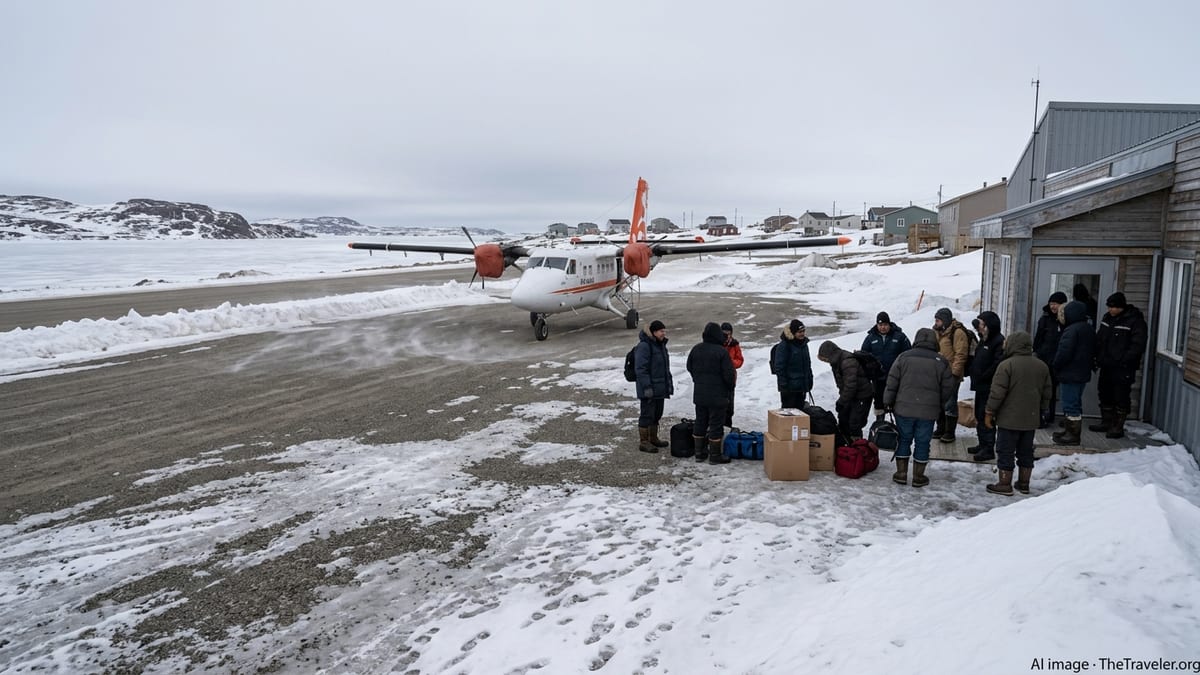
Chain of Cancellations at a Small but Strategic Airport
The latest disruptions at Quaqtaq Airport come at a time when regional flying in Arctic Quebec is already operating on a tightly coordinated schedule. Publicly available schedule information shows that Air Inuit operates a web of short sectors along the Ungava coast, with Quaqtaq serving as a key stop on routes that also touch Kangirsuk, Kangiqsujuaq and Kuujjuaq.
In recent days, several of these links have either disappeared from daily operations or have been marked as not operating on specific dates, indicating cancellations or temporary suspensions. Flight-tracking and schedule tools list services such as Aupaluk to Kangirsuk and Kangirsuk to Kangiqsujuaq as not operating on select days in late May, narrowing options for travelers who rely on these routes to connect with larger hubs in Kuujjuaq and southern Canada.
The pattern has effectively concentrated pressure on Quaqtaq and neighboring airfields. When flights at one airport are removed or rescheduled, the knock-on effect can immediately reduce onward connectivity for travelers who typically string together multiple short flights to reach medical services, education centers or family in other parts of Quebec.
For passengers already en route, the absence of multiple flights on the same corridor can mean being stranded overnight in small communities or facing long detours through alternative coastal stops. With only one main carrier on many of these routes, rebooking choices are limited compared with busier southern markets.
Remote Nunavik Communities Feel the Strain
The impact of cancellations is particularly acute in Nunavik communities such as Quaqtaq, Kangirsuk and Kangiqsujuaq, where air service is more than a convenience. These villages, scattered across the eastern shores of Hudson Strait and Ungava Bay, depend on scheduled flights for essential goods, medical travel and administrative visits.
Air Inuit’s published information describes these airports as regular stops within its northern network, with small De Havilland aircraft providing lifeline links between settlements. When even a handful of flights are removed from the timetable over several days, there can be immediate effects on local mobility, from delayed returns for students and workers to postponed specialist medical appointments in regional centers like Kuujjuaq or Montreal.
Travel-related platforms tracking Nunavik routes indicate that the late May schedule between Kangirsuk and Kuujjuaq, as well as services involving Kangiqsujuaq and other Ungava Coast communities, has been operating with narrower frequency than in peak periods. Within that context, four cancellations centered on Quaqtaq represent a significant share of available seat capacity for a short window of time.
Residents and travelers often have limited alternative transport in this part of northern Quebec, particularly in spring shoulder season when sea ice conditions restrict marine access. As a result, even routine schedule adjustments can quickly take on the feel of a broader disruption when they coincide with weather challenges or aircraft rotation issues.
Operational Pressures Behind Northern Flight Disruptions
While Air Inuit has not issued detailed public explanations for each cancelled sector around Quaqtaq, several factors commonly influence regional operations in Canada’s north. Arctic flying is highly sensitive to fast-changing weather, runway conditions and daylight, as well as to the availability of specialized aircraft and crews.
Flight history data for Air Inuit’s Dash 8 and Twin Otter fleet illustrates how closely aircraft are cycled through multiple short legs in a single day, including stops at Quaqtaq, Kangirsuk and other coastal communities. A disruption on one rotation can ripple across subsequent flights, particularly when there is no spare aircraft based locally and any substitution must be ferried from larger hubs.
Industry coverage of regional aviation in Canada has also highlighted the effect of fuel costs, staffing constraints and maintenance scheduling on small carriers. In remote markets that cannot easily absorb additional capacity, airlines may proactively trim or consolidate lightly booked flights at the margins of the schedule to maintain reliability on core sectors. When this occurs in the Arctic, the result can appear primarily as single-day gaps in the timetable for certain routes.
Analysts who follow northern aviation note that such pressures are not unique to one carrier but are part of a broader pattern facing operators that serve isolated communities with small fleets and specialized aircraft types. In Nunavik, that reality makes every removed flight highly visible to travelers planning time-sensitive trips.
Guidance for Affected Travelers and Future Bookings
Publicly accessible customer information from Air Inuit encourages travelers to monitor flight status closely before heading to airports such as Quaqtaq, Kangirsuk or Kangiqsujuaq, particularly during seasons when weather-related disruptions are more common. Travelers are generally advised to build extra connection time into itineraries that connect through Kuujjuaq or southern hubs, given the limited daily frequencies on many northern routes.
Travel planning tools that aggregate Air Inuit schedules show that services along the Ungava Coast are often clustered on specific days of the week and at recurring times in the early evening. When cancellations occur, it can be several days before the same routing is available again, which is important for passengers booking essential travel such as medical referrals or government appointments.
Travelers already ticketed through Quaqtaq or neighboring communities during periods of disruption typically have to work within the carrier’s rebooking policies and any applicable tariff provisions. In practice, this often means accepting alternative routings via different coastal stops or adjusting travel dates to match the next available flight, rather than shifting to another airline.
For future trips, travel specialists recommend that visitors to Nunavik and residents returning from the south consider flexible accommodation and contingency plans, including additional days at either end of their journey. Even in normal operations, the highly interconnected nature of Air Inuit’s northern network means that a small number of cancellations at a strategic airport like Quaqtaq can quickly reshape travel options across multiple communities.
Broader Questions About Resilience of Arctic Air Links
The spate of cancellations affecting Quaqtaq and neighboring airports has renewed attention on the resilience of air links that tie Nunavik to the rest of Quebec. Regional policy discussions in recent years have emphasized the importance of reliable air access for social cohesion, economic activity and emergency response across the Arctic.
Published analyses of northern transportation point out that, unlike larger southern cities with multiple carriers and road or rail alternatives, communities such as Quaqtaq, Kangirsuk and Kangiqsujuaq typically have only one scheduled airline and no year-round surface connection. That places additional weight on operational decisions around short-haul flights and highlights the need for contingency planning when aircraft or crews become unavailable.
Observers note that continued investment in airport infrastructure, navigation aids and fleet modernization could help reduce the frequency and impact of future disruptions. However, they also stress that the geographic realities of Nunavik will continue to make its air network highly sensitive to weather and operational pressures, even as carriers work to refine schedules.
For now, the experience of travelers caught up in four cancellations linked to Quaqtaq Airport underlines how quickly a localized operational issue can resonate across a wide swath of northern Canada, turning a handful of missing flights into a region-wide challenge for mobility.