


More news on this day
Malaysia’s AirAsia and Türkiye’s Pegasus Airlines have begun a new codeshare partnership that stitches together two of the world’s largest low-cost networks, creating fresh one-stop options between Southeast Asia and Europe through Istanbul.
Get the latest news straight to your inbox!
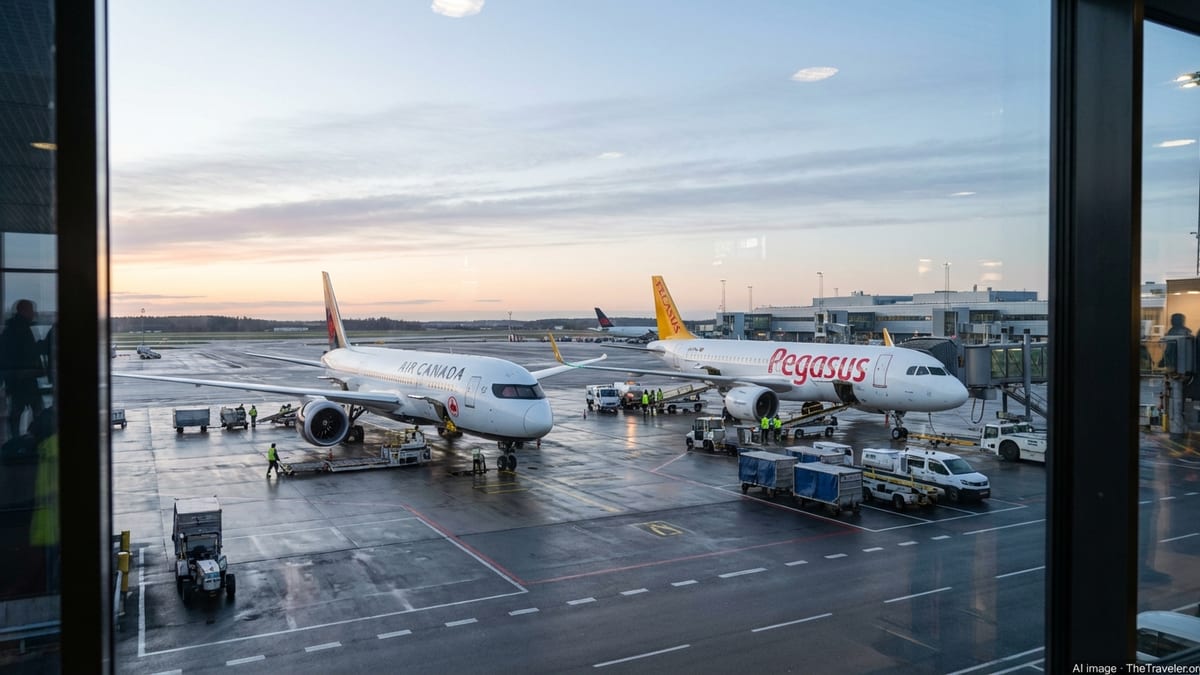
First Codeshare for AirAsia Targets Affordable Asia–Europe Travel
Publicly available information shows that the agreement is AirAsia’s first full codeshare arrangement, marking a strategic shift for the Kuala Lumpur based group best known for its point to point low fare model. The partnership allows AirAsia to place its code on selected Pegasus operated services beyond Istanbul, while Pegasus gains access to AirAsia operated flights across Malaysia and the wider Southeast Asian region.
Updates shared by both airlines on professional and corporate channels indicate that the arrangement focuses on itineraries that can be sold on a single ticket, with through check in of baggage from origin to final destination. This is designed to remove a key friction point for price sensitive long haul travelers, who often had to self connect between separate tickets when combining low cost carriers.
The collaboration also builds on AirAsia X’s direct service between Kuala Lumpur and Istanbul Sabiha Gökçen, which has been promoted as a budget friendly link between ASEAN markets and Türkiye. With Pegasus already operating an extensive short and medium haul network from the same Istanbul airport, the two carriers are positioned to convert the route into a broader Asia to Europe bridge.
Industry observers note that both airlines have expanded rapidly in recent years, with AirAsia restoring and growing its post pandemic network across more than 130 destinations and Pegasus increasing its reach to nearly 150 destinations across Europe, Asia and North Africa. Aligning these networks through a codeshare is viewed as a way to capture demand that might otherwise flow to full service rivals and Gulf based carriers.
Istanbul Sabiha Gökçen Emerges as a Low Cost Super Hub
The new partnership further elevates the role of Istanbul Sabiha Gökçen International Airport as a key transit point between Asia and Europe in the low fare segment. AirAsia X already serves the airport from Kuala Lumpur, while Pegasus uses Sabiha Gökçen as its primary base, offering frequent flights to major European and regional cities.
According to published network data and schedules, Pegasus connects Istanbul to cities such as London, Zurich, Athens, Amsterdam and numerous secondary European destinations that traditionally have limited direct links to Southeast Asia. Through the codeshare, many of these routes can now be combined with AirAsia flights from Malaysia and neighboring ASEAN countries on a single itinerary.
Travel industry coverage has highlighted that itineraries built around the new cooperation are intended to be competitive with traditional one stop options via major Gulf or European hubs, especially for travelers prioritizing cost over premium onboard services. Istanbul’s geographic position allows for relatively efficient one stop routings between a wide range of Asian origins and European endpoints.
The move also reinforces Sabiha Gökçen’s growing status as a multi airline low cost transfer hub. In addition to Pegasus and AirAsia X, other budget carriers have been building presence at the airport, creating more opportunities for self connect passengers and for future commercial cooperation across different brands.
Seamless Ticketing and Baggage Handling Aim to Ease Long Journeys
One of the most significant practical changes for passengers is the ability to book a multi segment journey across both airlines on a single reservation. Information published by the carriers indicates that travelers will see combined itineraries in global distribution systems and online sales channels, carrying a single booking reference and integrated itinerary.
Under the codeshare structure, baggage is intended to be checked through from the initial departure point to the final destination, even when a connection is required in Istanbul. This contrasts with traditional low cost arrangements where travelers might need to collect and recheck bags at the transfer point, adding time, uncertainty and potential missed connection risk.
For leisure travelers from Europe heading to beach destinations in Thailand, Indonesia, the Philippines or Malaysia, and for Southeast Asians visiting cities across Europe, the simplified process may narrow the perceived gap between low cost and full service carriers. Interline style handling, combined with lower base fares, is being framed in industry commentary as a way to broaden the appeal of budget travel on longer sectors.
At the same time, analysts caution that travel buyers and passengers will watch closely to see how disruption handling, minimum connecting times and customer support are managed under the new setup. Reliability during irregular operations is often a differentiator for network airlines, and the performance of this partnership will influence traveler confidence in long haul low cost connections via Istanbul.
Competitive Pressure on Full Service Rivals Across Eurasia
The AirAsia–Pegasus cooperation arrives at a time when competition on Asia–Europe corridors is intensifying. Gulf carriers, large European network airlines and Türkiye’s own full service operators have long dominated this traffic flow, often using major hubs in Doha, Dubai, Abu Dhabi, Istanbul and key European capitals.
By creating a structured low cost alternative, the new codeshare has the potential to put downward pressure on fares in selected markets, particularly where Pegasus has strong coverage into secondary European cities and AirAsia has significant feed from smaller Southeast Asian points. Travel media reports suggest that price sensitive travelers already compare these options against more established one stop itineraries.
Market commentary also notes that the partnership could stimulate latent demand from first time long haul flyers who previously viewed Europe as unaffordable. The combination of simplified connections, transparent pricing and the ability to depart from regional airports in both Asia and Europe may gradually reshape travel patterns on some routes.
However, full service competitors retain advantages in areas such as business travel, premium cabins and loyalty program benefits. For that segment, the AirAsia–Pegasus agreement is more likely to serve as a niche alternative rather than a direct replacement, though growing scale could increase its relevance to corporate travel buyers over time.
Implications for Malaysia and Türkiye as Tourism Gateways
The strengthened air link is expected to support national tourism agendas in both Malaysia and Türkiye. Kuala Lumpur benefits from enhanced visibility as a Southeast Asian entry point for European visitors using the new codeshare to access destinations across the region. Similarly, Türkiye gains from additional inbound traffic and increased use of Istanbul as a staging post for Asia bound journeys.
Tourism and aviation focused publications have repeatedly highlighted Türkiye’s strategy of positioning itself as a global transit hub, leveraging its location to attract connecting traffic between continents. The closer alignment between a major Turkish low cost carrier and a leading Southeast Asian budget group fits into that narrative while reinforcing Malaysia’s role in regional connectivity.
For airports and local tourism boards on both ends of the corridor, the partnership offers fresh marketing angles built around multi destination itineraries linking European cities with Malaysian islands, Thai resorts, Indonesian cultural centers and other ASEAN attractions. Travel packages that combine a stop in Istanbul with onward travel into Southeast Asia may become more common in tour operator catalogues.
Looking ahead, industry watchers will monitor how far the codeshare expands across each carrier’s network and whether deeper cooperation, such as reciprocal loyalty benefits or additional joint marketing, is introduced. For now, the launch of the AirAsia and Pegasus partnership signals a notable step in the evolution of long haul low cost travel between Asia and Europe.