


More news on this day
Fresh investment in Spanish and British airports, combined with renewed cooperation between the United Kingdom, Spain and the European Union, is setting the stage for a new phase of intra-European connectivity that particularly strengthens links with Germany and other key markets.
Get the latest news straight to your inbox!
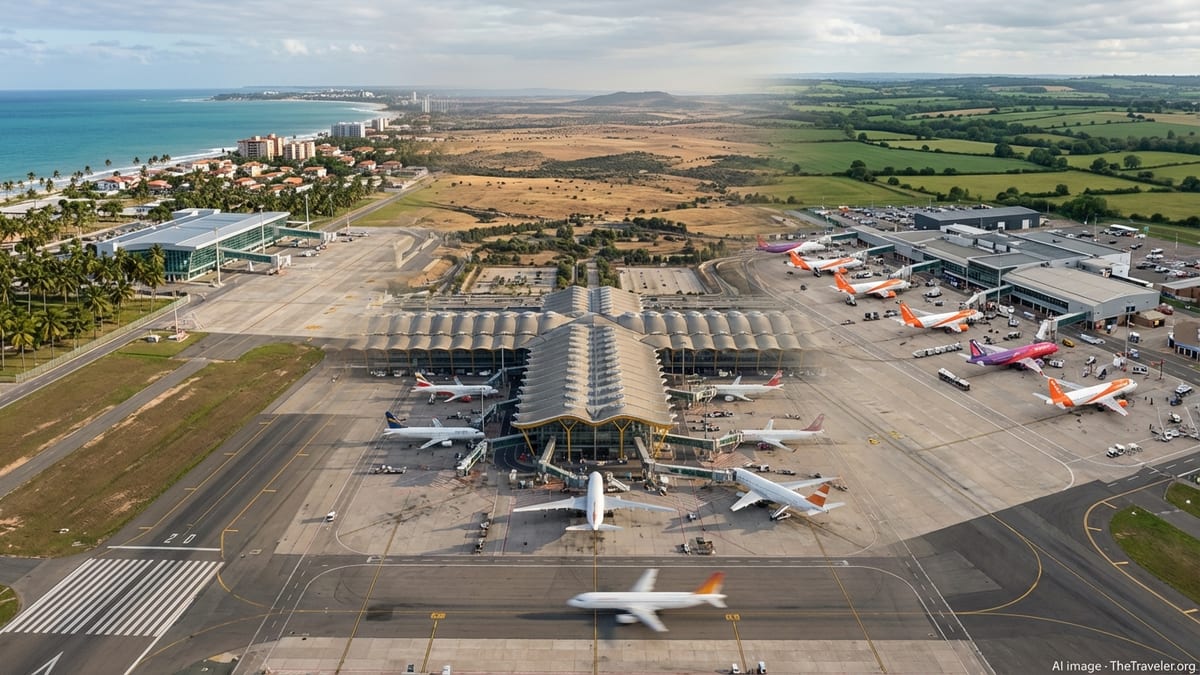
New Capital Flows Target Europe’s Busiest Travel Corridors
Publicly available industry analysis indicates that Europe is entering a new investment cycle in aviation, with Germany and Spain emerging as leading destinations for travel and tourism capital. A recent report by the World Travel & Tourism Council projected trillions of dollars in global travel infrastructure investment through 2035, with Germany and Spain highlighted as front-runners in deploying new capacity and upgrades across airports and supporting transport networks.
Spain’s government has signalled that aviation connectivity is a strategic priority, particularly for routes linking the country with northern European markets such as the United Kingdom and Germany. Official economic briefings describe the UK as one of Spain’s most important partners for both trade and tourism, while Germany consistently ranks among the top national markets by passenger numbers through Spanish airports. This combination of investor interest and sustained passenger demand is helping to position Spain as a natural hub between northern and southern Europe.
For the UK, capacity and investment debates have focused on how to maintain its role as one of Europe’s primary international gateways despite its departure from the European Union. Heathrow continues to present itself as Europe’s busiest hub by passenger numbers, while other major airports promote modernisation plans aimed at handling more flights and facilitating smoother connections into the Schengen area via partner airports in Spain and Germany. Industry documents repeatedly stress that aligning these investments with demand on core corridors is critical to sustaining growth.
Germany’s large outbound and inbound market adds further weight to this emerging triangle. Market studies of European air travel show that business and leisure routes linking the UK with German cities such as Frankfurt, Munich and Düsseldorf rank among the continent’s most heavily used. When these flows are combined with Germany’s strong tourism presence in Spain, they help to underpin a dense network of connections that facilitates multi-stop itineraries across the three countries.
Spain’s Airport Upgrades Strengthen Its Role as a Southern Hub
Spain’s airport system has been steadily recovering traffic and adding resilience, with trade and government reports pointing to an additional rise in passenger numbers across the network in the most recent seasons. Data gathered by European airport associations suggest that Spanish airports have benefitted from favourable economic conditions and supportive aviation policies, allowing them to outpace traffic growth in several northern European markets.
Traffic studies produced for European air navigation authorities show that Spanish airports now occupy a central position in the continent’s route map, linking major hubs in the UK and Germany to Mediterranean destinations and the Canary and Balearic Islands. By nationality, Germany, Spain and the United Kingdom consistently appear at the top of passenger rankings in several Spanish airports, reflecting a dense pattern of holiday, visiting-friends-and-relatives and business travel across these markets.
At the same time, Spain has been active in modernising the regulatory environment at key gateways. The new comprehensive framework between the European Union and the United Kingdom on Gibraltar, signed in mid-2026, reforms airport and border arrangements around the territory. Public information from Spanish and European institutions describes the agreement as removing remaining physical barriers for people and goods between Gibraltar and neighbouring Spanish territory, with Spain assuming Schengen border controls at Gibraltar’s airport and port. This is intended to turn the wider Campo de Gibraltar region into an area of improved connectivity and shared prosperity for workers, residents and cross-border travellers.
These changes are being closely watched by airlines and tour operators, many of which already offer dense schedules between UK airports and Spanish destinations. Route maps from major leisure carriers show that travellers can now choose from dozens of Spanish airports served from multiple British departure points, reinforcing Spain’s status as one of Europe’s best-connected countries after the UK and Germany. The steady layering of new routes and frequencies creates additional options for travellers combining Spain with German city breaks or business trips.
UK Connectivity Reorients Around European Partnerships
In the UK, discussions about the future of air travel increasingly revolve around how to expand capacity while preserving the country’s standing as a global aviation hub. Government and industry recovery plans have underlined aviation’s role in trade, investment attraction and inbound tourism, emphasising that restoring and growing connections with Europe is essential to long-term competitiveness.
Civil aviation statistics for the post-pandemic period show that UK air travel has climbed back toward pre-crisis levels, with Spain emerging as the single most popular overseas destination for British passengers. This demand has encouraged airlines and airport operators to look for new efficiencies and network strategies, often using Spanish and German hubs as gateways to wider European and long-haul destinations.
Several UK airports are pursuing investment programmes to improve terminal capacity, streamline passenger flows and accommodate rising demand for European services. Publicly available plans highlight proposals for larger departure areas, upgraded security facilities and better-integrated public transport links. These enhancements are framed as complementary to investments taking place in EU member states, especially at major Spanish and German airports that handle large volumes of transfer traffic from the UK.
For travellers, one immediate impact is the broadening of one-stop options via Spain and Germany to secondary European cities. As UK point-to-point connections face capacity constraints at peak times, carriers are increasingly marketing itineraries that connect through Madrid, Barcelona, Frankfurt or Munich, effectively “uniting” UK-origin passengers with continental destinations through a series of coordinated airport investments and policy reforms.
Border Modernisation and Regulatory Shifts Shape Passenger Experience
Beyond hard infrastructure, border management reforms are reshaping the travel experience between the UK and continental Europe. Airlines and consular authorities have been advising British nationals to prepare for the European Union’s new Entry/Exit System, which is being phased in across the Schengen area and will apply to most short-stay visitors including those heading to Spain and Germany. Guidance notes stress the importance of biometric registration and accurate passport data, signalling a more data-driven approach to external border control.
At the same time, Spain’s consular services in the UK continue to clarify entry conditions for short-stay visitors, confirming that standard Schengen rules apply for trips of up to 90 days within any 180-day period for tourism, business travel and non-remunerated activities. Separately, the bilateral framework on Gibraltar introduces joint arrangements at the territory’s airport that are intended to remove long-standing bottlenecks for cross-border commuters and visitors.
Industry analysts suggest that while these systems may initially add new steps for UK travellers, they are also likely to improve predictability and security once fully implemented. The combination of clearer rules, digital pre-registration and modernised airport facilities in Spain and Germany is expected to reduce queuing times over the medium term and support higher throughput during peak holiday seasons.
Crucially, these regulatory changes are taking place in parallel with broader efforts to coordinate airspace management and airport capacity across Europe. Long-term traffic forecasts produced for Eurocontrol point to sustained growth in flights for France, Germany, Spain and the United Kingdom through 2050, with a particular emphasis on modernising air traffic management and optimising available runway capacity. For frequent travellers, the net result is likely to be more choice of departure times and routing combinations linking the UK with German and Spanish gateways.
Germany’s Demand Helps Tie the Network Together
Germany’s role in this evolving landscape is both as a destination and as a crucial connecting market. Studies on the economic impact of large European airline groups show that routes linking London with major German cities consistently top rankings for business travel within Europe, generating higher average spending per passenger and strong incentives for carriers to maintain and expand frequencies.
Spanish air traffic documents also highlight Germany as the leading foreign nationality by passenger count at several airports, ahead of Spain’s domestic market and the United Kingdom in some cases. This pattern reflects the enduring popularity of Spanish coastal and island destinations among German travellers, as well as the growing number of German residents with homes or long-stay arrangements in Spain.
These twin flows of British and German passengers into Spain underpin a triangular network of high-demand corridors. With the UK still ranking among Europe’s most internationally connected countries and Germany operating some of the continent’s largest hubs, Spain’s ongoing airport investment drive effectively bridges the two, providing leisure and business travellers with a wide choice of routing options and price points.
As Europe’s travel landscape continues to adjust to new regulations and shifting demand, analysts point to this UK–Germany–Spain axis as a bellwether for wider trends. If investment schedules remain on track and regulatory reforms deliver smoother cross-border flows, travellers across Europe can expect an expanding menu of itineraries that connect British, German and Spanish cities more seamlessly than at any point in recent decades.