


More news on this day
Latvia’s flag carrier airBaltic has initiated Chapter 11 proceedings in a United States court, using the American restructuring framework as a tool to ease debt pressures, attract new capital and position the airline for a more competitive future in Europe’s crowded aviation market.
Get the latest news straight to your inbox!
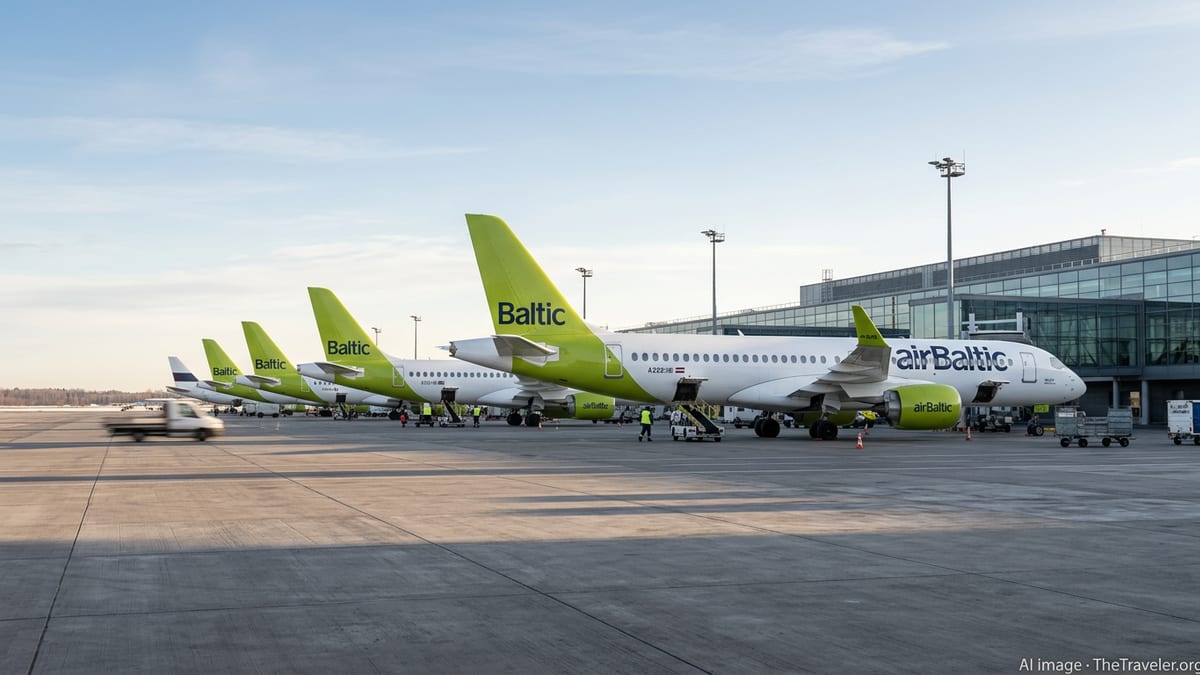
Strategic use of US bankruptcy law by a European carrier
Publicly available information shows that airBaltic has opted for Chapter 11 protection in the United States to carry out a court supervised restructuring while continuing flight operations. This type of filing is commonly used by airlines seeking to renegotiate debt, aircraft leases and other long term obligations without shutting down their networks or grounding fleets.
Reports indicate that the company is using the US venue because of the flexibility and international recognition of Chapter 11, particularly for cross border financings and aircraft related contracts that are often governed by US law. By entering the process, airBaltic can seek to consolidate negotiations with creditors into a single forum and propose a reorganization plan that, once approved, would bind a broad range of financial stakeholders.
For passengers, Chapter 11 typically means that tickets remain valid and schedules are largely maintained, while the airline works behind the scenes to reduce costs and restructure its balance sheet. Industry history shows that several airlines have used similar processes to emerge leaner, with reworked fleet plans and new financing agreements.
Analysts following the European aviation sector have noted that this move reflects the persistent financial strain mid sized network carriers face in a market dominated by low cost rivals and large airline groups. The Chapter 11 route is being interpreted as a proactive attempt by airBaltic to stabilize its finances before conditions become more challenging.
State backing and the path to long term viability
As the national airline of Latvia, airBaltic has historically benefited from state support, including capital injections approved under European Union state aid rules during the pandemic years. According to published coverage, those measures helped the carrier survive the sharp collapse in demand and allowed it to renew parts of its fleet with more efficient aircraft.
The new court process in the United States is being framed in available documentation as a next phase in that long term stabilization effort rather than an immediate prelude to liquidation. By seeking protection while still operating, the company aims to reassure customers, employees and suppliers that it is working within a structured legal framework designed to preserve enterprise value.
Observers point out that the government in Riga is likely to remain a key player throughout the restructuring, given its role as a significant shareholder and the airline’s importance to national connectivity. Publicly accessible commentary suggests that officials in Latvia and within European institutions will be watching closely to ensure that any additional support or ownership changes remain compatible with competition and state aid rules.
At the same time, the Chapter 11 process may open the door to new private investment, potentially through fresh equity or debt instruments that could dilute existing stakes but bring in much needed capital for future growth.
Implications for passengers, routes and fleet plans
For travelers using Riga as a hub to reach destinations across Europe, the Middle East and parts of Asia, the key question is how the court process will affect day to day flying. Available information on similar airline restructurings suggests that airBaltic is likely to prioritize operational continuity, seeking to maintain its core schedule while adjusting underperforming routes.
Chapter 11 gives airlines tools to revisit aircraft leases and purchase commitments, which can lead to changes in fleet size and composition. airBaltic has built its recent strategy around a single type fleet of modern narrow body jets, a model that reduces complexity and operating costs. Industry analysis indicates that the company will probably try to preserve this simplified structure while using the court process to improve lease terms and financing conditions.
Some seasonal or marginal routes may nevertheless be scrutinized as part of cost cutting efforts, especially where competition from low cost carriers is intense. However, maintaining Riga’s role as a regional hub is expected to remain central to the airline’s strategy, as connecting traffic has been an important source of revenue.
Frequent flyer programs, vouchers and existing bookings generally continue to function normally in Chapter 11 cases, and there has been no widespread indication of immediate disruptions tied directly to the legal filing. Travelers are still advised, as with any airline undergoing restructuring, to monitor official announcements for schedule adjustments or policy updates.
Chapter 11 in a changing European aviation landscape
airBaltic’s recourse to a US court highlights the globalization of aviation finance and the growing influence of American legal tools on European carriers. Over the past two decades, a number of international airlines have used the Chapter 11 framework to reset their cost base, restructure debt and renegotiate aircraft deals, often emerging with more sustainable capital structures.
For Europe’s air travel market, this development comes at a time of shifting demand patterns, higher financing costs and evolving environmental policies. Mid sized network carriers situated between large airline groups and aggressive low cost competitors face pressure to modernize fleets, invest in digital systems and meet emissions targets, all while managing thin margins.
By initiating a Chapter 11 process in the United States, airBaltic is signaling that it intends to remain part of this evolving landscape rather than exit it. The outcome will depend on the airline’s ability to secure creditor support for a reorganization plan, align interests between state and private stakeholders, and adapt its network to post pandemic travel behaviors.
Travel industry observers will be watching closely over the coming months to see how the restructuring shapes airBaltic’s role in connecting the Baltic region with the rest of Europe and beyond, and whether its use of a US court becomes a template for other medium sized European carriers seeking to build a stronger financial future.