


More news on this day
India’s rail network is experiencing a sharp travel surge, with Indian Railways carrying 67.27 crore passengers in August 2026 and suburban journeys climbing 9 percent compared with a year earlier, according to recent traffic data.
Get the latest news straight to your inbox!
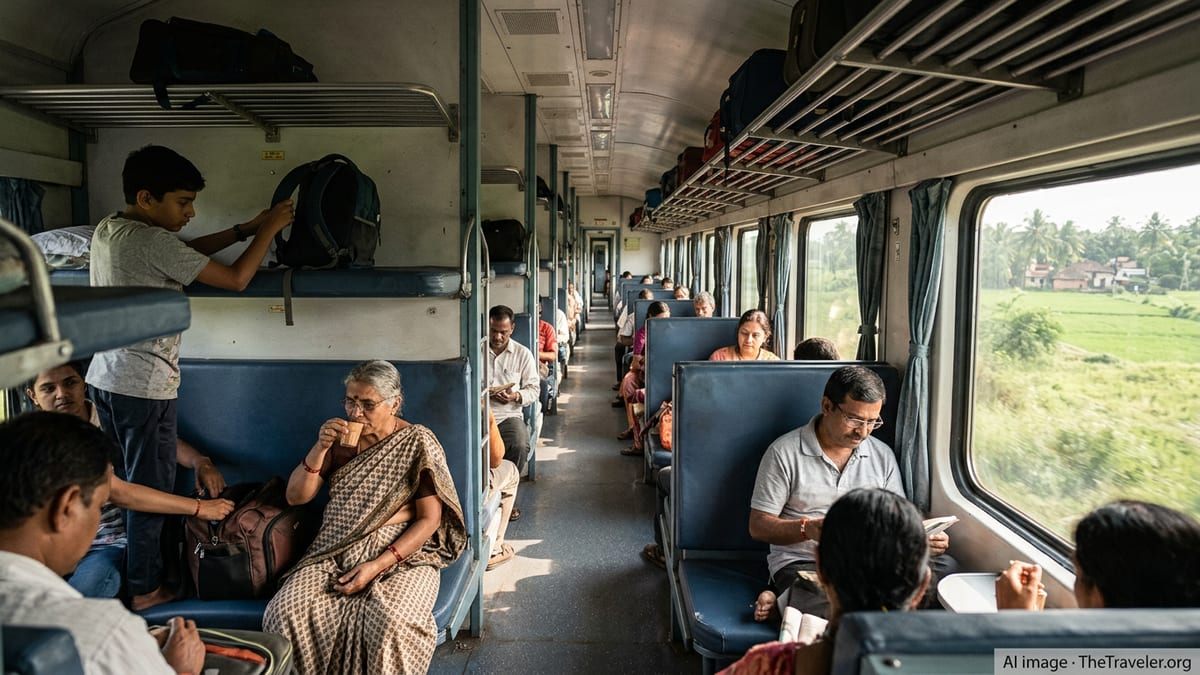
Record Passenger Volumes Highlight Rail’s Travel Revival
The latest figures indicate that Indian Railways moved 67.27 crore passengers in August 2026, up from 64.43 crore in August 2025. Publicly available data and recent coverage describe the increase as one of the strongest monthly jumps in the post-pandemic period, reflecting both pent-up demand and the continued preference for rail as India’s most affordable long-distance travel option.
The August data follow a series of busy months across the summer season. Passenger traffic reportedly crossed around 61 crore in May 2026 and exceeded 63 crore in July 2026, pointing to a steady upward trend rather than a one-off spike. Traffic has grown in both reserved and unreserved segments, including general coaches and mail and express services on trunk routes.
Over the broader financial year 2025–26, Indian Railways is estimated to have carried roughly 741 crore passengers, up from about 716 crore in 2024–25. That trajectory, combined with August’s 67.27 crore tally, suggests that FY 2026–27 could see another annual high if current growth rates hold.
The surge is being closely watched by the wider travel sector. Rail remains the backbone of domestic movement for millions of Indians, and rising train patronage often tracks with higher activity in tourism, hospitality and regional aviation as travelers combine multiple modes.
Suburban Segment Posts 9 Percent Jump
The standout feature of the latest data is the strength of suburban demand. Reports citing railway traffic statistics indicate that suburban passenger numbers in August 2026 grew by about 9 percent year on year, outpacing the growth in non-suburban journeys. That performance aligns with longer-term trends showing robust ridership on urban and semi-urban corridors around Mumbai, Kolkata, Chennai and other expanding metropolitan regions.
Suburban rail accounts for a relatively small share of route length but a disproportionately high share of passengers. Earlier statistical reports have shown that suburban systems across Mumbai, Kolkata and Chennai together handle more than half of all rail passengers nationwide in a typical year, underlining their importance for daily commuting and short-distance travel.
The 9 percent suburban increase is being linked to several factors: renewed office commuting, steady growth in service-sector jobs in urban clusters and the continued expansion of city regions into surrounding districts. The data also coincide with incremental capacity additions such as longer trains, higher-frequency services and upgrades to signaling and track infrastructure on busy suburban corridors.
For India’s travel industry, stronger suburban numbers can translate into more weekend and short-break tourism, particularly as commuters with reliable daily rail access look to extend journeys beyond city limits using the same network.
Network Upgrades and New Services Feed Demand
The rail travel surge is unfolding against a backdrop of sustained investment in rolling stock and infrastructure. Publicly available budget analyses show that Indian Railways has been adding higher-capacity coaches, modernizing stations and expanding electrified routes, while premium services such as Vande Bharat and Amrit Bharat trains have multiplied over the past two years.
Recent press releases and ministry statements highlight the operation of more than 160 Vande Bharat and dozens of Amrit Bharat services during peak summer travel periods, aimed at easing congestion on popular intercity routes. These additions, combined with targeted timetable adjustments and special trains during festivals and holidays, have broadened travel options and helped accommodate higher volumes.
On the policy side, fare restructuring has largely protected suburban and short-distance ordinary travel from steep increases, preserving affordability for frequent users. Non-suburban reserved categories have seen modest adjustments in recent years, but second-class ordinary and season ticket products remain positioned as low-cost options for daily commuters, reinforcing ridership in the very segment now showing a 9 percent jump.
Infrastructure expansion is also supporting the travel boom. Capacity augmentation projects, new freight corridors and upgraded junctions free up paths for additional passenger services, contributing indirectly to the higher passenger counts recorded in recent months.
Travel Boom Tied to Economic and Tourism Trends
The growth in rail travel is emerging alongside broader indicators of rising mobility in India. Economic studies and transport data associate higher passenger numbers with increased labor-market participation, urbanization and growth in domestic tourism, particularly to religious, heritage and nature destinations accessible by rail.
Railway statistics indicate that unreserved and general-class travel, which typically includes lower-income passengers and migrant workers, has been climbing steadily since the easing of pandemic-era restrictions. At the same time, reserved classes such as sleeper and air-conditioned coaches are capturing growing demand from middle-class travelers seeking predictable, reasonably priced alternatives to road and air travel on busy corridors.
Tourism boards and state transport planners often track rail traffic around major festivals, pilgrimage seasons and school holidays, when special trains are deployed to manage flows. The recent rise to 67.27 crore passengers in a single month suggests that these seasonal spikes are now occurring on top of an elevated baseline of everyday travel, intensifying pressure on popular routes and hubs.
For destinations that rely on rail-linked visitors, higher passenger throughput can support hotel occupancy, local transport services and small businesses clustered around stations, reinforcing rail’s role as a catalyst for local economies.
Capacity, Comfort and Sustainability Challenges Ahead
The record passenger volumes also pose challenges. Crowding in suburban and general coaches, infrastructure constraints at older stations and limited platform capacity on certain routes continue to affect the travel experience, particularly during peak hours and festival seasons. Audit documents and budget discussions have repeatedly flagged the need for accelerated modernization to keep pace with demand.
Safety and reliability remain priorities as trains and stations operate near capacity on many sections of the network. Investments in automatic signaling, track renewal and modern rolling stock are intended to reduce bottlenecks and minimize disruptions, but implementation timelines vary across zones and corridors.
Environmental considerations are adding another dimension to the rail travel debate. With a large share of routes now electrified, rail is positioned as a relatively low-emission alternative to road and short-haul air travel. The latest surge in passengers may support India’s broader climate and energy goals by shifting more journeys to electric traction, provided capacity constraints are addressed and service quality keeps pace with expectations.
For now, the movement of 67.27 crore passengers in August and a 9 percent rise in suburban demand underline how central Indian Railways remains to the country’s travel landscape, even as new highways, airports and metro networks expand around it.