


More news on this day
Amsterdam Centraal has vaulted into Europe’s top echelon of rail hubs in the 2026 European Railway Station Index, a shift that highlights both the station’s rapid transformation and a wider resurgence of rail travel across the continent.
Get the latest news straight to your inbox!
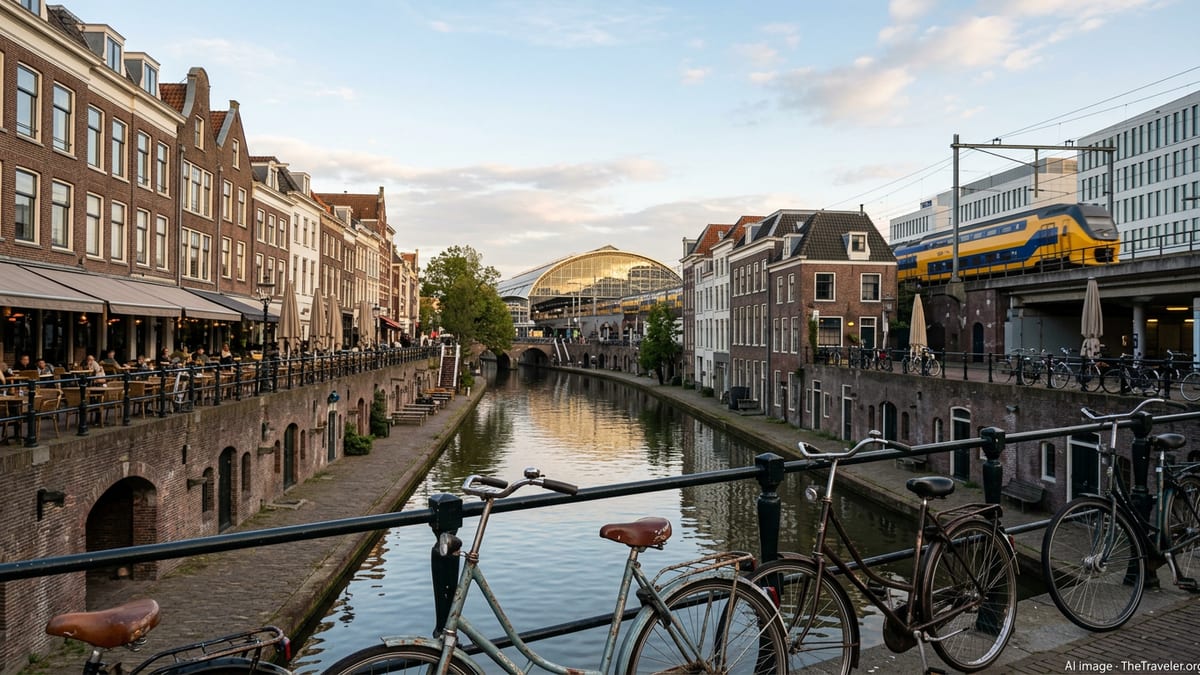
New Rankings Put Amsterdam Centraal Among Europe’s Best
The latest European Railway Station Index, published in early September 2026 by the Consumer Choice Center, places Amsterdam Centraal firmly within the top three large railway stations in Europe. The Dutch capital’s main hub scores 98.5 points out of 110, just behind Zurich Hauptbahnhof and Paris Gare du Nord, and ahead of a growing field of high-performing competitors.
The index evaluates 60 of Europe’s busiest stations by passenger volume, using criteria such as access and connectivity, passenger amenities, cleanliness, reliability of services, and availability of international links. Publicly available coverage of the 2026 edition notes that Amsterdam Centraal has risen from a lower top‑ten position in the 2025 rankings to a place on the overall podium this year, reflecting multiple years of targeted upgrades.
Media analysis of the ranking highlights a broader pattern in which Swiss, French and Dutch hubs dominate the upper tier, while several major German stations have slid down the table. Within this shifting landscape, Amsterdam Centraal’s ascent is portrayed as one of the clearest examples of how sustained investment and network integration can reposition a long-established terminal as a modern, passenger-focused gateway.
Travel industry reports suggest that the 2026 results will be closely watched by rail operators and tourism boards, since the index increasingly shapes perceptions among frequent train travellers comparing routes and transfer points across Europe.
A Dutch Gateway Transformed
Amsterdam Centraal is the busiest station in the Dutch capital and one of the country’s primary rail gateways, handling tens of millions of passengers a year across domestic, regional and international services. In recent years, the station has been reshaped through a mix of infrastructure works, concourse redesigns and service improvements that have gradually changed the experience for everyday commuters and international visitors.
According to publicly available information from rail authorities and independent transport analyses, the station has benefited from concourse widening, clearer wayfinding, upgraded platforms and a more coherent separation between local and long‑distance flows. These changes have helped reduce pinch points in a terminal that sits on a narrow strip of land between the city’s historic centre and the IJ waterfront.
Coverage of the 2026 index notes that Amsterdam Centraal now scores particularly strongly in accessibility, digital information and multimodal interchange. Direct links to trams, metro services, ferries across the IJ and regional buses have been progressively integrated, turning the station into a compact transport hub where transfers between modes can be completed with comparatively short walking distances.
The evaluation also credits the breadth of station amenities, from food outlets and shops to luggage facilities and waiting areas. While some commentaries point out ongoing challenges at peak times, the overall picture presented in 2026 assessments is of a hub that has closed much of the gap to the continent’s most celebrated stations.
International Connections Drive Amsterdam’s Appeal
One of the strongest factors behind Amsterdam Centraal’s rise in the rankings is its expanding web of international connections. Public timetables and specialist rail travel guides for 2026 show a dense set of routes linking the station with Belgium, France, Germany and the United Kingdom, including both high‑speed services and new open‑access operators.
Eurostar’s services between Amsterdam, Brussels and London, consolidated in recent years through a purpose‑built international terminal area within the station, have reinforced Amsterdam Centraal’s role as a northern gateway to and from the UK. Service quality reports and rail industry documents indicate continuing investments in security, boarding processes and passenger information around these cross‑Channel trains.
On the continental side, international schedules list frequent high‑speed and intercity links from Amsterdam to cities such as Paris, Brussels, Berlin and beyond, with new entrants planning additional connections from the mid‑2020s onward. Announcements from emerging operators signal that the Dutch capital is viewed as a key node in future pan‑European day and night networks.
These developments mean Amsterdam Centraal is increasingly marketed by travel media as a strategic starting point for rail‑based itineraries around Europe. The station’s prominence in consumer‑oriented guidance on “best cities to reach by train” aligns closely with its improved standing in the 2026 station index.
Golden Era Signals Changing Priorities in European Travel
The 2026 ranking has been widely interpreted by travel publications as evidence of a new golden era for European train travel, in which major stations are being reimagined as central civic spaces rather than purely transport nodes. The rise of hubs like Amsterdam Centraal is seen as part of a wider shift towards rail in response to environmental targets, capacity constraints at airports and changing traveller preferences.
Reports note that European governments and rail operators are prioritising cross‑border high‑speed links, overnight trains and integrated ticketing systems that make long‑distance journeys by rail more attractive. In this context, the quality and efficiency of major stations have become critical markers of how well the system serves both daily commuters and international visitors.
Analyses of the 2026 index also highlight that passenger expectations are rising. Travellers now look for seamless digital wayfinding, reliable real‑time information and a mix of services comparable to those in large airports. Stations that adapt quickly to these demands tend to climb the rankings, while those that struggle with delays, crowding and limited amenities see their scores weaken.
Within this broader narrative, Amsterdam Centraal’s performance is cited as evidence that medium‑sized hubs can compete with the largest European stations when they deliver strong connectivity, a high standard of facilities and coherent design.
What the 2026 Ranking Means for Future Passengers
For passengers, Amsterdam Centraal’s elevation into Europe’s top rail elite has practical as well as symbolic implications. A high placement in the European Railway Station Index often correlates with more predictable connections, a clearer station layout and a wider range of services for travellers passing through.
Travel commentators suggest that the 2026 result is likely to reinforce Amsterdam’s status as a preferred transfer point for those piecing together complex rail journeys across multiple countries. The combination of frequent services, multimodal links and a central urban location offers advantages for itineraries that blend long‑distance trains with local transport or cycling.
The ranking may also influence future investment decisions. City‑level planning documents and public policy discussions increasingly treat top‑rated stations as anchors for urban development, encouraging surrounding upgrades in public space, cycling infrastructure and waterfront access. In Amsterdam’s case, planners have long viewed the station precinct as a laboratory for balancing heritage with modern mobility.
As the 2026 index circulates among travellers and industry professionals, Amsterdam Centraal’s new position in the European hierarchy serves as both recognition of recent progress and a benchmark for further improvements. For rail passengers arriving in or departing from the Dutch capital, it underscores that the station at the heart of their journey is now considered one of the continent’s leading gateways.