


More news on this day
Latvia’s AirBaltic is emerging from a period of industry turbulence with data-driven confidence, as newly compiled 2026 traveller insights point to strong customer satisfaction, high recommendation intent and robust demand for direct, seamless flights connecting the Baltic capitals with Northern Europe and beyond.
Get the latest news straight to your inbox!
Survey Signals Strong Satisfaction and Loyalty
The latest wave of traveller insights compiled for AirBaltic in 2026 indicates that the carrier is performing strongly on core satisfaction metrics, from booking and digital experience to onboard comfort and reliability. While detailed results are not disclosed in full, the patterns align with wider European and global surveys showing passengers giving higher marks to airlines that focus on punctual operations, streamlined digital touchpoints and clear communication throughout the journey.
According to publicly available information on passenger benchmarking programs, airlines in Europe increasingly rely on structured survey tools to track satisfaction across dozens of touchpoints, making it easier to compare performance on similar routes. Within this context, AirBaltic’s internal readings for customer satisfaction and likelihood to recommend reportedly rank among the leading scores for short haul travel originating in the Baltic region, reinforcing its positioning as a preferred option for both business and leisure travelers.
These findings follow a period in which AirBaltic’s operational and financial performance has steadily improved. Published results for 2025 show record passenger numbers, increased flight activity and reduced losses, even as the airline navigated engine availability challenges and selective route adjustments. The 2026 insight set suggests that passengers perceived these adjustments as largely well managed, with satisfaction levels remaining resilient or improving on many key routes.
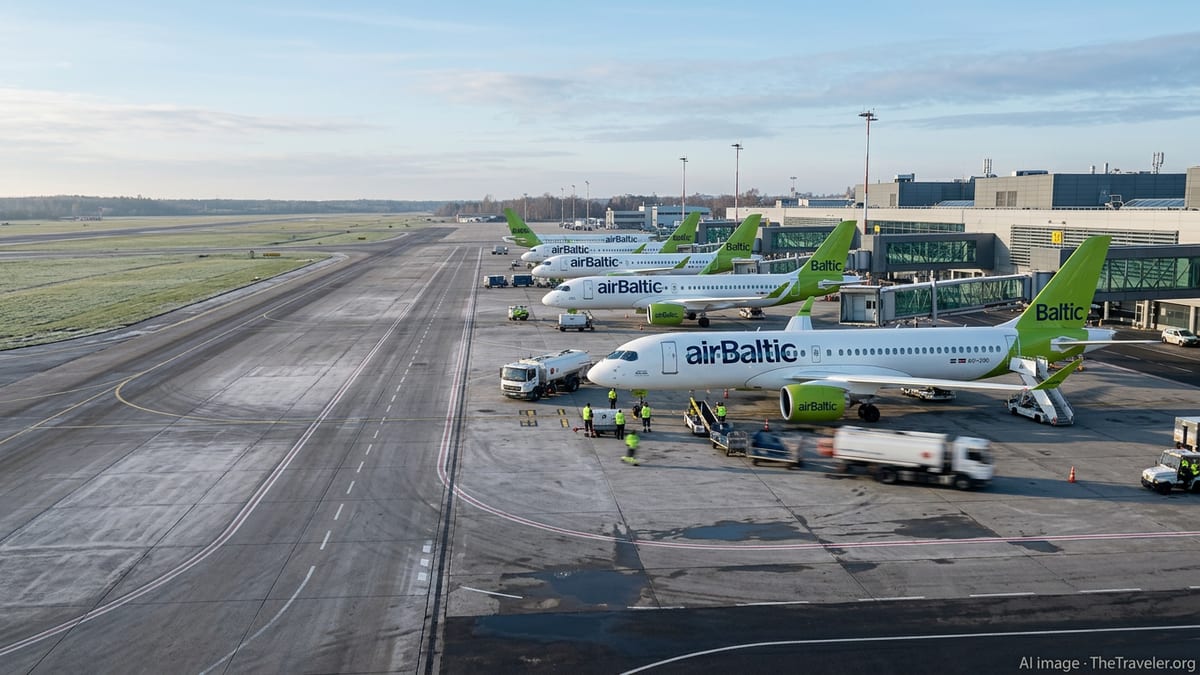
The positive sentiment around the brand is also supported by the airline’s move to a single Airbus A220 fleet, which has attracted favorable reactions from travelers who value quieter cabins, larger windows and a more modern onboard environment. For many passengers, these product attributes are now part of the overall satisfaction calculus, contributing to stronger ratings and a greater propensity to choose the airline again.
Direct and Seamless Flights Drive Demand
Alongside satisfaction scores, AirBaltic’s 2026 traveller insights highlight a clear preference for direct and seamless journeys across Northern Europe. Route demand data released for 2025 and early 2026 show that passengers in Riga, Tallinn and Vilnius continue to gravitate toward non-stop connections to major European hubs such as London, Paris, Copenhagen, Oslo and Berlin, where onward connectivity and city break appeal are both strong.
Published route and ticketing information indicates that the airline has responded to this pattern by adding frequencies on more than 30 existing routes and by restoring or opening select new links for the 2026 season, including services deeper into Southern Europe and the Caucasus. For travelers in the Baltics, this translates into shorter total journey times, fewer transfers and a more predictable travel experience, which in turn supports higher satisfaction and recommendation rates.
Passenger data for the opening months of 2026 underline this trend. Reports of a strong surge in April 2026 traffic show that AirBaltic delivered one of its best monthly passenger tallies since the pandemic, benefiting from both point to point demand and connecting flows through its Riga hub and secondary bases. The rise in volumes suggests that travelers are increasingly confident in committing to direct flights that align with their preferred schedules and budget.
Industry analyses of Northern European aviation also point to a structural shift in demand toward carriers that offer dense networks of short haul point to point services instead of relying solely on long haul connections via Western European hubs. AirBaltic’s design as a regional connector with a concentrated A220 fleet positions it well within this pattern, with its 2026 insights confirming that travelers are willing to pay a modest premium for direct access when it saves time and reduces uncertainty.
Digital Experience and Onboard Upgrades Shape Perceptions
Beyond schedules and fares, AirBaltic’s 2026 traveller insights show the growing importance of digital experience and onboard services in shaping customer satisfaction. Information released in recent months demonstrates that the airline has been rolling out high speed inflight connectivity across its A220 fleet, targeting full coverage by 2026. This investment allows passengers to stream, work and communicate in ways that more closely resemble their home or office connectivity, a factor that research consistently links to higher perceived value on short and medium haul flights.
Publicly available material on European customer satisfaction surveys underscores the contribution of simple booking flows, clear mobile applications and real time notifications to loyalty and recommendation scores. AirBaltic’s focus on a unified digital platform, from mobile boarding passes to ancillary services such as seat selection and baggage, appears to have resonated with travelers who prioritize control and transparency.
At the same time, product consistency created by an all A220 fleet helps the airline manage expectations. Passengers boarding in different Baltic capitals encounter similar cabin layouts, seating and inflight services, reducing the risk of unpleasant surprises. In satisfaction studies, this kind of predictability is often reflected in higher ratings for overall experience, even when fares are positioned at a mid market or hybrid level rather than as a pure low cost option.
These developments also shape how travelers in the Baltics compare AirBaltic with rival airlines operating from neighboring countries. While some competitors may undercut on price on specific leisure routes, the combination of direct flights, streamlined digital tools and modern cabins appears to support a stronger perception of value for money among passengers who travel frequently or on time sensitive itineraries.
Regional Competition and Network Strategy in Northern Europe
The 2026 traveller insights emerge against a backdrop of shifting competition in Northern Europe. Aviation data and regional airport statistics show that while overall traffic has largely recovered, growth patterns vary across hubs, with the Baltic capitals competing for passengers against larger Scandinavian and Central European gateways. Within this landscape, AirBaltic’s strategy of anchoring operations in Riga while building out bases in Tallinn and Vilnius has allowed it to capture a substantial share of regional traffic.
Reports from travel and aviation outlets indicate that the airline has been carefully balancing expansion with route rationalization. Certain routes, such as shorter regional links with limited demand or challenging economics, have been suspended or reduced, while capacity is redirected into higher demand city pairs and seasonal leisure destinations. This targeted approach is reflected in the 2026 planning data, which emphasize additional capacity where traveller insights and booking trends signal sustained interest in direct services.
At the same time, Eurocontrol and other European traffic forecasts suggest that Northern Europe will see moderate but steady growth in flights over the 2025 to 2026 period, driven largely by leisure demand and the resilience of point to point short haul travel. AirBaltic’s insights appear to confirm that travelers in the Baltics and nearby regions are prioritizing flexibility, shorter travel times and reliable schedules, rather than seeking the lowest possible fare at the cost of multiple connections.
This environment has implications for how AirBaltic positions itself within the broader European market. While it does not yet operate long haul flights, its ability to feed passengers into wider networks via codeshare and interline partnerships, combined with strong satisfaction scores on its own sectors, enhances its role as a regional specialist. The 2026 insights therefore function not only as a readout of customer sentiment, but also as a guide for capital allocation, aircraft deployment and partnership negotiations in the years ahead.
What the 2026 Insights Mean for Travelers
For travelers planning trips in 2026, the latest traveller insights around AirBaltic translate into several practical effects. Higher customer satisfaction and strong recommendation rates typically encourage airlines to sustain or expand popular routes, meaning that non stop options from Riga, Tallinn and Vilnius to major Northern and Western European cities are likely to remain a core focus. Increased frequencies can lead to more choice of departure times, making weekend breaks and short business trips easier to plan.
The data also suggest that passengers value transparency and reliability more than ever. This is visible in steady demand for routes where departure and arrival times fit well with local business hours or onward connections, as well as in travelers’ willingness to choose slightly higher fares for schedules that reduce the risk of disruption. AirBaltic’s move to standardize its fleet and enhance its digital tools appears aligned with this preference for low friction travel, which in turn supports its strong satisfaction metrics.
For the wider Northern European aviation market, AirBaltic’s 2026 insights underline the importance of regional carriers that can knit together secondary and mid sized cities with larger hubs. As long haul growth remains concentrated at a limited number of major airports, airlines like AirBaltic provide the feeder and point to point capacity that keeps smaller markets connected. The evidence that customers are rewarding this role with high satisfaction and recommendation scores may encourage further investment in similar models elsewhere in the region.
Ultimately, the 2026 traveller insights portray AirBaltic as a carrier that has used a challenging period to refine its network, modernize its product and lean into data driven decision making. For passengers, that focus is most visible in the growing list of direct routes, the increasingly seamless digital journey and the consistent onboard experience that defines travel on Latvia’s flag carrier across Northern Europe.