


More news on this day
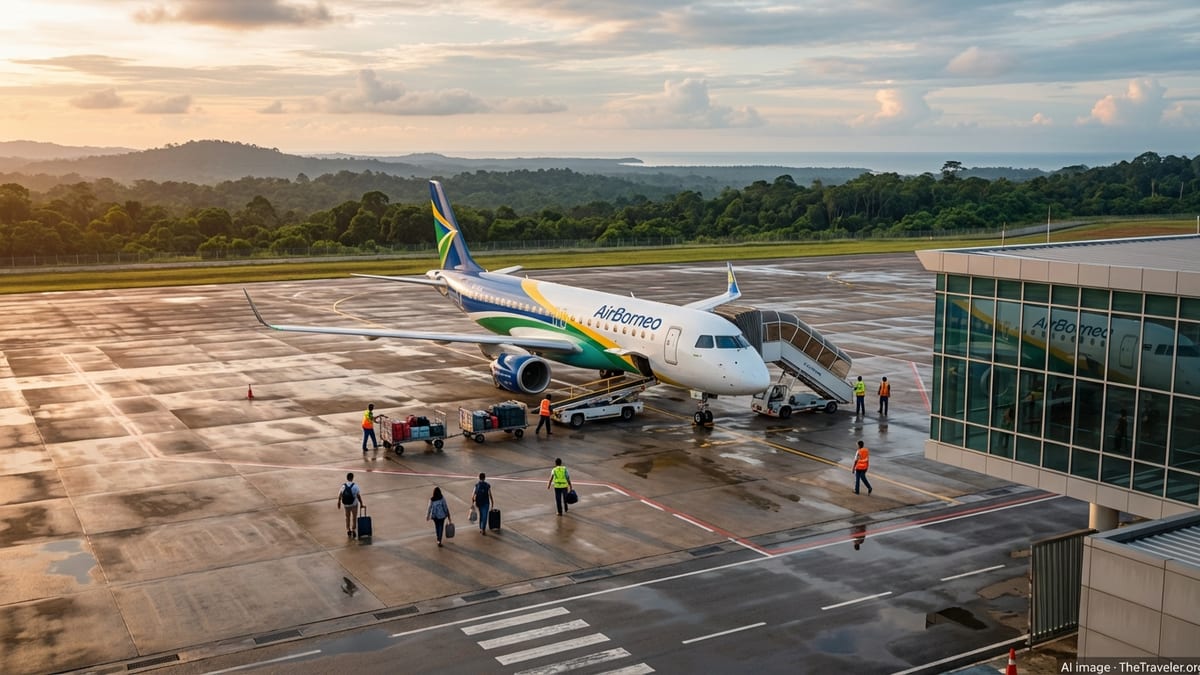
AirBorneo’s chief executive has linked a wave of delays and cancellations affecting passengers across Sabah and Sarawak to the simultaneous grounding of several aircraft for maintenance and technical rectification works, as the state-backed carrier struggles to stabilise its young regional network.
Get the latest news straight to your inbox!
CEO points to concurrent maintenance as key factor
In recent public statements, AirBorneo’s leadership has acknowledged that multiple aircraft are currently unavailable at the same time due to a mix of scheduled maintenance and unscheduled technical work. Reports indicate that this has sharply reduced the number of planes available to operate the airline’s rural and regional routes, triggering a cascade of delays and cancellations over several days.
Business-focused outlets describe the airline’s chief executive, Megat Ardian Wira, outlining how planned maintenance checks overlapped with technical rectification needs on other aircraft, creating a fleet bottleneck that could not be resolved quickly. Coverage notes that replacement components have also taken longer than expected to arrive, prolonging the downtime for affected aircraft and limiting the pace at which flights can be restored.
Local media report that the airline has apologised to travellers for the disruption and characterised the situation as a short-term operational crunch driven primarily by safety and reliability requirements. By framing the issue around maintenance and technical integrity, the carrier is seeking to reassure passengers that aircraft will not be rushed back into service before all engineering work is complete.
Sabah and Sarawak services most affected
According to Malaysian news reports, the most severe disruption has been concentrated on routes within and between Sabah and Sarawak, where AirBorneo operates as a key provider of regional connectivity. Several services on these sectors have faced repeated delays or last-minute cancellations since early June, leaving travellers scrambling to adjust plans.
Coverage from regional outlets indicates that communities relying on the airline for access to major hubs have been particularly exposed, with travellers recounting missed family occasions, medical appointments and business commitments due to the irregular schedule. Social media posts and local commentary highlight growing frustration among passengers who see little room for alternative carriers on some of these thin but essential routes.
Publicly available information shows that AirBorneo is working to re-accommodate affected customers on the next available services, but limited spare capacity on a reduced fleet has constrained these efforts. Passengers have been advised in media reports to monitor flight status closely before travelling to the airport, reflecting the likelihood of further short-notice changes while the maintenance backlog is cleared.
Young state-backed airline faces early operational test
The disruption comes only months after AirBorneo assumed responsibility for services previously operated under the MASwings brand, following a transition finalised at the start of 2026. Background information from aviation briefings explains that the Sarawak government-backed carrier was established to strengthen rural air services and improve connectivity in East Malaysia, using a fleet of turboprop aircraft on shorter routes.
Industry analysis suggests that integrating a legacy operation, while simultaneously standardising fleets and maintenance processes, can create complex challenges in the early months of a new airline’s life. The need to align engineering schedules, parts supply, and crew rostering under a refreshed operating model may leave little room for error when several aircraft are pulled from service at once.
Commentary in regional newspapers and specialist outlets notes that AirBorneo had signalled ambitions to modernise its fleet and gradually enhance service quality. The current wave of maintenance-driven disruption is therefore seen as an early stress test of the carrier’s operational resilience and its ability to manage reliability on routes that many remote communities depend on.
Passengers urged to plan around continuing disruptions
Public statements carried by Malaysian media indicate that AirBorneo expects some level of disruption to persist in the near term as engineering teams complete maintenance checks and technical fixes. The airline has encouraged travellers to allow extra time, check departure information frequently and be prepared for schedule adjustments while the constrained fleet continues to operate.
Reports show that AirBorneo has been prioritising the return of aircraft to service as soon as safety-critical work is finalised, while also adjusting crew duty patterns to keep as many flights running as possible. However, with several planes still in maintenance, analysts caution that seat availability on some routes is likely to remain tight, particularly during peak travel periods.
Travel advisories in local coverage recommend that passengers with time-sensitive commitments, such as medical visits or important events, build in additional flexibility and consider contingency plans where possible. While there is no formal timetable yet for a full restoration of normal operations, the airline has indicated through its public messages that clearing the maintenance backlog and stabilising schedules is now its primary operational focus.
Spotlight on maintenance practices across regional aviation
The AirBorneo episode has renewed attention on how maintenance planning and technical reliability shape the performance of smaller regional airlines. Aviation industry documents emphasise that turboprop fleets require regular checks and periodic deeper inspections, which can temporarily ground aircraft even when no major fault has occurred.
Analysts note that for carriers with modest fleet sizes, taking just a few aircraft out of service for overlapping maintenance or technical rectification can sharply reduce capacity. Without a large pool of standby aircraft or the ability to lease immediate replacements, schedule resilience becomes highly sensitive to the timing of engineering work and the availability of spare parts.
Commentary in trade publications suggests that AirBorneo’s experience may prompt a review of maintenance scheduling, inventory planning and contingency strategies among regional operators serving essential connectivity markets. For passengers in Sabah and Sarawak, the immediate priority remains a return to more predictable timetables, but industry observers see the situation as part of a wider conversation on how smaller airlines can balance safety-driven maintenance demands with the need to keep remote communities reliably connected.