


More news on this day
American Airlines and Google have unveiled what public disclosures describe as a record-breaking sustainable aviation fuel agreement, positioning the partnership as a major test case for decarbonizing business travel and supporting global climate goals.
Get the latest news straight to your inbox!
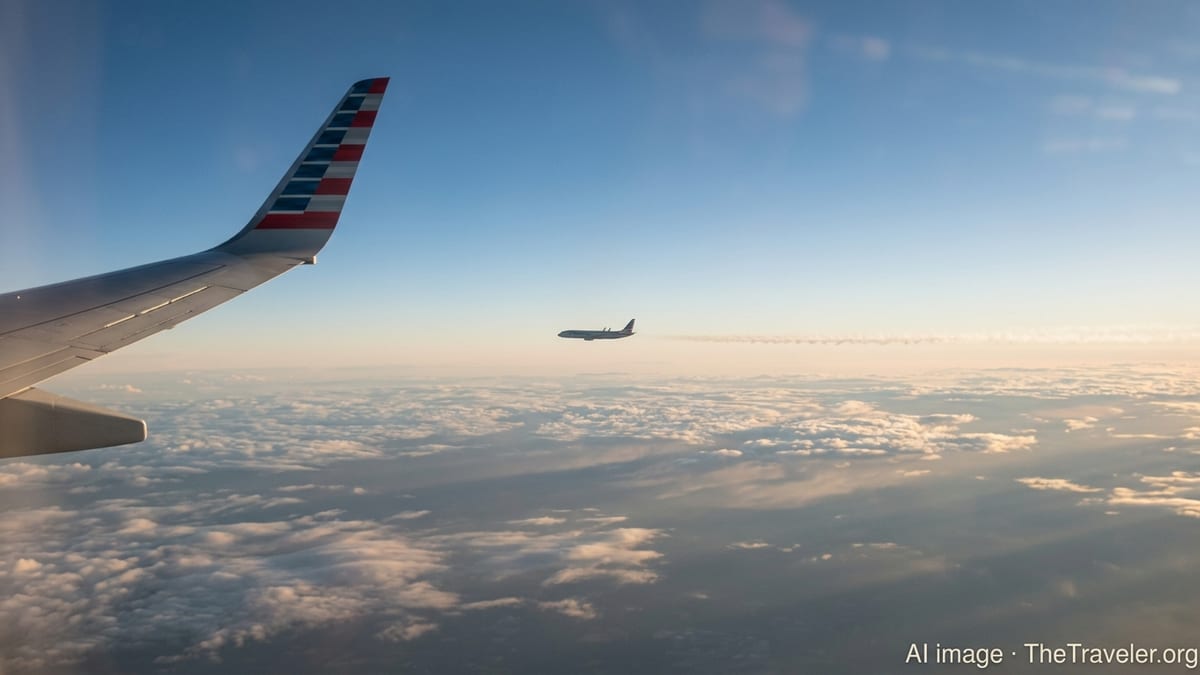
Record Sustainable Aviation Fuel Deal Targets Corporate Travel
According to recent announcements from both companies, American Airlines and Google have signed the largest publicly reported sustainable aviation fuel certificate agreement between an airline and a single corporate customer. The deal centers on sustainable aviation fuel certificates, or SAFc, which separate the environmental attributes of low-carbon fuel from the physical fuel itself.
Publicly available information indicates that the agreement will support 35 million gallons of sustainable aviation fuel over a three-year period. Analysts say that, based on typical lifecycle accounting, that volume equates to nearly 300,000 metric tons of carbon dioxide equivalent emissions reductions compared with conventional jet fuel. The SAF will be delivered into the fuel system at Chicago O’Hare International Airport, while Google receives the environmental benefits to help address emissions from its employee business travel.
The structure highlights how corporate travel buyers are increasingly influencing aviation’s decarbonization path. Instead of only purchasing traditional carbon credits, large companies are turning to SAF-linked certificates that are tied to actual low-carbon fuel use within airline operations. Industry observers view this as a way to reward early producers, send stronger demand signals and improve transparency around reported emissions cuts.
Reports indicate that the SAF supplied under the agreement will be produced from waste-based feedstocks such as used cooking oil, categorized as a “drop-in” fuel that can be blended with conventional jet fuel and used in existing aircraft and airport infrastructure without modifications.
Decarbonizing Thousands of Flights Through SAF and AI
American Airlines frames sustainable aviation fuel as a key element of its broader strategy to operate in a lower-carbon economy. Company sustainability materials describe SAF as the most significant near- and medium-term lever available to cut emissions from existing fleets, with potential lifecycle emissions reductions of up to around 80 percent compared with fossil jet fuel, depending on the feedstock and production pathway.
The agreement with Google is expected to underpin the decarbonization of thousands of flights over the life of the contract, given that the physical fuel will be consumed across American’s operations at a major hub. Because aircraft typically burn blended fuel from common airport storage, the impact is accounted for on a systemwide basis rather than on specific branded flights.
In parallel, American and Google have been collaborating on operational measures to curb climate impacts in the sky. Publicly reported trial results from 2025 show that American worked with Google, Contrails.org and Flightkeys to integrate contrail-avoidance forecasting into its flight planning tools. Over roughly 16 weeks and approximately 2,400 transatlantic flights, the airline reported a statistically significant reduction in persistent contrail formation of about 62 percent for flights that incorporated the guidance compared with those that did not.
While contrails are separate from carbon dioxide emissions, high-altitude ice clouds are considered an important contributor to aviation’s overall climate impact. Combining lower-carbon fuel with data-driven route optimization is increasingly seen by researchers and industry planners as a complementary path to shrink aviation’s warming footprint while more transformative technologies, such as hydrogen or fully electric long-haul aircraft, remain distant.
Implications for Business Travel and Corporate Climate Strategies
The partnership underscores how business travel remains a focal point of corporate climate strategies. Large technology companies such as Google have pledged ambitious emissions-reduction and net-zero targets, and travel-related emissions often account for a sizable share of their operational footprint. By channeling capital into SAF through certificates, these companies can directly support emerging low-carbon fuel producers while addressing their own Scope 3 emissions from air travel.
Industry coverage notes that Google already participates in multi-party SAF initiatives with travel management and fuel partners, and the new bilateral agreement with American deepens that approach. The arrangement allows Google’s travel emissions reporting to reflect the verified climate benefits of the SAFc, recorded through dedicated registries that aim to reduce double counting and standardize accounting methodologies.
For American Airlines, the deal serves both environmental and commercial objectives. It reinforces the carrier’s positioning with premium and corporate clients that increasingly evaluate airlines on sustainability performance as well as schedule and price. It also provides a long-term demand anchor that can justify new SAF offtake contracts with fuel suppliers, helping build a more predictable market for producers.
Travel management specialists suggest that such high-profile partnerships could influence how corporate travel policies are written, potentially encouraging organizations to consolidate spend with airlines that demonstrate concrete progress on emissions intensity and sustainable fuel adoption. That, in turn, could accelerate competition among carriers to secure additional SAF volumes.
Scaling Sustainable Aviation Fuel in a Constrained Market
The significance of the American–Google agreement is amplified by the current scarcity of sustainable aviation fuel globally. Industry bodies estimate that SAF will still account for well under 1 percent of total jet fuel demand this year, despite rapid percentage growth from a low base. Production capacity remains limited, feedstock supplies face competing uses and costs remain substantially higher than conventional fuel.
American’s sustainability disclosures show that the airline has struck multiple SAF offtake agreements in recent years, including supply to Chicago O’Hare and longer-term contracts with emerging producers backed by private and public investment initiatives. Observers note that the new three-year commitment tied to Google’s SAF certificates builds on that foundation by matching corporate demand with secured physical volumes.
Policy support is another critical variable. Reports on the American–Google deal highlight the role of state-level incentives, including a sustainable aviation fuel tax credit in Illinois, which help narrow the cost gap and make it economically feasible to route larger SAF volumes through particular hubs. Industry groups have argued that similar mechanisms, alongside federal measures, will be necessary to scale SAF from millions to billions of gallons annually.
Even with supportive policy and financing, analysts caution that sustainable fuel alone will not fully decarbonize aviation. However, high-visibility agreements of this kind are widely seen as important steps in building a viable market, spreading risk between airlines, corporate customers and fuel producers, and demonstrating that low-carbon options can be integrated into day-to-day global operations.
Positioning for Long-Term Climate Goals in Aviation
The aviation sector has collectively endorsed long-term climate objectives, including net-zero carbon dioxide emissions by 2050 for international flights under frameworks led by industry associations and international organizations. Achieving those targets is expected to require a portfolio of solutions, from new aircraft technologies and air traffic modernization to carbon removal, in addition to large-scale deployment of SAF.
Within that context, the American Airlines and Google partnership is being interpreted as both a practical emissions-reduction measure and a symbolic signal. It links one of the world’s largest carriers with a major technology company whose own operations and data centers are energy intensive, illustrating how collaboration between high-emitting sectors may be necessary to drive the next phase of climate action.
For travelers, most of the changes underpinning the agreement will remain largely invisible. Aircraft will continue to look and operate much as they do today, tickets will be purchased through existing channels and flight numbers will not be marketed as uniquely “green.” Instead, the impact is embedded in the fuel mix and digital tools behind the scenes.
As global demand for air travel continues to recover and expand, the scale of the climate challenge is set to grow. Observers note that partnerships combining sustainable fuel, advanced analytics and corporate purchasing power offer one of the few immediately scalable levers available to bend the sector’s emissions trajectory while longer-term technologies advance toward commercial readiness.