


More news on this day
Fresh United States sanctions and legal moves against Cuba and Venezuela are reverberating across the Caribbean, reigniting compliance fears among cruise lines, airlines and investors at a time when the region is still rebuilding tourism and aviation links after the pandemic.
Get the latest news straight to your inbox!
Cuba Back in the Crosshairs as Legal and Sanctions Risks Mount
Cuba, long at the center of Washington’s sanctions architecture, is once again emerging as a focal point for travel industry risk managers. Publicly available US policy overviews show that Cuba remains subject to comprehensive economic sanctions, with tight restrictions on US travel, banking and investment, and a prohibition on US cruise calls that has been in place since 2019. These measures severely limit the ability of US travelers to visit the island and complicate payment channels for non US visitors, crimping hotel occupancy and tour operations.
The island’s risk profile sharpened further in May 2026 after the US Supreme Court sided with a US company whose port facilities in Havana were expropriated after the Cuban revolution. According to published coverage of the ruling, the decision revives litigation over the use of Havana cruise terminals between 2016 and 2019 and clarifies that claims under the Helms Burton Act can extend to physical assets seized decades ago. Legal analysts note that this could encourage additional claims targeting tourism infrastructure and service providers linked to confiscated properties.
Human rights and policy groups have previously highlighted how Cuba’s continued presence on the US State Sponsors of Terrorism list restricts financial transactions, hampers humanitarian trade and raises compliance costs for airlines, tour operators and cruise companies. These constraints have made it harder to sustain regular air links, process card payments and finance tourism investments, even as some regional markets recover strongly.
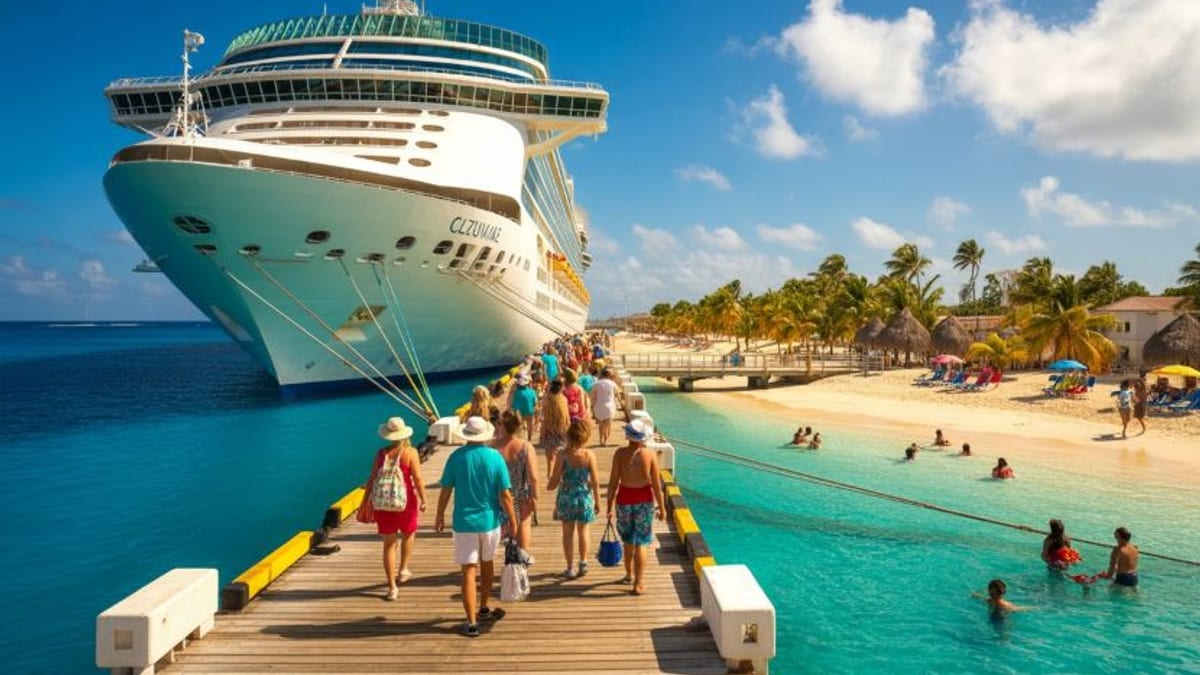
For cruise operators, the combination of sanctions and litigation risk has already translated into route changes. Industry records and court filings show that major brands stopped calling at Cuban ports after 2019, rerouting ships to destinations such as the Bahamas, Jamaica and Mexico. The renewed focus on Helms Burton liability is likely to reinforce a cautious approach toward any future Cuba itineraries, keeping a potentially lucrative Caribbean stop off the map for now.
Knock On Effects Across Jamaica, Bahamas and Neighboring Hubs
While Cuba carries the heaviest direct restrictions, neighboring tourism heavyweights are feeling indirect pressure. Caribbean economic briefings and regional commentary indicate that operators in Jamaica, the Bahamas, the Dominican Republic, Barbados and other destinations are increasingly attentive to secondary sanctions risk, particularly where local banks or service providers handle transactions linked to sanctioned Cuban or Venezuelan entities.
In practice, this has led to tighter due diligence requirements for hotel chains, yachting marinas, and aviation service providers that rely on US dollar clearing and US based insurance. Some Caribbean policy papers describe how financial institutions in tourism focused economies have “de risked” by exiting relationships seen as vulnerable to US enforcement, reducing credit availability for small hotels, tour operators and cruise excursion providers.
The tightening also affects regional aviation. Airlines operating multi stop routes through the northern Caribbean must ensure that ticket sales, fuel contracts and maintenance services do not trigger sanctions exposure. According to sector analyses, carriers have cut or re timed some links to Cuba and Venezuela, consolidating operations through larger hubs such as Nassau, Montego Bay and Punta Cana. This can lengthen journeys for travelers and reduce connectivity between smaller islands that depend on tourism for a large share of gross domestic product.
Cruise homeports in the Bahamas and Florida reliant on multi country itineraries are likewise exposed. Industry observers note that itineraries once marketed as “grand Caribbean” circuits now avoid sanctioned destinations, concentrating passenger flows into compliant ports. While this brings short term gains for some islands, it also increases vulnerability to future shifts in US policy or legal rulings that could suddenly change where ships are allowed to dock.
Venezuela’s Sanctions Shadow Over Fuel, Air Links and Investment
Venezuela, another focal point of US sanctions, casts a different but significant shadow over Caribbean tourism. Sanctions focused on the Venezuelan state and its energy sector have disrupted the PetroCaribe concessional oil program that once supplied subsidized fuel to many Caribbean nations. Regional economic studies have linked the decline of that program to higher energy costs for island economies, raising operating expenses for airlines, hotels and cruise ports.
Legal and policy briefings on Venezuela describe a complex landscape of primary and sectoral sanctions that restrict dealings with government entities and certain state owned companies. Although these measures are not a full embargo, compliance experts caution that any tourism or infrastructure investment touching Venezuelan partners or financing channels involving sanctioned actors can face heightened scrutiny from US authorities. This risk can discourage regional airlines from maintaining routes to Venezuelan cities and deter hotel or resort developments that target both Venezuelan and Caribbean markets.
More recently, geopolitical tensions surrounding Venezuela have introduced an additional layer of uncertainty. Reports on regional security developments describe an expanded US military presence and heightened political friction connected to the crisis there. For nearby tourism dependent states such as Trinidad and Tobago, Grenada and Antigua and Barbuda, the concern is that an escalation in sanctions or conflict could unsettle traveler perceptions of safety across the wider southeastern Caribbean basin.
Legal commentaries also point out that the US Treasury has periodically adjusted general licenses for activities in Venezuela, including those related to energy and financial services. Each shift requires rapid reassessment by banks, insurers and investors serving the Caribbean, some of whom opt to freeze new travel related ventures rather than risk misinterpreting complex sanctions rules.
State Sponsor and Sanctions Listings Complicate Regional Recovery
Beyond country specific measures, the broader US sanctions framework creates an intricate compliance environment for Caribbean destinations working to restore tourism to pre pandemic levels. Cuba’s continued listing as a State Sponsor of Terrorism, alongside sanctions programs relating to Venezuela and to actors in Iran and Russia, has had a chilling effect on correspondent banking relationships across the region, according to policy research organizations that track the impact of financial de risking.
For the tourism sector, this manifests in practical hurdles such as delays in processing card payments from US visitors, reduced appetite among global banks to finance resort projects, and additional checks on charter flights and cruise operations that involve passengers or companies from sanctioned jurisdictions. Hoteliers and tour operators in Barbados, the Dominican Republic and other destinations report that navigating these requirements adds cost and complexity to doing business, even when their operations are fully compliant.
Recent European and US policy briefs on the Caribbean warn that the cumulative impact of sanctions related banking pressures has made some smaller island economies more reliant on a limited number of financial gateways. This concentration risk worries aviation and cruise executives who depend on smooth movement of funds for ticketing, port fees and fuel payments. Any disruption in those gateways, prompted by an enforcement action or the blacklisting of a regional bank, could quickly cascade into cancelled flights and cruise calls.
At the same time, investors and infrastructure funds weighing airport expansions, new marinas or destination resorts must factor in the possibility of future sanctions shifts. Analysts note that prospective backers increasingly seek explicit contractual protections and political risk insurance when investing in Caribbean projects that might indirectly intersect with Cuban or Venezuelan entities, adding to project timelines and costs.
Caribbean Governments and Industry Seek Clarity and Diversification
Caribbean governments and industry groups are responding on several fronts as sanctions related pressures intersect with climate vulnerability, higher borrowing costs and lingering post pandemic recovery. Regional policy forums and recent think tank reports describe a push to strengthen compliance frameworks, improve coordination with international regulators and diversify tourism source markets beyond North America.
Some states, including Barbados, Jamaica and the Bahamas, are promoting closer ties with European and Latin American carriers to reduce dependence on US gateways and to attract visitors from markets perceived as less directly exposed to US sanctions dynamics. Destination marketing campaigns increasingly target travelers in Canada, the United Kingdom and parts of South America, seeking to build resilience if US outbound demand is dampened by economic or policy shocks.
Industry associations across the Caribbean cruise and aviation sectors are also calling for clearer guidance from regulators on how to manage exposure to sanctioned jurisdictions while maintaining regional connectivity. Public consultations and policy papers emphasize the need to balance legitimate enforcement of international sanctions with the economic reality that many islands depend on multi stop itineraries and cross border supply chains to sustain tourism employment.
Analysts observing the region suggest that, in the absence of a broad reset in US Cuba relations or a durable easing of sanctions on Venezuela, Caribbean governments will continue to pursue a strategy of diversification, compliance upgrades and cautious engagement. For now, the combination of legal rulings, sanctions listings and financial sector de risking is likely to keep travel operators, investors and policymakers on edge as they navigate an increasingly complex map of risks in the Caribbean.