


More news on this day
Rolling flight disruptions at AirBorneo and schedule changes among other regional carriers are unsettling tourism flows through Kuala Lumpur International Airport, Kuching and Kota Kinabalu, just as Borneo eyes stronger visitor arrivals from Singapore, China, Indonesia and India.
Get the latest news straight to your inbox!
New AirBorneo Era Collides With Operational Turbulence
AirBorneo formally took over MASwings operations on 1 January 2026, inheriting a fleet of ATR turboprops and Twin Otters to maintain essential links across Sabah and Sarawak. The rebranded carrier was positioned as a cornerstone of connectivity for East Malaysia, with services feeding major gateways such as Kuching and Kota Kinabalu as well as Kuala Lumpur.
Within months of launch, however, the airline has been hit by a wave of delays and cancellations across its network. Publicly available information points to concurrent aircraft maintenance and technical rectification work as key drivers of the current disruption pattern, particularly on short-haul routes that many residents and visitors rely on for same-day connections.
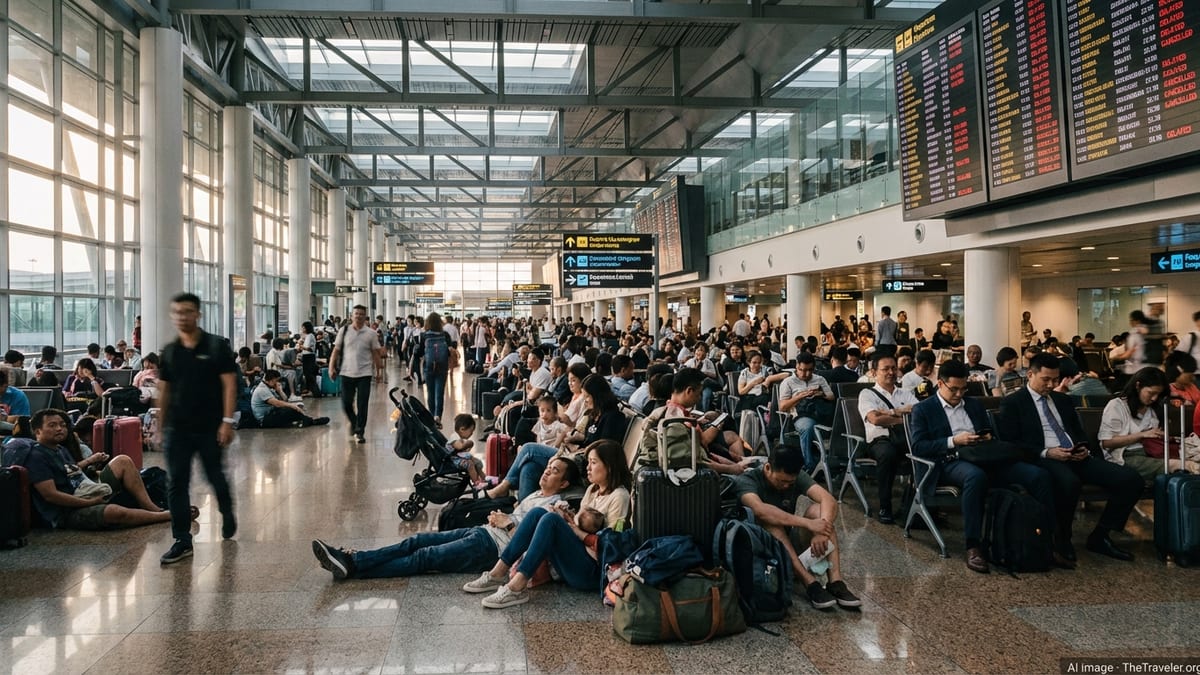
Recent coverage from Malaysian outlets describes passengers facing rolling schedule changes, last-minute cancellations and extended waits at airports across Borneo. The situation has become sensitive for local communities that view air travel not as a luxury but as a basic transport necessity between scattered towns and regional hubs.
The turbulence is unfolding during a broader ramp-up phase for Malaysia’s tourism sector in 2026, amplifying concern among tour operators, hotel groups and small businesses that depend on predictable air links between Borneo and Kuala Lumpur as well as regional markets.
Impact at KLIA, Kuching and Kota Kinabalu Hubs
The knock-on effects of AirBorneo’s challenges are most visible at three key gateways: Kuala Lumpur International Airport, Kuching International Airport and Kota Kinabalu International Airport. These airports function as the main entry points for foreign visitors heading to Borneo’s national parks, beaches and cultural attractions.
At Kuching, arrivals boards in recent days have shown a complex mix of mainline jet services from carriers such as AirAsia, Malaysia Airlines and selected foreign airlines alongside regional turboprop flights under the AirBorneo code. While many trunk flights between Kuala Lumpur and Kuching continue to operate, disruptions on feeder sectors into smaller Sarawak destinations are complicating onward travel plans.
Kota Kinabalu plays a dual role as both a domestic hub for Sabah and an international gateway for visitors from cities such as Singapore and several points in East Asia. When regional connections within Borneo are unreliable, passengers arriving on long-haul or medium-haul services can find themselves stranded or forced to re-route via alternative domestic carriers at short notice.
Travel industry observers note that even where alternative options exist on low-cost or full-service competitors, irregular operations tend to cascade. Missed connections affect hotel check-in schedules, tour departures and overland transfers, particularly for multi-stop itineraries that combine Kuala Lumpur with wildlife and diving hotspots in both Sarawak and Sabah.
What Travellers From Singapore Should Watch
Singapore remains one of the largest short-haul source markets for Malaysian Borneo, with multiple carriers linking Changi to Kuala Lumpur and directly to Kota Kinabalu or Kuching. For now, most Singapore originating passengers are still able to reach Borneo on mainline jet services, but onward domestic links have become less predictable.
Tour planners in the city state are advising clients to allow more buffer time between international arrivals and onward regional flights, especially when itineraries involve AirBorneo services into secondary destinations such as Miri, Sibu, Mukah or smaller airfields. Same-day tight connections that previously worked in normal conditions are now considered higher risk.
Singapore based visitors who intend to route via Kuala Lumpur before flying on to Borneo are being encouraged to keep all flight sectors on a single ticket where possible, or to choose itineraries with rebooking flexibility. Publicly available schedules show that low-cost competitors continue to operate dense frequencies on routes linking Singapore and Kuala Lumpur with Kota Kinabalu and Kuching, offering some resilience for those willing to adjust timings or carriers.
Travellers with fixed tour start dates, such as group departures for climbing Mount Kinabalu or Sarawak river expeditions, are particularly exposed. In those cases, agents recommend arriving at least one day earlier at the gateway city to reduce the risk that a missed domestic flight could wipe out key elements of the trip.
China, Indonesia and India Markets Face Added Complexity
China is a crucial growth market for Borneo, with recent charter and scheduled services linking Chinese cities to Kuching and Kota Kinabalu as part of regional tourism campaigns. While many of these flights are operated by foreign or peninsula based airlines, onward distribution within Borneo often depends on the same regional turboprop network now under pressure.
Groups arriving from Chinese cities on limited-frequency services have less room to maneuver when things go wrong. If an onward connection to an interior destination is delayed or cancelled, re-accommodation options may involve waiting for the next available seat on a competitor, changing the sequence of a tour, or cutting out an excursion entirely.
Indonesia and India travellers typically reach Borneo either on direct low-cost flights into Kota Kinabalu and Kuching or via Kuala Lumpur. For Indonesian visitors from Kalimantan and Sulawesi, cross border itineraries that combine Malaysian and Indonesian Borneo rely on reliable short-haul services to keep overland and sea transfers aligned. Any instability in flight schedules can create logistical challenges at land border posts and ferry terminals.
Indian travellers, many of whom combine Borneo with Kuala Lumpur or Singapore in multi-country trips, face similar constraints. Tour operators catering to this market say, through published commentary, that they are now placing more emphasis on routes with multiple daily frequencies and on booking classes that allow date changes without excessive penalties, even if that means higher upfront fares.
Practical Guidance for Affected Passengers
Across Singapore, China, Indonesia and India, travellers currently planning Borneo itineraries are being urged by airlines, airports and travel intermediaries to monitor flight status closely in the days leading up to departure. Public advisories emphasise that operational conditions on regional carriers can change quickly as maintenance work progresses or aircraft are rotated between routes.
Passengers connecting through Kuala Lumpur, Kuching or Kota Kinabalu are widely encouraged to build in generous connection times and to avoid last flights of the day on critical domestic sectors where alternatives are limited. For those flying on separate tickets, travel insurance with strong trip interruption coverage is gaining renewed attention.
Recent announcements from AirBorneo indicate that the airline is working on measures to stabilise operations, including fleet planning adjustments and capacity management on the most affected routes. However, published information also makes clear that disruptions may persist in the short term as maintenance and rectification programmes run their course.
For tourism stakeholders across Malaysian Borneo, the coming weeks will be a test of how quickly regional connectivity can be normalised. For visitors from Singapore, China, Indonesia and India, careful itinerary design, extra time buffers and flexibility on routing will be essential tools to keep long awaited trips on track while the region’s new aviation landscape finds its footing.